Reply To:
Name - Reply Comment
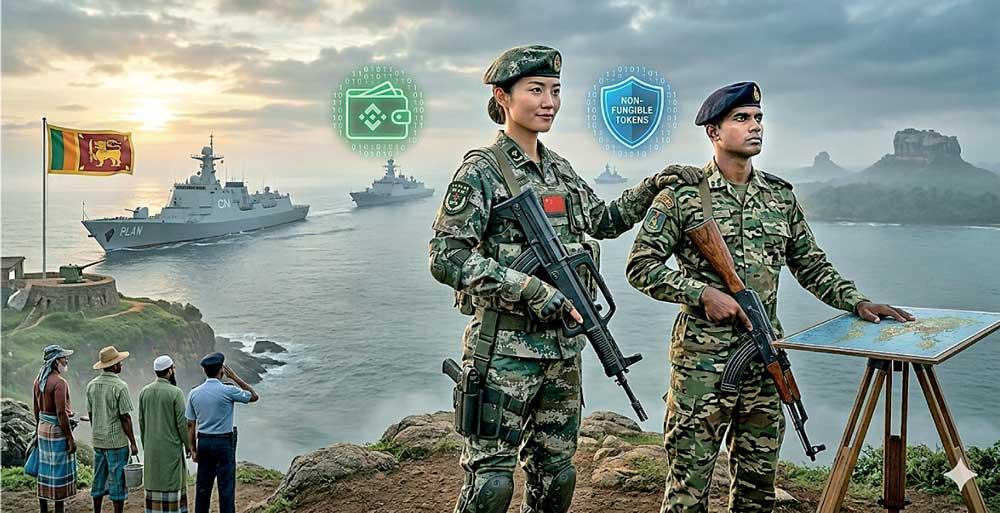
 In this analysis, Prof. Samitha Hettige explores the multifaceted requirements of a “Stable State,” emphasising that Sri Lanka’s sovereignty is increasingly challenged by global security shifts and escalating cybercrimes. While the 2022 crisis underscored the fragility of the social contract, the author argues that future stability depends on recognising the diverse contributions of the island’s multi-ethnic population and maintaining strategic international alliances. Central to this path is the “China factor”—leveraging Socialist China’s Global Security Initiative (GSI) and the Belt and Road Initiative (BRI) to shield the nation from external interference and ensure long-term economic peace.
The term ‘State’ stems from the word ‘status’ (Ref. Prince by Machiavelli). Physically a State should have a population and a territory and politically it should be sovereign and should be governed by its government.
Sri Lanka has a comparatively clear territory as it is surrounded by the Indian Ocean. Its population has elected a government to rule them and their territory. Sri Lanka’s sovereign status is accepted by other states and the United Nations.
The Sri Lankan territory was considered a paradise due to climatic conditions and still attracts tourists.
However, its territorial location resulted in Indians, Arabs, Dutch and the British manipulating the population mix. Northern and Southern Indians settled in the northern parts (before 1505), Arabs arrived for trading and settled, the Dutch imported prisoners to build canals (while suppressing uprisings in Java) and British mixed Malays as Police/Army officers and South Indians into plantations.
Those wishing for a stable State should equally recognise; the revenues generated from tourism, contributions of the plantation workers, trading by Muslims and the services of Malay security officers to stabilise the economy and the State.
Stability Challenges
In the present context Sri Lankans concerned about State stability may focus on global security and in particular the growing global scale cyber crimes.
If the territory, sovereignty, population are affected, the government may get affected de-stabilising the State. The population as a whole will suffer as in the 2022 crisis if the focus is shifted. The United States hunting Iranians in the Indian Ocean may lead to territorial influences. This in turn will affect sovereignty which is the authority of a State to self govern without external interference. Sovereignty also gives authority to the State over its population.
When managing the population, those living outside the territory (Diaspora), extension of the Overseas Citizenship of India (OCI) facility, and human rights violations in the Middle East are factors which may affect the population and government popularity as a result.
Attention on escalating cyber crime attacks is also vital for stability as the population must be expecting the State to practice internal sovereignty (to make and enforce more laws) to prevent such crimes.
It will help prevent conflicts, maintain order and provide public services to citizens.
Lessons in stabilising and the China factor
When discussing state stability, even the inner circle of former President Gotabaya (who distanced China due to immaturity) may appreciate all including the USA which had a positive view on the 2022 uprising as it democratically eradicated the negative forces (which promoted violence, dragged the economy backwards de-stabilising the state).
Although Sri Lanka is stabilising whilst facing obstacles of the conflict in the Gulf, the public must remember the possibility of unexpected attempts to stop the progress online or offline.
Historically Sri Lanka relied on China whenever it was de-stabilised. With Socialists in control, it will be much easier to learn from Socialist China and benefit from Chinese initiatives designed to usher peace and stability to the world.
The Global Security Initiative (GSI) and the Belt and Road Initiative (BRI) are two notable concepts endorsed by more than 150 countries and the UN general assembly.
Sri Lankans (especially the Sinhalese) should ask themselves how other powers would treat the Sri Lankan State if China wasn’t there.
They would find ways to better stabilise the State when answering the question.
Good friends are like stars, we don’t see them always but they are there – Chinese Proverb.
Views expressed are personal.