 Kamanthi Wickramasinghe
Reply To:
Name - Reply Comment
|
Prof. Enoka Kudavidanage
|
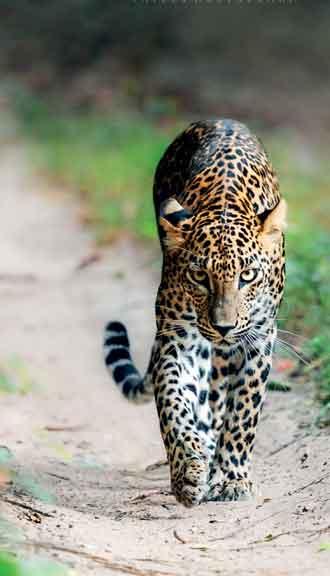
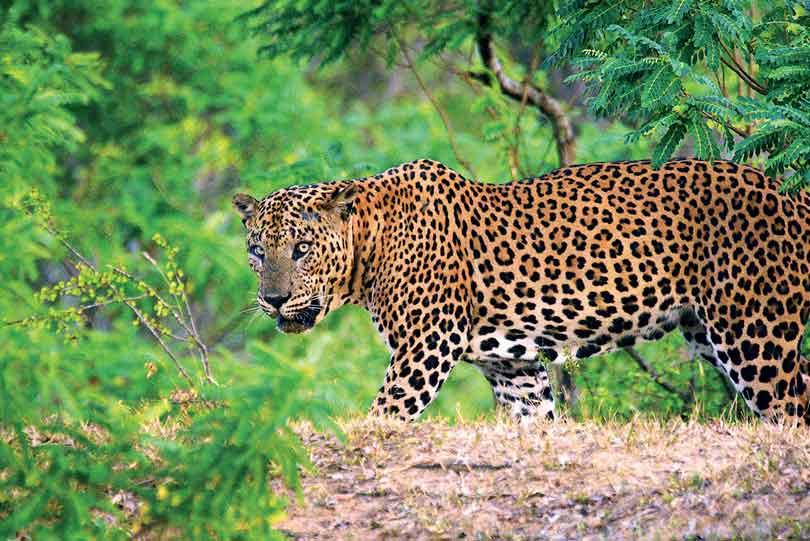
One of the most iconic species sharing the same terrain on this isle, along with humans, is the Sri Lankan Leopard (Panthera pardus kotiya). Elusive in nature and often taking cover from the human eye, these beings hold significant ecological and economic importance for the country. The Sri Lankan leopard has also been crowned (rather self-crowned itself) as the apex predator of the island’s ecosystems and is a flagship species, adored locally and internationally.
But like every other charismatic animal, the Sri Lankan leopard faced an existential threat due to the ever-expanding human population, much to the concern of conservationists. According to statistics, a total of 67 leopard deaths have been recorded from August 2022 to March 2025 despite ongoing efforts to raise awareness on coexistence.
Depending on the region, challenges faced by people vary, in addition to the anthropogenic pressures experienced by these elusive cats. Studies indicate that leopard predation on livestock resulting in retaliatory killing, release of cattle into protected areas for grazing, lack of sufficient land for cattle grazing, and a lack of proper enclosures to safeguard livestock during the night are common challenges faced by people in the dry zone. Poaching and the bushmeat trade, along with an increasing trend in poisoning, have been observed in the wet zone. On the other hand, one of the major threats to leopards in hill country includes snaring, unintentional killings by non-workers in estates and an increasing requirement for rapid response to snaring incidents. Roadkill has also been observed close to known wildlife crossing areas.
Recognising the need for conservation, the Wildlife and Nature Protection Society (WNPS), in collaboration with LOLC Holdings PLC, launched the WNPS-LOLC Multi-Regional Leopard Research and Conservation Project in mid-2022. This long-term initiative aims to study leopard populations within human-dominated landscapes and facilitate human-leopard coexistence in the said regions. The project functions upon three foundational pillars: scientific research, public awareness, and strategic partnerships for conservation. The project activities are operational through six regional centres located in Panama, Sigiriya, Kilinochchi, Kotagala, Belihuloya, and Kalawana, each overseeing research and outreach activities within key geographic areas.
From its beginning, the project has been focusing not just as a scientific study, but as a community-integrated conservation movement. Centre-based coordinators serve as the link between fieldwork, research, and local community engagement. They also engage and work closely with the officials from the Department of Wildlife Conservation (DWC), Forest Department (FD), and other entities such as Rainforest Alliance to ensure coordinated and impactful actions in their respective regions.
Over the course of three years, this project has addressed over 18,000 participants, providing them with much-needed awareness in addition to training on snare removal and tree planting.
While the first two years of the project focused on raising awareness among people in different age groups—from school children to adults, the project also aimed at a rapid response mechanism. “So when an incident is being reported and if our assistance is needed, then with the permission of DWC, we go and talk to people and see what we can do to ensure the safety of people and prevent harm to the leopard,” said Enoka Kudavidanage, Professor in Conservation Biology at the Sabaragamuwa University.
This year, the main priority of this project is research. Prof. Kudavidanage said that a huge amount of citizen science data and other information had been collected over the past two years.
This data had been collected to mark leopard distribution in the country and map risk zones, which are areas that need critical and moderate attention.
“We have also marked the presence and absence of leopards in certain areas. Now it seems important to look at this in a scientific manner. We have received camera traps as a donation, and we will set them up in several places. Right now, the priority has been given to Belihul Oya and Hill Country, but this technology would be installed in other locations as well. We are also going to set camera traps in confirmed areas. What we want to know is to confirm whether the animal is there, and if so, at what time does it go around, what is the behaviour, prey base available, threats and other information. Other research, such as scat analysis to analyse what they are feeding on, and other little research studies are also being done. We have published several abstracts, and two research papers are under review at the moment. We will be intensifying the research and having more collaborations with universities. We already have a collaboration with Sabaragamuwa University, and two post-graduate studies are being completed,” she added.
In addition, a couple of new programmes have also been lined up to explore technological applications in conservation and specific capacity-building programmes for children in selected schools.
When asked if leopards have been found in previously unknown areas, Prof. Kudavidanage said that there have been recordings in a couple of areas which were not marked during the initial Red Listing process.
Responding to a query on the response from people, she said that people are changing. “It’s easy to ask people to coexist, but it takes time. However, we observe a change. People would call us and give us information. Sometimes even the most classified information would be shared with us, and it shows that people trust us. We also observe a change in children after the school programmes, especially in the way they communicate with their families, etc. We notice changing perceptions, but it’s a slow journey. So yes, we see that this is working,” she said in conclusion.