 Kamanthi Wickramasinghe

Reply To:
Name - Reply Comment
|
Private Bus Owners Association |
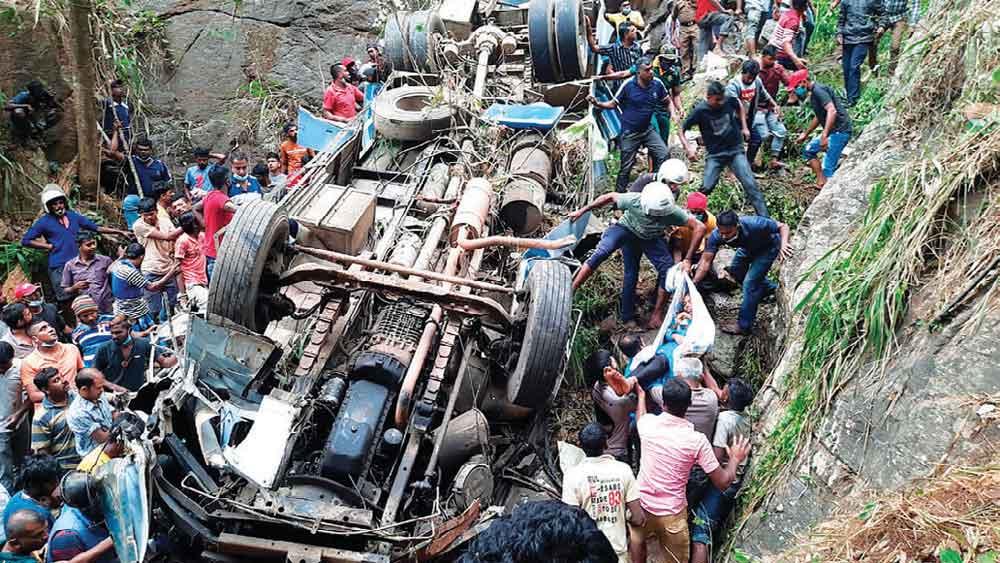
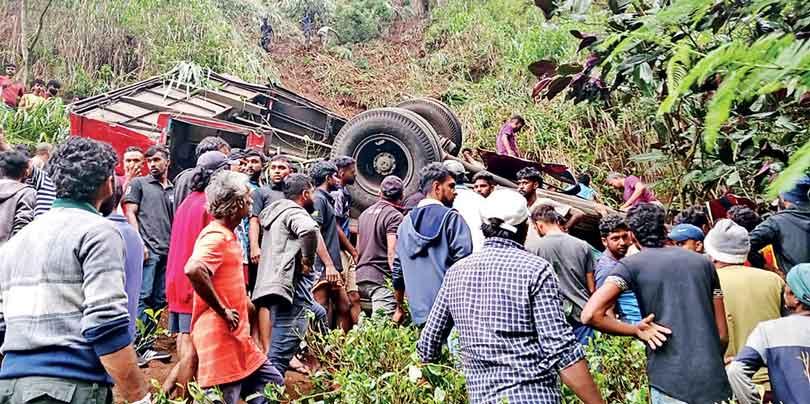
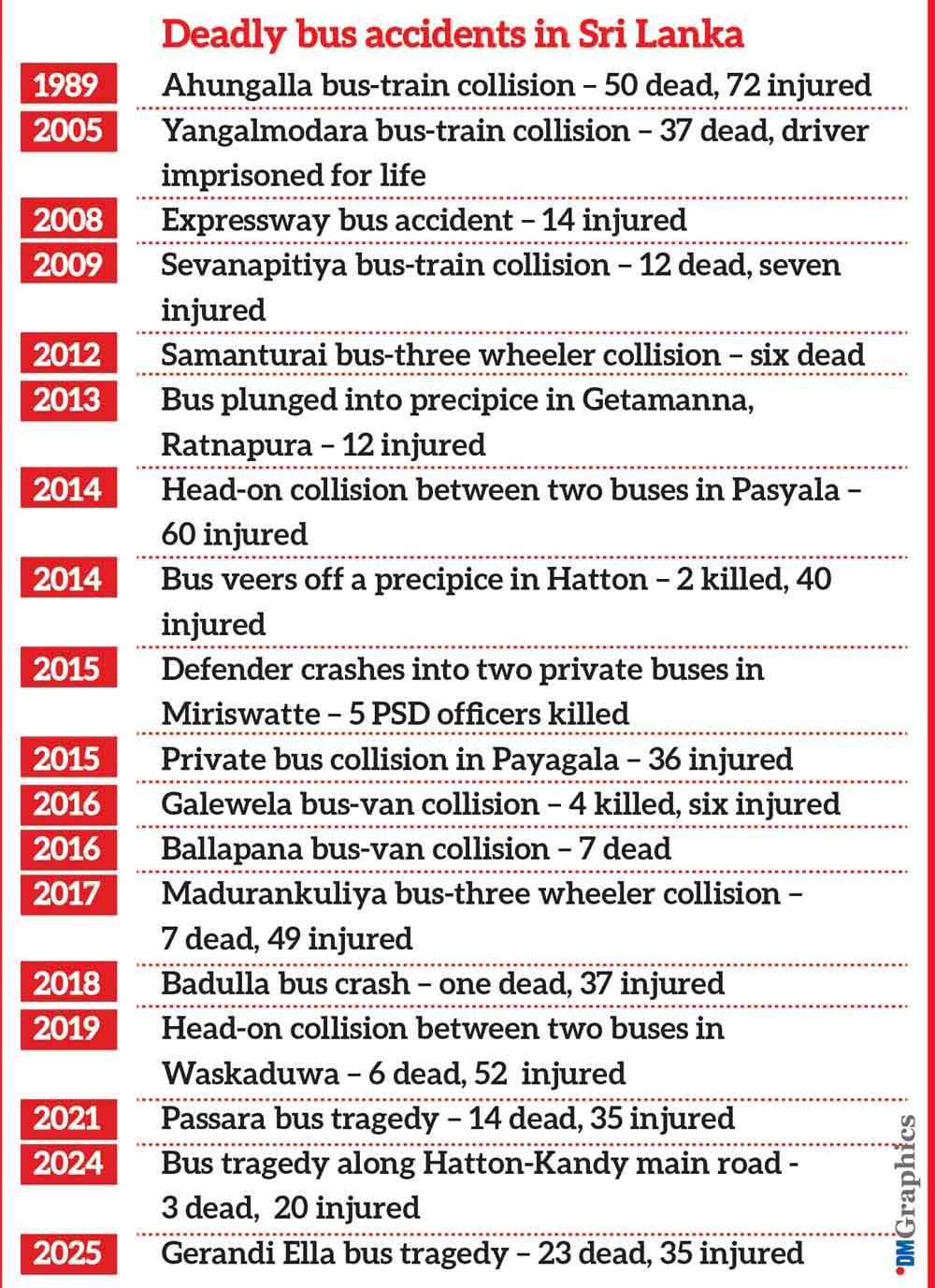
Hopping aboard a bus to travel to a destination may not be the best option for Sri Lankan citizens anymore. Reckless driving coupled by disrespect towards passengers, racing with other buses to reach their destinations, overloading, uncleanliness and a gamut of other issues have discouraged citizens from using public transport when commuting. The fatal bus tragedy at Gerandi Ella, Kotmale is another example of poor government-run public transportation services. While this is not the first instance that a fatal bus crash claimed the lives of many passengers, it is clear that successive governments have been unable to resolve this public transportation crisis that continues to endanger the lives of people by the day.
Survivor’s recollection of the fatal Kotmale bus accident
Janith Shyaminda from Welimada had been a regular passenger in the bus that plied the Kataragama-Kurunegala route for about one and a half years. As a student of the Agriculture Faculty of the Wayamba University, his only option had been to travel in this bus in order to reach the university on time. On the day of the fatal accident, Janith had boarded the already overcrowded bus as he had to sit for the plant nutrients and fertilizer management examination the next day. But despite reaching the Welimada bus stand by 2.00 am the bus hadn’t arrived on time. Janith was used to standing inside the bus for a long period and falling asleep in a corner.
“After passing Nuwara Eliya town I had fallen asleep, but I had a strange feeling while passing the slopes and bends that followed,” he wrote on his Facebook account. “I woke up when people started screaming and that was when I realised that the bus was veering off a steep slope! The bus initially turned slowly towards the slope and in less than a minute it went crashing downwards. The only thought that crossed my mind was to give up hopes on life! Fortunately or otherwise I realised that I had survived. I thought I had injured myself but all my body parts were in tact. Next to me, a boy was screaming in pain as a steel pole had pierced through his left foot. The body of another individual, who was standing next to me, was seen at a distance. Even though the villagers rushed to scene, it was difficult for them to reach the location with the massive undergrowth. But I have to mention the support given by people of the village near Gerandi Ella because they treated us like their own family,” he added.
During the incident, Janith lost his Samsung tablet which was inside a black HP bag and an assignment that he had to submit to the university. He urges the public to assist him in recovering these items in case they are found.
Speaking to the Daily Mirror, Janith said that it is a miracle that he survived even though he had sustained minor injuries to his spine, hands and legs.
Passenger concerns
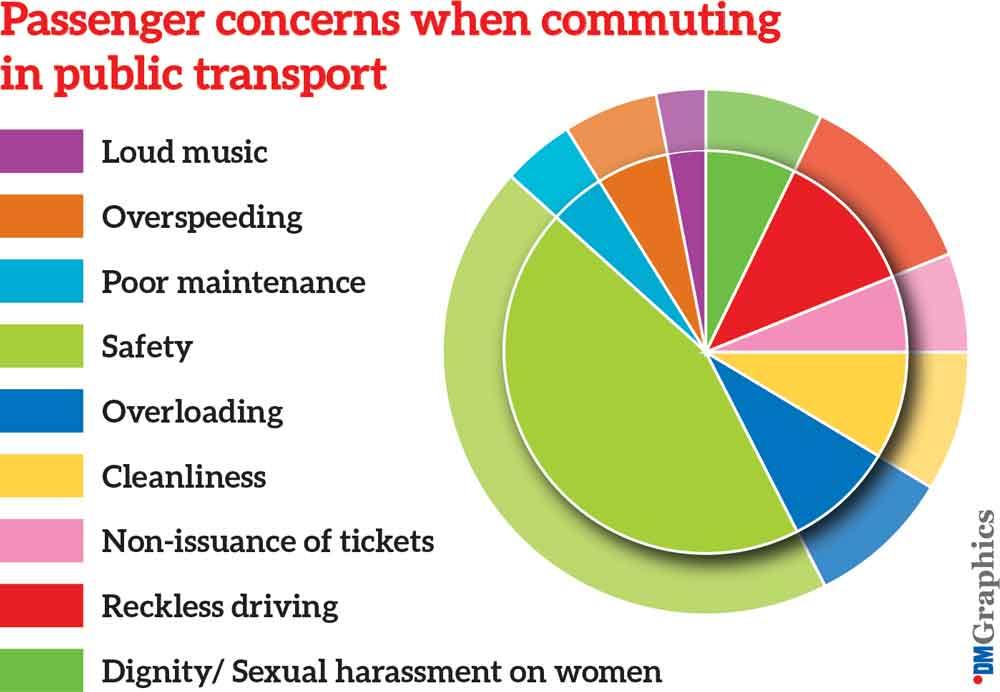
The Daily Mirror conducted a social media survey to find out the biggest concerns for people when commuting by public transport. Here are a few selected comments out of over 300 responses.
“Reasons are plenty; disregard for road rules and traffic regulations, excessive speed, driver possibly being under the influence of alcohol/drugs, overcrowding, poor vehicle maintenance, insanitary conditions, sexual harassment and not being on schedule,” complained Anoushka Ondaatje
“Safety should be the highest priority in public transport, with regular safety checks. This includes checking, cleanliness and comfortable seating. Special driver licences should be issued for public transport. Issue short-term route permits with regular reviews for renewal. Passenger insurance schemes should be implemented at the cost of the operator. There has to be a strict ban imposed on three wheelers and buses that race on the road,” said Sujeevan Sriskanthan.
According to Nilushi Dissanayake, her biggest concern when commuting in public transport has been the speed with which they drive; especially the long-distance buses because they endanger the lives of others.
“I’ve seen older passengers finding it really hard to climb up and down the steps. Private busses are always in a rush to compete and conductors yell at commuters. It’s really unpleasant and it is an absolute health hazard,” said Kasun Karunatilake.
“Time keepers are not doing a proper job. So buses have to race. The first thing that needs to be done is to implement a proper timetable and a city-to-city time frame. If drivers violate that rule they could be fined, suspended or terminated from service,” said Nadeesh Wickramasundara
“Lack of leg space! They have put the seats closer to one another in order to add a few more rows, making it harder for people above 5’5” to sit,” observed Poorni Dias
Kushan Ranasinghe suggested that bus licences should not be issued to drivers who only have a heavy vehicle licence. “Introduce new criteria and comprehensive training programmes for bus drivers. Ensure licences are not granted to irresponsible individuals. The role of a bus driver should carry a high level of responsibility and professionalism,” he added.
Speaking about her experiences, Kithmi Pathirana spoke about the fear of being sexually assaulted by men. “My first experience of this was in a bus and I was as young as 13 years. Secondly, the drivers and conductors’ lack of concern for passenger safety. They’re taking off when you have barely stepped in/out of the bus. Speeding because they’re in a rush to get more passengers before the other bus. Thirdly, overloading the bus with passengers leads to hygiene issues. It also opens a window for men who prey on women to sexually assault them,” she said.
The biggest concern for people is safety, followed by the issue of overcrowding, loud music, cleanliness, not giving the balance money, non-issuance of tickets mainly in private buses, the race to reach a destination before the other bus traveling along the same route, disrespect towards citizens, taking off before a passenger takes a seat or have gotten off a bus among others. This writer has observed instances when the bell or alarm system to indicate that a passenger is getting off either doesn’t exist or doesn’t work; thereby forcing the commuter to squeeze through the crowd to inform the driver or the conductor who would often behave as if they haven’t heard you.
SLTB and NTC at loggerheads?
Ensuring a quality, cost effective and safe integrated transport system and services that will provide for the socio-economic development across the country and the different mobility requirements of every individual and corporate citizen of Sri Lanka is the comprehensive vision statement of the National Transport Commission (NTC). But the Daily Mirror learned that the Ceylon Transport Board or rather the Sri Lanka Transport Board does a bare minimum in adhering with rules and regulations issued by the NTC.
Some of the regulations include drivers being advised to take 20-30 minute breaks after traveling every four and a half hours, changing drivers after traveling for nine hours and so on. However, a senior official at the NTC who spoke on conditions of anonymity said that SLTB drivers don’t purchase a corporate permit because then they are under obligation to adhere to these regulations. “If they have this permit they can’t travel according to their own will. SLTB buses don’t have proper GPS systems, they don’t change drivers after a long travel period and they don’t upgrade facilities,” the official said.
When traveling over long distances it is important that the driver gets adequate rest. But it had been revealed that the driver who drove the bus plying on the Kataragama-Kurunegala route had been doing a day job as a tipper driver. “Therefore he doesn’t have enough time to sleep. The bus is not as old as some other buses which have been in service for over 15 years. Sometimes you feel overconfident about driving when you have stressed yourself too much. This accident could have been prevented if they adhered to regulations. On the other hand buses that come under the purview of the NTC are sent for annual inspections. This way minor and major errors could be detected and rectified to ensure the safety of passengers,” the official underscored.
Blame game
Following the fatal accident on Sunday (May 11), the government took immediate steps to introduce two buses for long-distance journeys exceeding two hours. These buses would be deployed from two different depots. SLTB Chairman Jeewaka Purasinghe said that the above safety measures have been implemented to reduce driver fatigue and enhance better oversight. In addition a five member committee had been appointed to investigate into the cause of the accident, headed by Senior Deputy Inspector General of Police Ajith Rohana. The final report of this Committee would be submitted after receiving several key documents; such as the motor vehicle examiner’s report and the post-mortem report of the deceased driver with other key scientific findings.
However, Private Bus Owners Association President Gemunu Wijeratne claimed that the SLTB and the government should take complete responsibility of the recent tragedy. He said that issuing compensation is not a solution. “Reckless driving is one of the main causes for many accidents over the recent past. Private buses are being regulated while long distance buses are being regulated under the NTC. Provincial buses are being regulated by respective authorities. SLTB Act indicates that they should consult from regulating bodies prior to expediting their journey. There’s a Supreme Court decision 8/2007 of 2012 March 20 which indicates that proper timetables should be maintained with the consultation of NTC. But 13 years have elapsed and there are no timetables being made. They are traveling along their own routes endangering the lives of people,” he claimed.
Wijeratne further said that appointing committees won’t be an effective solution and that the government is following the same old strategy. He said that the SLTB cannot make their own timetables and operate independently.