Reply To:
Name - Reply Comment
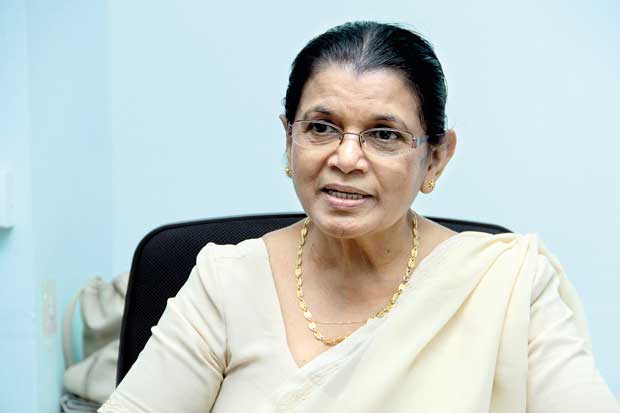 - Nelum Senadira, Principal, Musaeus College
The New Ascendant to the Throne of the Musaeus Monarchy talks about her long career in the teaching profession
With a history of over 125 years that lie behind the gates of Musaeus College-the oldest Buddhist girls school in the country- the halls of the school have been walked on by many a principal that helped bring the school to its standing glory today. The principals of Musaeus College hail a line of strong leadership figures, all of whom were great women that governed the school wisely. Nelum Senadira, the most recent ascendant to the school’s top seat as the new principal, prepares to open a new chapter in the history of the school. Possessing a strong willed character, a charismatic personality and a speech that reveals ‘a can-do’ spirit, Senadira stands worthy of her post and proves that there is no safer pair of hands than hers to be entrusted with the lives of 6500 young girls.Following are excerpts of an interview done with her.
QAs the principal of Musaeus College, you will be devoting your time to ensure that the students receive an excellent experience in education. How were you influenced in education as a student?
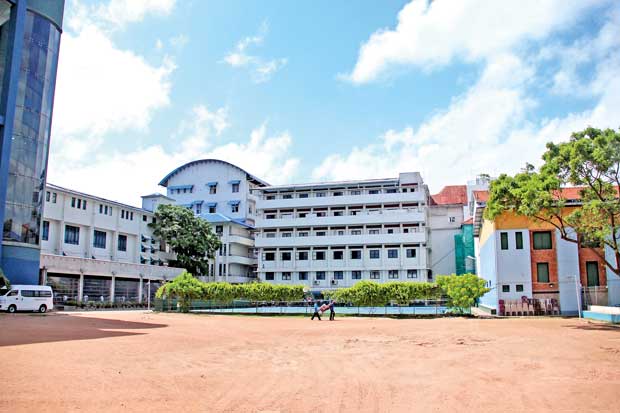
“I have a family history with Musaeus College. My mother was both a student and a teacher at  Musaeus College. Then I followed in her footsteps becoming a student and later on, a teacher at Musaeus. My daughters studied here too. So this became a passion for me. My sister and I studied here at Musaeus College since nursery, completing our primary education here. Then I pursued my higher education from my OLs onwards at Devi Balika. Dr. Wimala De Silva, the founding Principal of Devi Balika, contacted and invited my parents to enroll me and my sister in the school. Those days, Devi Balika was just getting started. I don’t regret that too because there I got an opportunity to cut my teeth into leadership skills as I became the school’s head girl during my final year. My school days were indeed spent as memorable and happy years of my life.”
The 16 years that I was away from Musaeus College, helped me to gather a lot of experience. Had I only remained at Musaeus, I wouldn’t have been able to broaden my horizons. During my time away I visited many countries and was able to have a glimpse of the international education system and standards
QHow did your professional career commence?
“After ALs I set off to get my academic and professional qualifications after which I returned to school as a teacher. That was way back in 1971. In that role I was then gradually a grade coordinator, a sectional head and then made the grade as vice principal in the late 1990s. Principal at that time was one Mrs. Chitra Abayaratna. After her it was Mrs. Pilapitiya who took on the role of Principal. Later on for personal reasons, I took some time off and stepped away. By that time I had served the school for 16 years. During the time I was away, I worked as the Education USA Advisor for the Fulbright Commission which actually opened up a lot of vistas for me. I worked very closely with secondary school students, university students and even graduates. I developed such close associations with them that I became their ‘Aunty Nelum’. I spent 13 years there and it was truly an eye-opener for me. But all good things must come to an end, so it was time for me to retire from that job because the embassy had a retirement age. Then I was asked to take charge of the Gateway Graduate School. I worked there as the head, working closely with all the 4 Gateway International Schools. The 16 years that I was away from Musaeus College, helped me to gather a lot of experience. Had I only remained at Musaeus, I wouldn’t have been able to broaden my horizons. During my time away I visited many countries and was able to have a glimpse of the international education system and standards. I met people and developed contacts. I also gained an international perspective. As time passed, the Chairman of Musaeus College contacted and invited me to return to the school as its principal. Finally I took up the offer. I started work, last May.”
QAs a school principal, you appear as a role model in the eyes of many. Who did you look up to when you were growing up?
“Earlier in my life, during my AL years at Devi Balika, Dr. Wimala De Silva became my role model. Being the head girl, I was able to work very closely with her. She was a strict disciplinarian and an absolutely good administrator. Later on, Mrs. Chithra Abayaratna became another great personality that I looked up to. She was the Principal of Musaeus College at the time when I was working there as vice principal. I worked with her as a grade coordinator as well. I admired her a lot. She taught us how to handle work in a very systemic manner.”
I understood that they hadn’t even decided about their future plans and goals. They were merely floating about and just jump the hurdles when they get to them. So I also organized a career guidance program for
the students
QYour work experiences have exposed you to the international curriculum too. In comparison, what are your thoughts on the Sri Lankan education system?
“Over my 30 years of teaching, I have observed that the local education system has gotten complicated with time. I too was a product of the Sri Lankan education system. Our local system has a great deal of breadth and depth which I feel could be made less complicated. In my opinion the Sri Lankan syllabus could be made a little less in content. Local examinations are tough. Today exams have become the driving force in the lives of students in deciding their future and creating an atmosphere of stress and competition. That’s why the tuition trend is predominantly prevalent in the country now. The Sri Lankan system is such that it’s based on competition. In addition to OLs and ALs, the grade 5 Scholarship has become yet another competitive exam. So the children are geared for competition from a young age. The grade 5 Scholarship started off as one way of getting the really deserving child to a school along with hostel facilities and an opportunity to pursue education. But today competition has become the driving force to succeed at these exams.”
QThe scenario of ‘all work and no play, makes Jack a dull boy’ is very much prevalent in today’s society with exam competition rising sky high. Sports and extra-curricular activities often take a back seat to Academics. How do you plan to ensure a stable equilibrium between the two?
“It is quite true that nowadays students are more academically inclined due to the extreme exam competition that exists. This leaves no time for students to engage in sports and extra-curricular activities. As a school, we provide an extensive variety of sports, clubs and societies for the students. These facilities are offered free to all students, encouraging them to try out whatever activity they are interested in. This also provides them with an opportunity to try out and explore new experiences and broaden their interests. Students who sit for their OLs attend school right after to commence their ALs which is jumping from one stress to another. This was brought to my attention by a parent. I thought about it and arranged a ‘Skills Acquisition Program’ for the students who were involved in non-academic activities for 6 days. It was a trial program which included activities such as physical training, counseling seminars, meditation sessions, grooming segments, etiquette programs, arts, crafts, dramas, debates and also included seminars on family planning. The highlight of the program was the segment which dealt with ‘handling social media safely’. Speaking to students, I understood that they hadn’t even decided about their future plans and goals. They were merely floating about and just jump the hurdles when they get to them. So I also organized a career guidance program for the students. All in all, the trial program was a success and received a lot of positive feedback. I hope to implement such programs in the future too which give students the opportunity to engage in something that’s not academic, but helps the students to develop skills which they may require in the future.”
Over my 30 years of teaching, I have observed that the local education system has gotten complicated with time. I too was a product of the Sri Lankan education system. Our local system has a great deal of breadth and depth which I feel could be made less complicated
QCompared to the past, the role that women bear at present is much more complicated. They have been given more importance and hold bigger positions than in the by-gone days. What are your thoughts on the roles women bear today?
“Yes, more women are exemplified as leadership figures in top most positions and bear a lot of importance in society. But back then, did women have the opportunity to shine out? There were many great women who existed in the past who performed their tasks in their own silent ways. Today many platforms are available for women to be recognized with more exposure, media, so more people recognize their skills and are given more importance than back in the day, but I believe that the roles that we bear as women haven’t changed over the course of time. Women who have found their feet in society are equally dutiful towards their families not having forgotten their obligations to their homes.”
QThe exemplification of women today has added more weight to your responsibility as Principal of a school with over 6500 girls. Do you find it challenging?
“I don’t look at it as a challenge. It has always been my passion to help mold young minds and I look at each one of the students as my own. I am at that age where I am mature enough to have the ability to do that. Of course, my religion, Buddhism, certainly has helped me empathize when with the children, so I am able to reach out to them. In this short time as principal, I know that I have touched a few lives. You really know you have succeeded in doing your job when your past pupils come up to you and say “I am this today because of you.” Some may say few things, but the message reaches the heart and I feel happy knowing that I am doing my job right.”
My school days were indeed spent as memorable and happy years of my life
QSocial media is becoming a viral trend and is gradually becoming incorporated into young lives. This could lead to interference in academic performances and affect student discipline. How do you plan to approach this issue?
“I have taken steps towards raising awareness among the students. I started out a program labeled ‘handling social media safely’ which I previously mentioned, where the students are made aware of the lurking dangers of social media, so they can learn to use social media safely. I am also making arrangements to hold sessions for the teachers, so they are too made aware of this topic and will be able to counsel the children tactfully. We can’t condemn social media as this is what surrounds young lives today and we can’t stop technology and progression. In fact I feel it is essential to get updated and introduce technology into classrooms and being open minded about new teaching techniques. What we should do is talk about it in a positive and constructive manner all the while making sure that the students are aware of the dangers and how to stay safe when dealing with social media. This is a matter that should be handled sensibly and with sensitivity.”
QOn a final note, what would you choose to offer as a few words of wisdom to the student population of the country?
“My advice is ‘decide for yourselves and be responsible for your decisions’. Having spent over 30 years in the field of teaching, a prominent issue that I have witnessed over the years is that it has become a common situation where children often blame parents for the wrong choices made in their academic future. To avoid such instances it is necessary for the child and parent to communicate openly. The attitude of parents has to change. Parents should co-operate and respect the child’s opinion as well. They should provide the support, so that children find the confidence in making their choices. The children have to heed their parent’s advice too and should research and explore all options and finally choose their path for themselves without forced external influences. Once their decision is made, the child should act responsibly in the path taken.”
Pic by Damith Wickramasinghe