Reply To:
Name - Reply Comment
 |
|
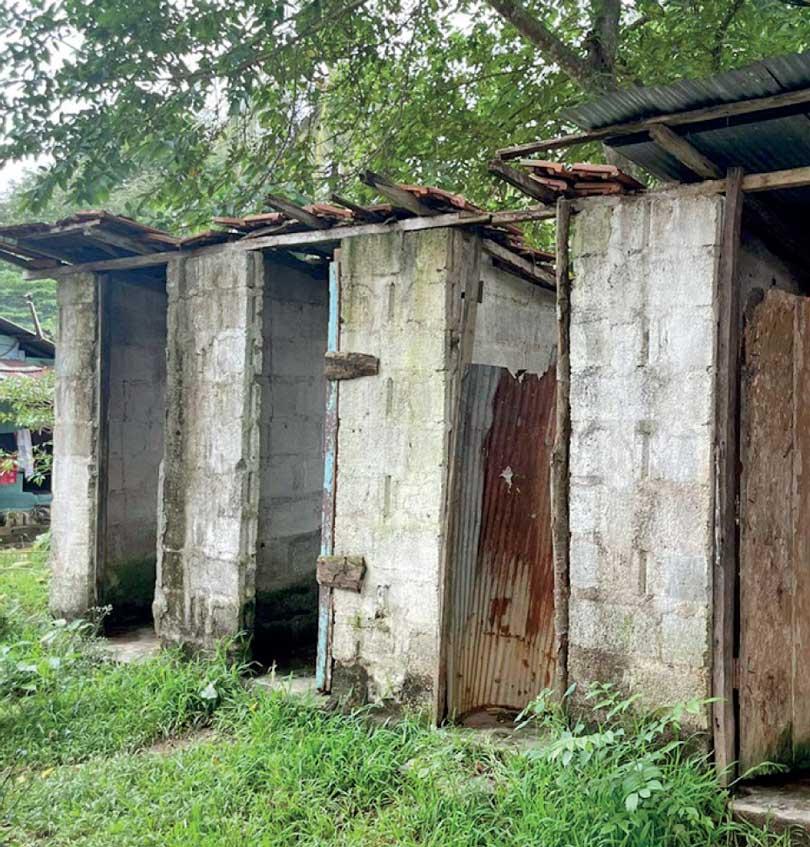 |
| Construction | Line rooms (outside) | Present toilets |
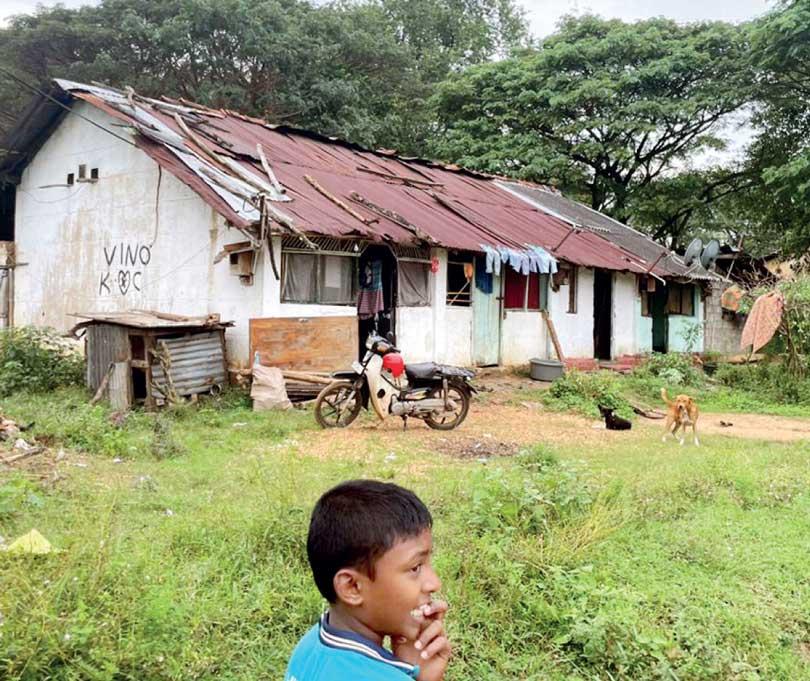
The community had never enjoyed land rights. Despite the proximity to main road, they live in slave like conditions, in dilapidated line rooms. About 5-9 adults and children live in some line rooms, allowing no space for privacy and intimacy
There are about 40 school going children in the estate. They have to travel several kilometres to get to the nearest school. Due to limited earnings of parents, general tendency is for children to drop out of school. The first student to sit for the Advanced Level examination was in 2023
Batalegoda is a private rubber estate of about 200 acres situated in the Ibbagamuwa Divisional Secretariat of the Kurunegela district. Its easily accessible by vehicle from the Dambulla – Kurunegela A6 road,though public transport from the main road is limited. Five generations of Malaiyaha Tamils have been living and working there, till now.
Land and Housing rights
The community had never enjoyed land rights. Despite the proximity to main road, they live in slave like conditions, in dilapidated line rooms. About 5-9 adults and children live in some line rooms, allowing no space for privacy and intimacy. Some family members have to go out when others are changing clothes. None of the workers have individual addresses and all letters are sent to the estate.
There are only eight common toilets. They don’t have running water and they are dilapidated. Some toilets are very far from the line rooms, making them difficult to access in the night or during rain. There are no bathrooms and bathing have to be in open or partially covered temporary basic structures. Often there is inadequate water in the wells and men, women and children used to go to the nearby river (Deduru Oya) for bathing. But as some parts of the estate with easy access to the river have been sold, they now have to walk about 5 kilometres to bath in the river.
Education, Health and Worker’s rights
There is no medical facility in the estate and they have to go to Pangolla or Rideegama hospitals, which are several kilometres away. The local health officers do not visit regularly and visits are often after several requests by workers.
There are about 40 school going children in the estate. They have to travel several kilometres to get to the nearest school. Due to limited earnings of parents, general tendency is for children to drop out of school. The first student to sit for the Advanced Level examination was in 2023. No one from the community has attended university.
The workers were not getting a “paysheet” and were not aware of details of the payment they get and deductions. No Employers Provident Fund (EPF)statements were received between 2020 to mid-2023. EPF statements between 2000 and 2019 indicated very low and irregular EPF contributions, which is usually 20% of the monthly salary. EPF contributions were zero for some months, Rs. 385 in May 2019, Rs. 952 in 2007 and Rs. 1,155 for the six months of January – June 2018. A female owner who had retired after about 40 years work, had received only about Rs. 200,000.
Struggles, reprisals, resistance
The minimum improvements and developments to the living facilities and infrastructure has been made through community’s own efforts and their own money. In the past, when the community tried to do small extensions or improvements to their housing facilities, they were met with opposition from the estate management. But the community’s determination and courage has enabled them to proceed with some initiatives. For example, the community built a Hindu temple, contributing from their meagre earnings, raising funds from public and contributing their labour in the evening. Electricity was also obtained few years ago by the community themselves based on an agreement to pay the electricity board monthly. The local council (Pradeshiya Saba) had built a gravel road from the entrance towards the area where most of the line rooms are located. The land where the cemetery was located has been sold and this has prevented the community from paying respect to their dead ancestors.
In 2023,community members had put up fences demarcating about 20 perches (1/8th of an acre) for each family, in an unused area of the estate. The owners had refused to visit and meet the community for many years to discuss the problems faced by the community, but had suddenly rushed to the estate on 12th August 2023 and threatened the community they will not be given work in the estate and will be evicted from their line rooms if they do not remove the fences within three days. The community continued their resistance and started to put up basic huts and plant trees in plots they had demarcated.
The Assistant Superintendent of the estate had filed a complaint with the police accusing 6 workers, including a woman, of cleaning parts of the estate. The workers had accepted they had cleaned parts of the estate and explained that the terrible living conditions and non-response of the estate management to their long-standing problems had compelled them to resort to this. Later, the owners of the estate had filed a case in Kurungela District court accusing the same six workers of cleaning the estate without permission and harming cultivation. They had requested the court to issue interim orders to stop the cleaning, harming of cultivation and erection of any buildings. But no such order has been issued.
The threats by the owners coincided with the last day of the historic two week walk from Talaimannar to Matale by Malaiyaha Tamil community to assert their rights, 200 years after they were brought by British to work in estates in slave like conditions. The demands by those marching included right to land and housing, affirmative action on education, health and living wage, decent work with legal protections. Most of those involved in the walk were from tea estates, but workers from Batalegodarubber estate had also participated in the walk.
Around this time, the UN Special Rapportuer on Contemporary forms of Slavery, who had visited Sri Lanka in 2021, urged the government to ensure access to land, housing education and decent work for the Malaiyaha Tamil community.
Fruits of struggle
Around this time, the struggle and resistance of the community started to receive media coverageand support from activists in Kurunegala and Colombo.
The Department of Labour visited the estate and workers received some of their dues which had been long pending.
The owners started to engage in dialogue with the community with the support a local organisation. The court case was withdrawn. A historic agreement was signed by the owners with the community, agreeing to grant just over 9 perches of land to each of 28 families, as “non-revokable gift deeds”. This was a major achievement, with community getting written legal assurance for land rights after 200 years.
The agreement also states that the owners have no objection to the community worshipping at the Hindu temple of the estate which is situated in part of the estate that’s outside the 28 plots of lands given to the community. The owners have also agreed for the temple land to be used by the community for religious activities, activities of the temple association, engagements with state institutions, activities of children, youth, women, elderly, sports and other welfare activities.
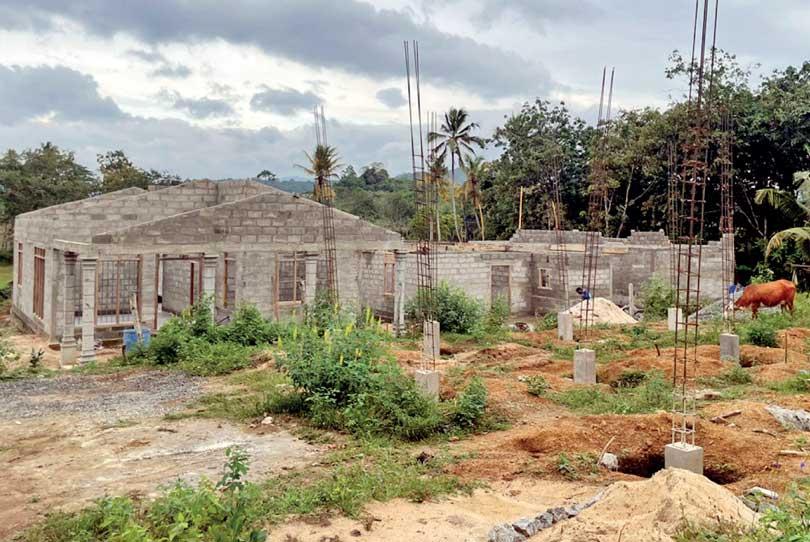
After land rights were assured, next challenge was housing. The community was fortunate to have a generous NGO come forward to fund the basic construction of houses, and each family had an opportunity to come up with their own design within a limited budget allocated by the donor. The amount provided by the donor was less than the estimates, and was sufficient to build a basic house to move in and live. Some families had agreed to contribute some funds from their savings or loans if their designs went beyond amount the donor could contribute. Most important was that each family will have their own house on their own land.
Challenges and inspirations
When I last visited the community on 23rd January 2025, constructions were going on, but houses were not in a condition that’s suitable for them to move in. Buildings were in various stages of being complete. Roofs, doors, windows, toilets, water and electricity facilities were still to be installed. The July 2024 agreement gave the community 6 months to vacate the existing line rooms, and move into new lands or alternative places outside the estate and this deadline passed last month. The community hopes to move in to houses later this month, when basic structures and facilities are in place, even if constructions may not be complete. There is eagerness to move into a house of their own on their own land.
Despite the progress and achievements, practical challenges remain. Even after they move into their own house on a piece of land they own, additional funds will be required to complete the houses, dig a well and put in place water connections to each house and do up the internal access roads to the houses.
After a fundamental rights case was filed by a member of Malaiyaha community, the previous government had committed to provide addresses for all, and when the community moves into their new houses in their lands, they will expect address of their own too. They had agreed to name their village as “Anandapuram”, loosely meaning a town of joy.
Since the commencement of their struggle for land in 2023, the community had a steady stream of visitors to learn about their struggles and many also became their supporters. A social work student who did field work in the estate did fund raising and helped construct a water tank near the Hindu temple, the most important common community space. Last year, a youth group following a human rights training also visited the estate to learn about community struggles, andfew months later, two of them turned up with a significant donation, with contributions from both Sri Lanka and South Korea. This was used as seed money for a community fund for common needs.
The Batalegoda community has suffered much and engaged in determined and defiant struggle for their rights and dignity. They are now on the threshold of a more dignified future, and in particular with right to land and adequate housing. It is the responsibility of the government to ensure this promise of a new life will become a reality. The support of others, such youth I had mentioned above, media etc., will also contribute towards this.
I hope the struggle and resistance of the Batalegoda community will inspire many others to struggle for right to land, housing and dignified life.