AI SUMMARY GENERATED ONLY FROM THIS ARTICLE'S TEXT.
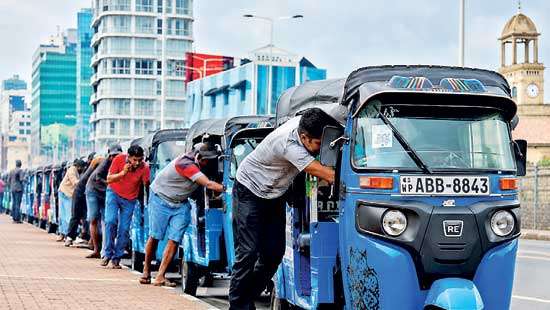
World Tourism day is celebrated on September 27 every year. In 1979 United Nations World Tourism Organization (UNWTO) in its third session (Terremolinos, Spain, September 1979) decided to establish World Tourism Day. This is a very important milestone in the tourism sector.
The main objective of this day is to make people aware of the tourism industry and observe its impact on every field in the society such as culture, economy and religion. And this is a very good opportunity to reveal how tourism caters and serves people in the world for their well being.
Last year alone, 1.235 mn travellers crossed international borders
Tourism generates close to 12% of world GDP
The Secretory General of the World Tourism Organization (UNWTO) Taleb Rifari in his official message states, “Tourism is today the 3rd largest export industry in the world after chemicals and fuels. It brings hope, prosperity and understanding to so many lives and livelihoods all over the world”.
Last year alone, 1.235 million travellers crossed international borders, which is significant given that this was achieved in one single year. By 2030 this figure is expected to reach 1.8 billion.
The question posed, as we celebrate World Tourism Day 2017, is how we can enable this powerful global transformative force-these 1.8 billion opportunities- make this world a better place and to advance sustainable development in all its five (5) pillars.
1.Economic: Yielding inclusive growth
2. Social: Bringing decent jobs and empowering communities
3. Environmental:Preserving and enriching the environmental and climate change
4.Cultural: Celebrating and preserving diversity, identify andtangible and intangible culture
5. Peace: As an essential perquisite for development and progress.
The UN General Assembly declared 2017 as the ‘International Year of Tourism for Development’.
This is a unique opportunity for all of us to come together to promote travel as a contributor to tourism. This should be done as a grand 21st Century human activity, to build a better future for people, the planet, peace and prosperity.
According to the World Tourism Organization (UNWTO), tourist is defined as the “temporary, short term movement of people to destinations outside the places where they normally live and work, and their activities during the stay at these destinations”. It is also defined as “the sum of the phenomena and relationship arising from the travel and stay of non residents, in so far as they don’t lead to permanent residence and aren’t connected with any earning activity “ (Hunziker and KrapF; 1941)
When considering archeology there are many definitions. According to Glyn Daniel, Archeology is a subject where revealing man’s history depends on the material evidence (Artifacts, monuments). Moreover, at present, most of the eminent archeologists agreed that archeology is a science which studies ancestors’ behavior, there material culture and their environment.
According to the World Tourism Organization (UNWTO), tourist is defined as the “temporary, short term movement of people to destinations outside the places where they normally live and work, and their activities during the stay at these destinations”.
It is a well-known fact that for a long period of time Sri Lanka has been a place of attraction for tourists from all parts of the world. Especially it is very popular for the Ptolemi’s map of Sri Lanka and the visiting of Arabic trading community. Sri Lanka was named as ‘serandib’. And there is also Fahien’s visit (5th century AD) to Sri Lanka giving some of the examples for Sri Lanka being on the map of tourism for a many centuries.
There are literary and clear archeological evidences to prove that trading was in operation in ancient Sri Lanka.
One of the ancient chronicles of India “ Divyavadanaya “ (5-6 century BC) mentioned about trade activities in ancient Sri Lanka. A Brahmi inscription, found at Duwegala in Polonnaruwa, has a picture of a sailing ship. Another Brahmi inscription at Bowattegala reveals the offering of a cave for the use of the Sanga (priests) by members of one of the foreign (Kaboja) trading companies. A trilingual inscription found in Galle (Chinese, Persian and Tamil (15th century AD) one C.W.Codrington has written that Roman coins were found along the coastal boarder of the southern province around Balapitiya. The records of H.C.P. Bell revealed that a fair number of Roman coins was found from the river bed of the ‘Madu ganga’. Quite a large number of Roman coins was found recently at Baragama in Hambantota District. Again there were many Chinese pottery found in various ancient ports and inland parts of Sri Lanka. According to the above examples it is very clear that people of various countries were aware of Sri Lanka’s trading activities.
The historical identity of a country is enhanced by its archeological heritage. One must consider not only the above mentioned artifacts, but also the monuments as well. There are already two thousand five hundred monuments in Sri Lanka. There are some monuments found from archeological explorations done by the Department of Archeology in the Northern and Eastern Provinces after the thirty-year civil war.
Because of the rich archeological sites and monuments UNESCO listed Eight world heritage sites in Sri Lanka. Six out of the eight are in Anuradhapura, Polonnaruwa, Sigiriya, Dambulla, Kandy and Galle Fort. The other two are Sinharaja and Horton Plains given their significant environmental values.
Tourism is arguably the largest industry in the world generating 250 million jobs and contributing close to 12% of world GDP. Within this tourism sector, “Cultural Tourism” is one of the fastest expanding segments.
Furthermore, it has become clear over the last few years that it is the developing world which takes an increasingly large portion of this expansion. Increasingly developing countries will feel the impact of tourism. As practiced by various countries in the world archaeological heritage could be launched as one of the main assets of Sri Lanka as well.
In this process the Department of Archeology, Central Cultural Fund, National Museum and allied other institutions, Ministry of Tourism and relevant other institutions and experts of the industry have to play a vital role. A combined operation should be introduced and promoted in collaboration with these authorities.
Comments - 0
Comments - Archaeology has enhanced the value of Sri Lanka’s tourism
222
Add comment
Comments will be edited (grammar, spelling and slang) and authorized at the discretion of Daily Mirror online. The website also has the right not to publish selected comments.



 World Tourism day is celebrated on September 27 every year. In 1979 United Nations World Tourism Organization (UNWTO) in its third session (Terremolinos, Spain, September 1979) decided to establish World Tourism Day. This is a very important milestone in the tourism sector.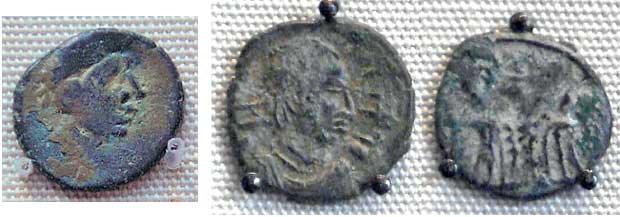
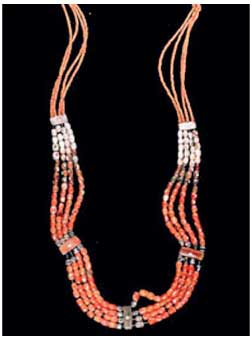 One of the ancient chronicles of India “ Divyavadanaya “ (5-6 century BC) mentioned about trade activities in ancient Sri Lanka. A Brahmi inscription, found at Duwegala in Polonnaruwa, has a picture of a sailing ship. Another Brahmi inscription at Bowattegala reveals the offering of a cave for the use of the Sanga (priests) by members of one of the foreign (Kaboja) trading companies. A trilingual inscription found in Galle (Chinese, Persian and Tamil (15th century AD) one C.W.Codrington has written that Roman coins were found along the coastal boarder of the southern province around Balapitiya. The records of H.C.P. Bell revealed that a fair number of Roman coins was found from the river bed of the ‘Madu ganga’. Quite a large number of Roman coins was found recently at Baragama in Hambantota District. Again there were many Chinese pottery found in various ancient ports and inland parts of Sri Lanka. According to the above examples it is very clear that people of various countries were aware of Sri Lanka’s trading activities.