 Zainab Hussein
 Reply To:
Name - Reply Comment
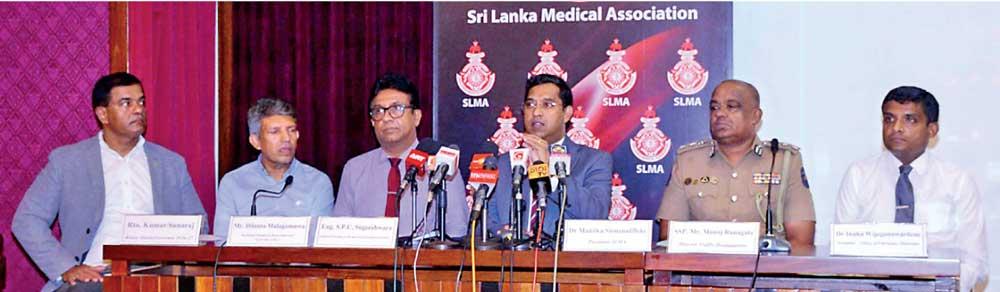
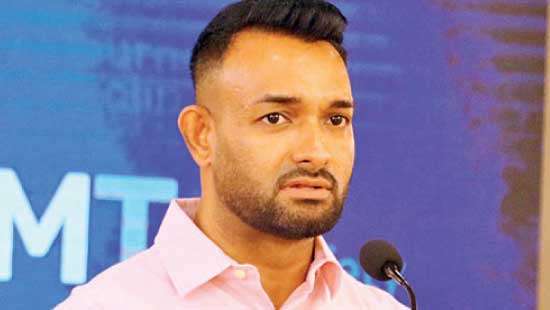
A press conference was organised by SLMA on the prevention of road traffic accidents and non-communicable diseases during the Sinhala and Hindu New Year (Pic by Waruna Wanniarachi)
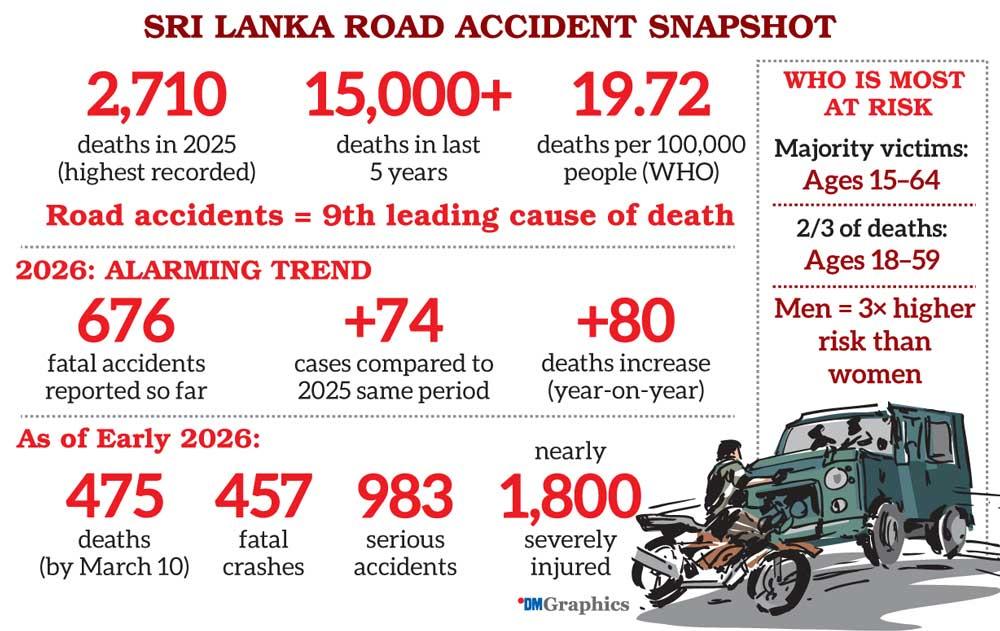
The upcoming Sinhala and Hindu New Year, a period of joy and celebration, is also marked by a surge in road accidents, turning it into one of the most dangerous times of the year. With fatalities on the rise, experts warn that a failure to recognise collective civic responsibility could have devastating consequences for the country. Recent data analysis indicate that road accident fatalities in the month of April are projected to increase by 10% to 30% compared to other months, highlighting a troubling seasonal pattern. World Health Organization’s (WHO) 2019 Global Health Estimates ranked road accidents as the ninth leading cause of death in Sri Lanka which accounted for a mortality rate of 19.72 deaths per 100,000 people.
With an aim to promote public health and safety during the festive season, The Sri Lanka Medical Association (SLMA) organised a press conference focused on the prevention of road traffic crashes during the 2026 Sinhala and Hindu New Year, with a particular emphasis on the rising incidence of motorbike-related injuries. The event was held on April 6 at the SLMA Auditorium, Colombo 07.
Delivering the welcome address, Dr. Manilka Sumanatilleke, President of SLMA, drew attention to the alarming rise in road traffic fatalities, describing the situation as a growing national crisis. He noted that over 15,000 lives have been lost in road accidents throughout the past five years, characterizing many of these deaths as preventable. “In 2025 alone, fatalities surged to a record 2,710, marking a significant increase compared to previous years. The trend has continued into 2026, with a notable rise in deaths reported within the first three months. As of March 10, a total of 475 people had been killed in 457 fatal road accidents. In addition, 983 serious accidents were recorded, leaving nearly 1,800 individuals with severe injuries, and a majority of these fatalities involved motorcyclists and their pillion riders,” he remarked.
Unsafe behaviours
Based on current patterns, he warned of a grim outlook for the remainder of the year. With April already underway, projections suggest that over 2,000 additional lives could be lost on the country’s roads before the year ends if urgent action is not taken. He further observed that unsafe behaviours, ranging from reckless driving to poor pedestrian discipline, continue to reflect a broader lack of road culture, and stressed that preventing these deaths is a shared civic responsibility.
SLMA states that road accidents should not be reduced to mere personal tragedies but as a large-scale national crisis with far-reaching consequences. The majority of those killed or permanently disabled in such incidents fall within the 15 to 64 age group - the active labour force contributing to the country’s economy. This severely hinders the country’s long-term economic growth. When measured in terms of Disability-Adjusted Life Years (DALYs), road accidents have risen to the fourth position among the leading causes of disease burden in Sri Lanka. Second only to non-communicable diseases, this situation has become a growing burden on both the national healthcare system and government expenditure.
Citing findings from the World Bank, the SLMA underscored that a 10% reduction in road traffic deaths could lead to a 3.6% increase in per capita GDP over a 24-year period. According to WHO data, some countries lose nearly 3% of their GDP annually due to road accidents, and Sri Lanka was warned as it is approaching a similar level of economic loss.
Eng. S.P.C. Sugeeshwara, Additional Secretary (Clean Sri Lanka Programme) highlighted the overall impact of road safety on public health and the economy of Sri Lanka. He remarked, “Road accidents must not be viewed merely as statistics, but as clear indicators of a severe socio-economic crisis affecting the country’s active labor force, with nearly two-thirds of fatalities occurring among individuals aged 18 to 59. Men, in particular, face a risk of death three times higher than women. These losses often deprive families of their primary source of income, creating long-term financial instability and hardship. The country’s overall human capital and productivity deteriorates due to the high costs of medical treatment and the necessity for other family members to abandon their jobs or education to care for disabled or injured individuals.” He added that the annual economic loss attributed to road accidents is estimated at approximately USD 3 billion. “We have taken steps to mitigate this impact, including improvements to road infrastructure, vehicle standards, and public awareness initiatives. However, spreading awareness alone is not sufficient without a fundamental shift in public attitudes, mindset and behaviour,” said Sugeeshwara. Underscoring the importance of personal responsibility, he called for a transformation in road ethics, stating that meaningful change must begin with the individual rather than relying solely on legal enforcement.
SSP Manoj Ranagala, Director of the Police Traffic Control and Road Safety Division, outlined the current trends and key risk factors contributing to road traffic accidents in Sri Lanka. He revealed that a total of 676 fatal road accidents have been reported so far this year. Compared to the same period last year, this marks an increase of 74 fatal incidents, with the death toll rising by 80 within the first four months alone. 230 pedestrians and 247 motorcyclists have lost their lives as of April 5. He recognised several primary causes which included reckless driving, poor road conditions, speeding, and driving under the influence of alcohol. He also raised concerns about underage and unlicensed driving, noting that numerous teenagers have been apprehended for reckless behaviour on the roads. Urging parental responsibility, he advised against providing vehicles to children who are not legally qualified or mature enough to drive. “Adhering to basic safety measures is crucial; motorcycle riders, including children, must wear helmets properly at all times, drivers and passengers must consistently use seat belts, and avoid using mobile phones while driving or crossing roads, and ensure adequate rest before driving. Moreover, organisers of motor races must strictly comply with established safety standards and administrative regulations,” he concluded.
As Sri Lanka prepares to celebrate the Sinhala and Hindu New Year, the SLMA Committee on Non-Communicable Diseases has launched a timely public health initiative promoting healthy eating and physical activity during the festive season, alongside a newly released public info- graphic. While Avurudu is marked by the sharing of traditional sweets, the SLMA cautioned that these foods- which are high in flour, oil, and refined sugars - can pose health risks if consumed excessively. The committee highlighted a recurring seasonal trend in which individuals with conditions such as diabetes, hypertension, and heart disease tend to abandon dietary and exercise routines, leading to spikes in blood sugar, blood pressure, and cardiac events. Emphasising that cultural traditions and health can coexist, the SLMA urged the public to practice moderation, maintain medication routines, stay physically active, and incorporate healthier options such as fruits and water into festive gatherings.