 KELUM BANDARA
 Reply To:
Name - Reply Comment
 Current GSP+ regulations will expire at the end of next year
New regulations will come into effect then
EU Ambassador says there will be more commitments for Sri Lanka then
EU, monitoring mission expected at the end of April
After U.S. President Donald Trump slapped tariffs on exports, Sri Lanka is struggling hard to deal with the fallout of such actions with geo-economic implications. Diversification of export markets and products is a prominent topic now being discussed. Over-reliance on a few markets such as the U.S. and European Union does not bode well for the country. That is the point being debated. Yet, is it practically possible for Sri Lanka to do without these markets in the span of a few months? The answer is a definite No.
In the wake of the Sri Lankan government trying to work out measures to deal with the fallout of the U.S. tariffs, it is heading to have a tougher time ahead in securing the Generalised Scheme of Preferences Plus (GSP+), a trade facility to secure market access to the markets in European Union (EU) because of conditions for compliance with 27 international conventions and new conventions to be added in the future.
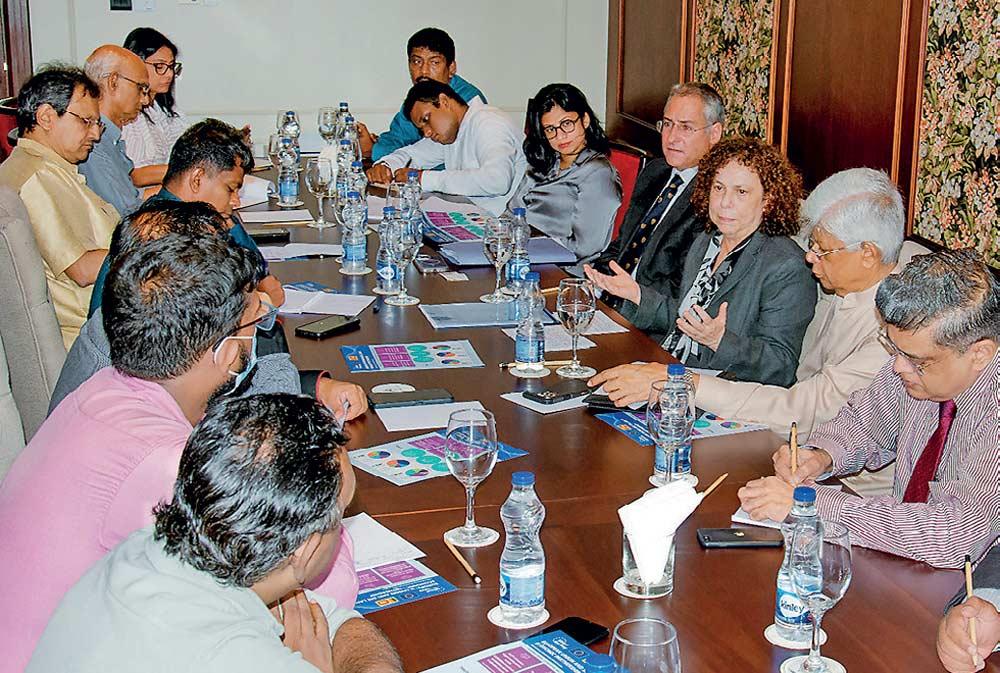
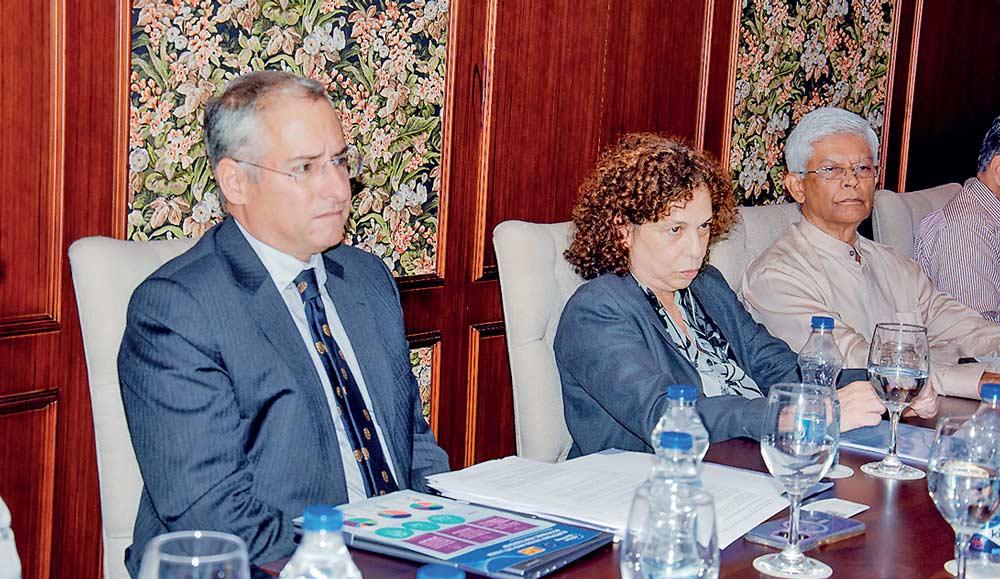
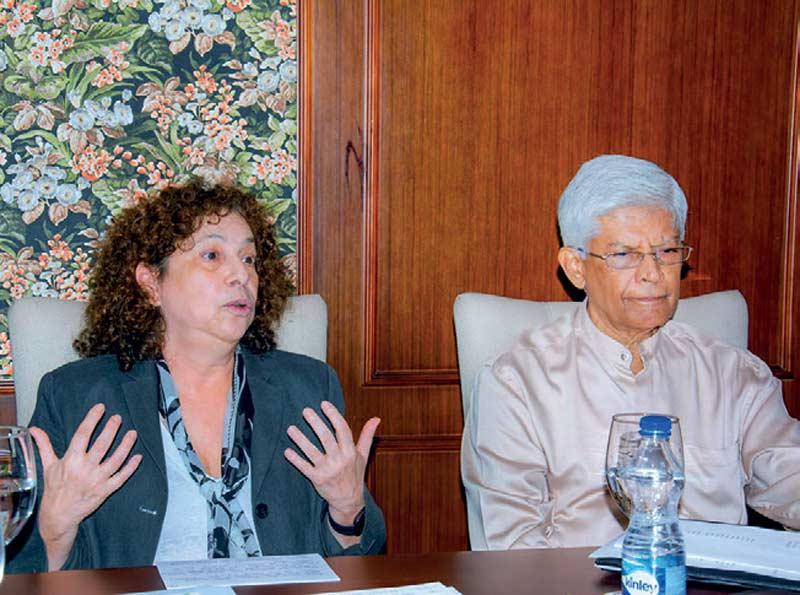
Against the backdrop, in a brief interaction with a select group of journalists on the sidelines of a roundtable discussion organised by Pathfinder Foundation, EU Ambassador Carmen Moreno said the lack of compliance and the area in which it happened had been published online for the benefit of the beneficiary countries including Sri Lanka. Sri Lanka is one of eight countries enjoying this benefit in exporting to the markets in the region.
“The European Union is a transparent entity. We send a report which marks the lack of compliance and in which conventions. This is sent to Parliament. So it’s public knowledge,” she said.
According to her, the EU had repeatedly highlighted that it wants a government that engages, that starts a conversation that provides information.
“If they haven’t done things, why? Where are the obstacles? What is the roadmap for doing that? This is the kind of engagement we are looking for, not for perfection, not for everything solved today.
Asked whether there is any lack of commitment on the part of the government, she replied, “It’s not up to me to see. It’s up to the monitoring mission that will be arriving in three weeks. I don’t do the monitoring,”
Responding to a query about difficulties for Sri Lanka in securing GSP+ under new regulations to be effective from the end of next year, she said there will be new commitments coming up but the conventions will remain the same.
The EU is a region with 27 countries and 450 million consumers. It remained Sri Lanka’s largest trading partner in 2023. The trade volume amounted to 3.84 billion Euros – 2.56 billion Euros exports and 1.28 billion Euros imports.
Sri Lanka was offered the GSP+ facility in 2005 after the Tsunami disaster, to export its products to the markets in the EU region under 6,000 tariff lines.
The Ambassador, who asserted that these tariff lines are underutilised, said the trade volume would increase even more than double the current size if properly used. She said Sri Lanka currently focuses its exports in a few countries such as Germany, France, Spain and Belgium in the region.
“So you have only a few partners. Out of 27, there are countries you have never exported anything to. Again, it’s the same market. It’s a single market,” she said.
She said, “It’s the same difficulty to enter Germany than to enter any other country. So what are the questions you have? They cannot ask for different things. Germany and Slovakia have to ask exactly the same thing, because the regulator, which is the European Union, is the one accepting the standards and the conditions under which the products can enter.”
A mentoring mission from the EU is expected at the end of this month to check Sri Lanka’s current compliance with the international conventions.
The current GSP+ regulations will expire at the end of next year. Afterwards, Sri Lanka will have to reapply.
“The GSP plus is only granted upon request, and you commit to submit yourself to a monitoring process every two years and comply with a number of conventions,” she said.
Commenting on food safety regulations, she said it is difficult to export to the EU unless Sri Lanka complies with them.
Asked about the performance of the current government in terms of addressing issues such as corruption, she said, “It’s not up to me to assess. It’s a monitoring mission with technical people coming from Brussels. It’s not up to me. My job is to interact with the government, not to monitor the government.
In response to a query whether the EU is ready for any leniency in its approach this time because Sri Lanka is in an economic crisis, she said, “We are all going through a difficult time. Again, are you telling the IMF (International Monetary Fund) to lower the bar? And to give you a free pass? We are giving you duty-free access. You just have to comply. So the message is to engage more and utilise the instrument much better.”
The instrument has to be understood not as a stick, but as an opportunity. There is an opportunity for Sri Lanka to use the instrument- even to justify it to people in the country who may oppose some reforms like governance reforms, according to her.
Responding to a query about the request for the repeal of the Prevention of Terrorism Act (PTA), she stressed the need for it. Asked about the proposed Anti-terrorism Bill worked out to be enacted instead of PTA, she said, “Well, I cannot tell you it’s a good bill.”
Commenting on the PTA, she said the EU had been asking Sri Lanka to repeal this bill from the moment it was approved.
“It’s been always in our dialogue, not only in the GSP dialogue,” she said.
Delving further into the topic, she said it is a Draconian bill where there is no due process.
“People can be arrested and put in jail forever without ever seeing a lawyer, a judge or even a member of the assembly,” she said.
She said the Anti-terrorism Bill is even worse because it enlarges the powers of the President to change things on the go. So it’s even worse.
It’s not good.”
She asserted that the law has to be according to international standards.
“We have offered repeatedly to support successive governments and work with them, even finance the experts that can help them from Geneva to match the law to the international requirements. Laws have to be in agreement with international law.