Reply To:
Name - Reply Comment
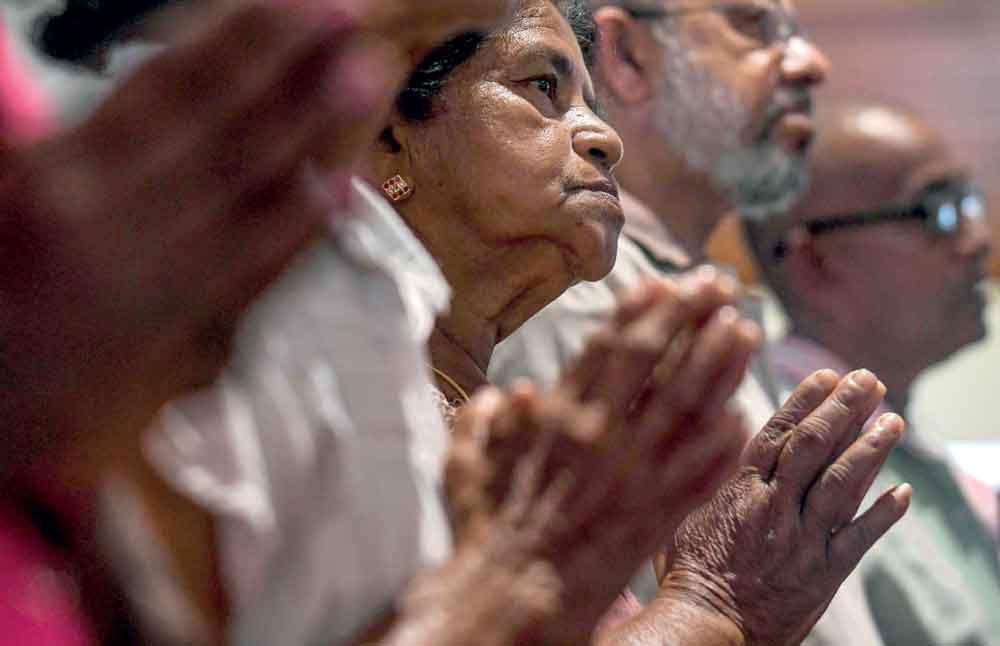
Through its teachings and practices, Buddhism cultivates the wisdom and mental clarity necessary to accept and prepare for the inevitability of ageing
 The suffering associated with ageing can serve as a powerful motivation to engage in practices that directly address this suffering, allowing us to gradually transform it or, at the very least, make it more bearable and manageable. We must recognise that this principle applies equally to our own bodies
 Buddhism is renowned for its profound insights into ageing and decay, known as jara in Pali. Through its teachings and practices, Buddhism cultivates the wisdom and mental clarity necessary to accept and prepare for the inevitability of ageing. The formula jati paccayā jarāmaraṇaṃ translates to “dependent on birth arise ageing and death,” clearly illustrating that birth inevitably leads to ageing and death, accompanied by sorrow, lamentation, pain, grief, and despair. Without birth, there would be no ageing and death. Therefore, ageing is a fundamental aspect of suffering as outlined in the Four Noble Truths.
Buddhism encourages us to confront the realities of ageing, illness and mortality head-on. Old age is recognised as an unavoidable aspect of dukkha (suffering). Old age is fundamentally and inextricably entwined with the concept of impermanence(annica), serving as the most visible, undeniable evidence that all conditioned things are in a state of flux and decay. Ageing, illness and death create in us an awareness not only of dukkha but also impermanence. The Buddha taught, “I teach suffering and the way out of suffering.” Here, “suffering” encompasses not only physical pain but also the profound discomfort that arises when our attempts to escape or remedy pain stemming from old age are thwarted. Instead of fearing old age, Buddhists are encouraged to embrace it, release attachments to youth, and cultivate wisdom, gratitude, and inner peace.
Ageing is a complex process shaped by both genetic and environmental factors. From a Buddhist viewpoint, we should perceive the body realistically. Fundamentally, the human body can be seen as a vessel of impurities, subject to old age, disease, decay, and death. The natural process of ageing is gradual, irreversible, and inevitable. Every individual must ultimately come to terms with the reality of growing old, as change is an essential fact of life.
In Buddhism, impermanence (anicca) holds a central position. Everything that exists is unstable and transient; nothing endures forever—including our bodies and all conditioned phenomena. Thus, anicca, dukkha, and anattā (non-self or selflessness) are the three characteristics common to all conditioned existence. The reality of impermanence can often evoke pain, yet a wise Buddhist fully understands and appreciates this simple yet profound truth.
The Greek philosopher Heraclitus encapsulated this notion when he stated, “No man ever steps in the same river twice, for it is not the same river, and he is not the same man.” Old age was one of the four sights that prompted Prince Siddhartha to seek enlightenment, alongside sickness, death, and the wandering ascetic. Coming to terms with these aspects of existence was pivotal in his transformation into the Buddha.
A lesson to a great king
At Sāvatthi, King Pasenadi of Kosala once asked the Buddha, “Venerable sir, is there anyone who is born who is free from old age and death?” The Buddha replied, “Great King, no one who is born is free from ageing and death. Even those affluent khattiyas—rich in wealth and property, with abundant gold and silver—are not exempt from ageing and death simply because they have been born.” This interaction underscores the universal challenge of ageing, transcending societal divisions of wealth or status.
Ageing presents one of the greatest challenges in human experience. Physically, the body begins to deteriorate; socially, we may find ourselves marginalised or discounted, sometimes subtly and sometimes explicitly. Some may encounter dismissal or condescension. Ageism remains one of the most persistent forms of discrimination. The physical and social difficulties associated with ageism can undermine our self-image and sense of self-worth. Common perceptions often portray old age as a stage where the best years are behind us, reducing the remaining years to a form of “bonus years” frequently presented in sentimental or patronising ways.
The suffering associated with ageing can serve as a powerful motivation to engage in practices that directly address this suffering, allowing us to gradually transform it or, at the very least, make it more bearable and manageable. We must recognise that this principle applies equally to our own bodies. The human body undergoes countless subtle changes every moment from the time you are born, never remaining the same even for two consecutive moments, as it is subject to the universal law of impermanence.
Whatever your age and however young-looking you try to remain through external means, the truth is that you are getting older every minute. Every minute, every second, our lives are getting shorter and closer to death. Since you were conceived in your mother’s womb, your life is getting shorter. We see external things going by rapidly, but never reflect on our own lives. No matter what we do, we cannot fully control what happens in our lives or to our bodies. With time, we all develop lines and wrinkles. We become frail, and our skin becomes thinner and drier. We lose teeth. Our physical strength and sometimes our mental faculties decline. In old age, we are subject to multiple diseases.
Many people live under the illusion that the body remains constant and is inherently attractive and desirable. Modern society, in particular, has become increasingly obsessed with the quest for eternal youth and the reversal of the ageing process. Many women feel inadequate about their physical appearance and constantly think about how to look younger and more attractive. Enormous sums of money are spent on cosmetic procedures, skincare, and grooming products to remain presentable and desirable. The global beauty and cosmetics industries thrive on this ideal, often promoting unrealistic standards of beauty and youthfulness. But no amount of products available in the world can truly restore lost youth, as time inevitably leaves its mark.
Therefore, in Buddhism, mindful reflection on ageing and the human body is considered essential for overall well-being. This contemplation provides insight into impermanence as we navigate life. Reflecting on the nature of the body—its true condition and its delicate, changing state—is a fundamental aspect of the Buddha’s teachings. By understanding the body accurately, we support both wisdom and peace of mind.
Buddhism recognises forty subjects of meditation which can differ according to the temperaments of persons. Contemplation of human body is one of them. Of all the subjects of meditation reflection on the human body as a subject is not popular among certain people particularly in the western world as they think such contemplation would lead to melancholic morbid and pessimistic outlook on life. They regard it as a subject that may be somewhat unpleasant not conducive to human wellbeing. Normally, people who are infatuated and intoxicated with sensual pleasures develop an aversion towards this subject of meditation. In Buddhism this mode of contemplation is called asuba bavana or mindfulness of the impurities of body. It is all about our physiology and individual body parts and organs internal as well as external. This subject of meditation is unique to the Buddhist teachings.
To appreciate the body as it truly is, we must set aside preconceived notions and engage in a calm and honest inquiry: Is this body genuinely attractive or not? What is it composed of? Is it lasting or subject to decay?
In embracing the teachings of Buddhism, we find the wisdom to navigate the journey of ageing with grace, transforming our understanding of this natural process into an opportunity for growth and acceptance.
When our fears centre on ageing, decay, and disease, we cannot overcome them by pretending they do not exist. True relief comes only from facing these realities directly.
Reflecting on the body’s unattractive and impermanent nature can help us gain a realistic perspective. In an age when the mass media constantly bombards people with sensual images, stimulating lust, greed, and attachment, contemplation of the body’s true nature can bring calm and clarity.
All beings that are born must eventually die. Every creature on earth, regardless of status, shares this common fate. After death, the body undergoes a series of biological changes and decomposes, returning to the earth as organic matter. It is part of the earth and ultimately dissolves back into it. Understanding this, we can meet ageing, decay, and death with greater wisdom, less fear, and a deeper sense of peace.