 Kamanthi Wickramasinghe
 Reply To:
Name - Reply Comment
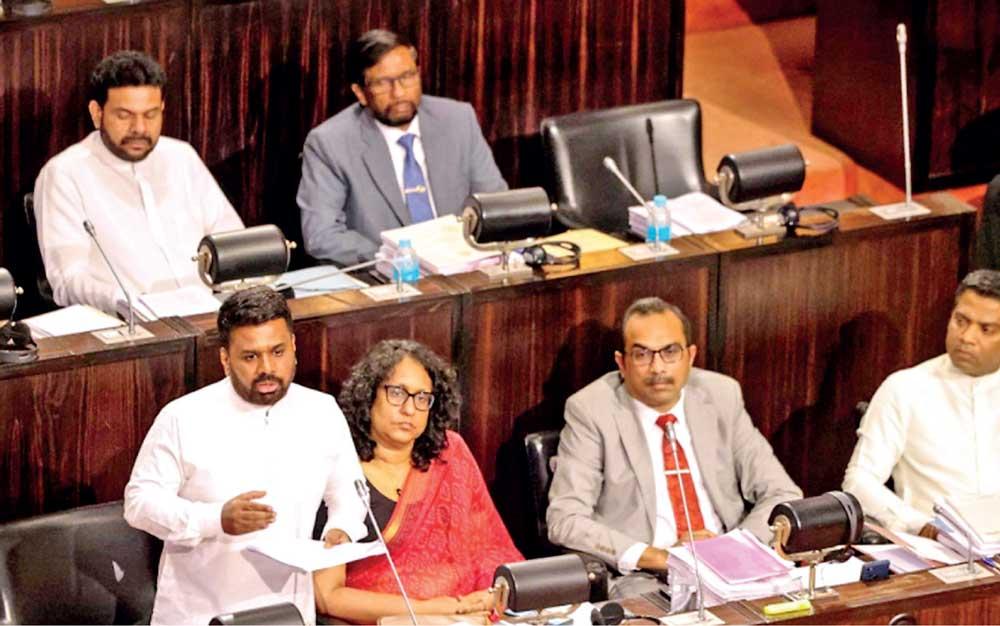
President Anura Kumara Dissanayake delivering the 2026 Budget in Parliament (File photo)
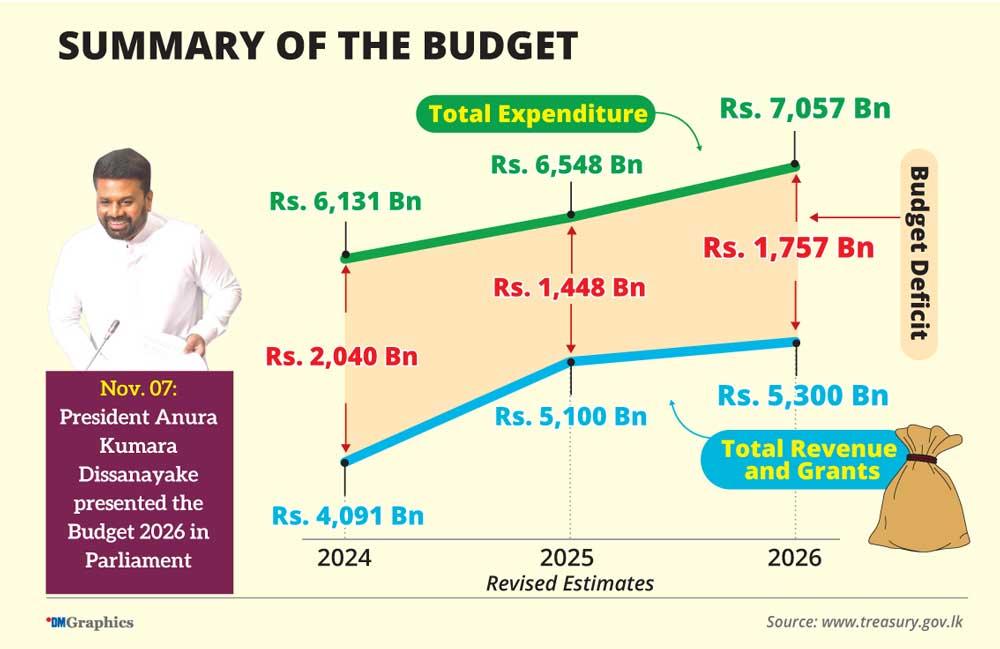
The 2026 Budget reading has been scrutinised by many individuals representing various sectors particularly due to the fact that it had either not prioritised on important issues or seems impractical. The government has also been blamed for not implementing proposals included in the 2025 Budget. While certain budgetary allocations, for example to improve physical infrastructure have been estimated at exorbitant amounts, certain other allocations for key sectors have either been slashed, reduced or eliminated.
Current status of the economy
According to Sirimal Abeyratne, Emeritus Professor in Economics at the University of Colombo, the 2026 Budget is a ‘very comfortably prepared budget’. He explained that on the revenue side, our actual tax revenue in 2026 has exceeded the original estimate. “The major point we need to highlight here is the success of the IMF stabilisation programme and guided by that the improved tax collection and tax compliance. An added advantage on the budgetary side would be faster growth in indirect tax collection such as VAT and import duties. Because of these factors the revenue side improved a lot. Then from the government expenditure side, the borrowing needs were being contained this year.
The new Central Bank Act which terminate Central Bank finance in the government borrowing needs has also played a role. Lower interest payments is another area that we can highlight as far as the reduction in government expenditure is concerned. Another area is reduction in capital expenditure at a higher rate than the original expenditure. These factors have contributed to have a comfortable budgetary situation this year. That’s why the preparation of the 2026 Budget looks quite easy-going compared to all our previous budgets,” he explained. Prof. Abeyratne further said that Sri Lanka has achieved as well as exceeded some of the targets set by the IMF. “But rather than internal stabilisation, we have not been quite successful with the external sector. In terms of the official foreign reserve position, the IMF expects it to be 15 billion US$ by the year 2030, but I don’t think we are closer to that level.
We are stagnant around US$ 6 billion for a couple of months now. We are over-dependent on tourism and remittances which are low hanging fruits, but we shouldn’t depend on these two components in the long run. We should have higher export growth, higher foreign investments and these are the challenging areas the government has to handle, but then again not necessarily within the budget. The budget talks about 7% growth, export expansion and FDI expansion. I think there’s much more to do outside the budget because it requires overall reforms. The budget is also a mixed budget, because it includes recurrent expenditure expansion such as increasing salaries, wages, subsidies as well as capital expenditure expansion,” he explained further.

The major point we need to highlight here is the success of the IMF stabilisation programme and guided by that the improved tax collection and tax compliance. An added advantage on the budgetary side would be faster growth in indirect tax collection such as VAT and import duties.
- Sirimal Abeyratne, Emeritus Professor in Economics at the University of Colombo

What about allocations for new education reforms? There was no mention about improving infrastructure in schools as well. So we are quite disappointed about the 2026 Budget allocations for education sector.
- Joseph Stalin, Ceylon Teachers’ Union General Secretary

Also, the government could have introduced new taxes on export companies related to Tea and Apparel to finance benefits for the workers in the plantations and apparel sector. Instead, the government has set a bad precedent by bailing out plantation companies with wage support funded by public funds.
- Amali Wedagedara, Political Activist and Senior Researcher at Bandaranaike Centre for International Studies

We have always been advocating for food security and food sovereignty. 67% of the entire population comprise farmers. Out of them, 37-40% thrive on farming as a primary source of income. This is either paddy farming or alternative vegetable crops or export crops such as tea or rubber. We expected this budget to provide relief for farmers.
- Anuradha Tennakoon, Chairman of the National Agrarian Union
When asked whether there would be some relief for people, Prof. Abeyratne said that given the fiscal constraints the current comfortable position of the budget shouldn’t be taken as a permanent state of the economy. “This is what happened even in the past. When things are moving alright, public spending as well as private consumption increased, but during bad times we always had the problem of reversing them back to the initial position. So we continue even in bad times through borrowing. So I don’t think we should be trapped in such kind of situations in future. Given the narrow fiscal space of the country, the relief arranged by the government is quite beyond IMF targets, so I think it would be alright,” he added.
Concerns over limitations for education sector
During the 2026 Budget reading, President Dissanayake issued a warning against discussing the issue of salary anomalies on the streets. “The Budget reading doesn’t provide concrete solutions to the crises faced by teachers and principals,” said Ceylon Teachers’ Union General Secretary Joseph Stalin. “President Dissanayake only proposed to set up a Commission to review salaries of public sector employees,” he added. The 2025 Budget allocated Rs. 500 million to develop primary schools located within a 3km radius from children’s homes. It also proposed a national plan to review and relocate schools to ensure better accessibility. Stalin questioned as to what happened to these proposals. “We didn’t see them being implemented. In an earlier instance the CTU demanded the government to increase the hardship allowance given to teachers up to Rs. 15,000. But President Dissanayake promised a hardship allowance of Rs. 1500. What can someone do with Rs. 1500? He said that it was given after 20 years, but this amount isn’t enough. He also warned graduates from taking to the streets. Then what about allocations for new education reforms? There was no mention about improving infrastructure in schools as well. So we are quite disappointed about the 2026 Budget allocations for education sector,” he said.
Shifting responsibilities of the private sector
The 2026 Budget predominantly represents the interests of the private sector and big capital said Amali Wedagedara, a feminist Political Activist and Senior Researcher at Bandaranaike Centre for International Studies. “In contrast, peasant women, smallholder farmers and fishers producing food, and working men and women in tea gardens and the apparel sector, as well as those abroad generating foreign exchange, are relegated to a secondary position as dependents on welfare,” she observed.
Wedagedara said that going by new evidence from the World Bank regarding the socioeconomic and human impact of regressive tax increases, the government could have reduced VAT and reevaluated the VAT exemption list. “Also, the government could have introduced new taxes on export companies related to Tea and Apparel to finance benefits for the workers in the plantations and apparel sector. Instead, the government has set a bad precedent by bailing out plantation companies with wage support funded by public funds. The private sector is already lagging behind in creating equal opportunities for women regarding employment, paying living wages, and providing benefits such as maternity leave and sick leave. Additionally, many companies do not adhere to labour rights, environmental laws or principles of justice. Private sector wage support initiatives of the government can lead to unhealthy practices. These initiatives may encourage businesses to shift the responsibility for adverse consequences - such as substandard wages, unpayable debt or environmental degradation - onto the government,” she added.
Farmers and agriculture sector ignored?
In his remarks, Anuradha Tennakoon, Chairman of the National Agrarian Union claimed that the 2026 Budget had ignored farmers and the entire agriculture sector. He claimed that President Dissanayake didn’t utter a word about the agriculture sector or the agriculture production economy. “This happened for the first time in history. We have always been advocating for food security and food sovereignty. 67% of the entire population comprise farmers. Out of them, 37-40% thrive on farming as a primary source of income. This is either paddy farming or alternative vegetable crops or export crops such as tea or rubber. We expected this budget to provide relief for farmers,” he said. Tennakoon further explained the plight of farmers due to heavy taxes imposed on agricultural inputs. “The production cost in Sri Lanka is much higher than that in India or Pakistan. In India it would cost around LKR 30-40 to produce a kilo of potatoes or big onions. But it is three times higher in Sri Lanka. This is due to the higher cost of agricultural inputs such as fertilizer and other resources. When the incumbent government assumed power the cost of 50kg of urea was Rs. 7200. But now it is between Rs. 9500-10,000.
The cost of a small bottle of chemical fertilizer is around Rs. 4000. On the other hand, everything from a mammoty to oil tanks costs a lot as a result of taxes when compared to 2020. A tractor costs around Rs. 60-70 lakhs and the harvester machine costs around Rs. 105 lakhs. In 2022 the cost of this machine was Rs. 28 lakhs. We expected the government to provide relief to farmers by bringing down taxes imposed on agricultural inputs, devices and machinery. The government has the ability to provide fertilizer at Rs. 5000,” he said. Farmers have also been challenged with selling their produce at reasonable prices due to the middlemen mafia and other interferences. “We requested the government to establish a price regulatory commission. Social welfare of farmers has been ignored. If we take the daily income and expenditure of farmers, they earn less than Rs. 200-300. But farmers are left with no option, but to continue farming as their only livelihood. We have always urged successive governments to strengthen small and medium scale rice mill owners but it hasn’t been addressed. Most allocations don’t seem to be practical and it’s a pity that they haven’t prioritized the agriculture sector,” he added.
GMOA announces strike action
GMOA disappointed about allocations for health sector In a statement issued, the Government Medical Officers’ Association (GMOA) accused the 2026 Budget for its failure to address chronic issues such as shortages of staff, medicines and essential medical equipment. GMOA’s doctors warned that the country’s health service had reached a ‘critical stage’ with hospitals struggling to maintain patient care due to dwindling resources and inadequate facilities. As a result, the GMOA has announced to launch strike action with effect from November 17.