Reply To:
Name - Reply Comment
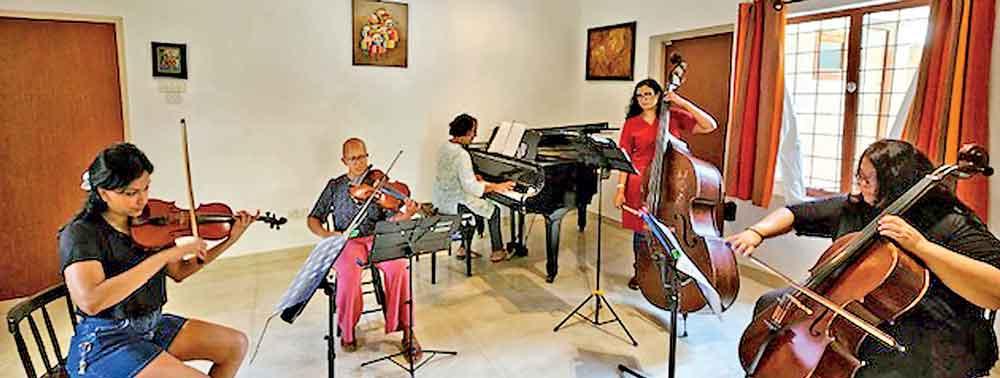
While symphonic repertoire is what the Symphony Orchestra of Sri Lanka is known for, it frequently forays into the more intimate, delicate and intricate form of chamber music. This July, the SOSL presents its next concert of chamber music in the Dr Earle De Fonseka series of concerts at the Lionel Wendt on July 20th.
This concert is sponsored by the Earle De Fonseka trust; the concert series memorializes Dr Earle De Fonseka, who for 40 years was the conductor of the SOSL, and one of its guiding lights.
The concert features chamber works from three different periods of music, written for different configurations of musicians.
The programme starts with Vivaldi’s concerto for two cellos in G minor (arranged for chamber performance) played by Dushy Perera, Tamara Holsinger (cellos) and Shanthi Dias (piano).
The Clarinet Quintet in A major, a masterpiece of Mozart’s later years, will be performed by Jonathan Guist (Clarinet), Nilupul Silva (violin), Lydia Goonetilleke-Jayamanne (violin), Mangala Abeysekera (viola), and Amila Abeysekera (cello). Jonathan Guist is back in Sri Lanka this year, having given a virtuosic performance of Weber’s second clarinet concerto with the SOSL last year.
Louise Farrenc is one of the most important female composers of the Romantic era, and one who contributed many works to the genre of chamber music. This concert features her first piano quintet in A minor, performed by Shanthi Dias (Piano), Nilupul Silva (violin), Mangala Abeysekera (viola), Tamara Holsinger (cello), and Andrea Leitan (double bass).
The players shared their thoughts about performing together, and the works being performed.
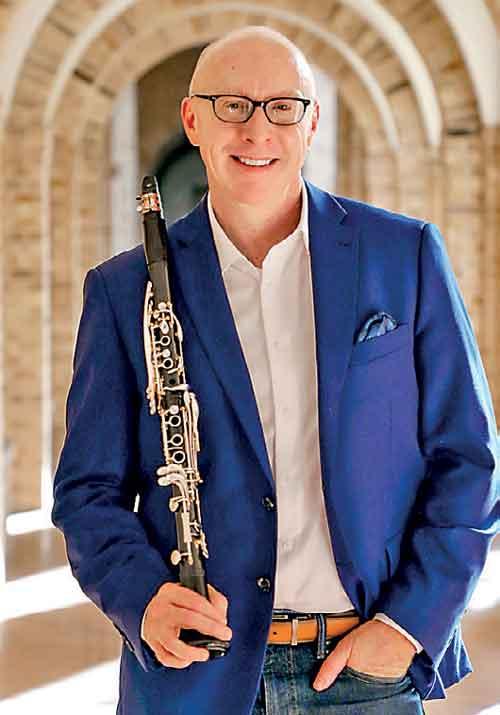
Jonathan Guist: Mozart’s works for clarinet are always a privilege for any clarinetist to perform. Not only are these works absolutely sublime musically, but due to his close relationship to the clarinet virtuoso Anton Stadler, they are also perfectly written for the instrument. These works were composed toward the end of Mozart’s life and are examples of the emotional complexity and paradoxes found in his mature style. The Clarinet Quintet in A major is particularly noteworthy as it can be credited with bringing the clarinet into the spotlight as a solo instrument for the first time.
Nilupul Silva: (About the Farrenc quintet) It is wonderfully empowering to bring to life the work of a lesser performed but astoundingly talented and competent female composer, with an all-female ensemble. (About the Mozart quintet) It feels like this is chamber music at its most intimate. The music is a mix of elegance and playfulness and is Mozart at his finest.
Lydia Goonetilleke-Jayamanne: When chamber music comes together, it is enriching for both the players and the listener. Like the pieces of a jigsaw puzzle coming together to create a beautiful picture, so it is with the Mozart quintet.
Mangala Abeysekera: I enjoy playing chamber music because of its intimate setting and the fellowship it creates amongst the players in the ensemble. The intricate writing in Mozart’s clarinet quintet creates the unique blend between clarinet and strings which is truly magical.
Amila Abeysekera: Something I enjoy about chamber music is that it provides a personal way for collaboration. Mozart’s clarinet quintet is special because it combines a traditional string quartet with a clarinet to create distinctive textures.
Shanthi Dias: The Farrenc quintet is a beautiful work with shifting moods of brilliance and a haunting cantabile. Farrenc highlights the beauty of each instrument in the four movements of the quintet. I enjoy the camaraderie of playing together, and learning from each other especially in terms of musicianship.
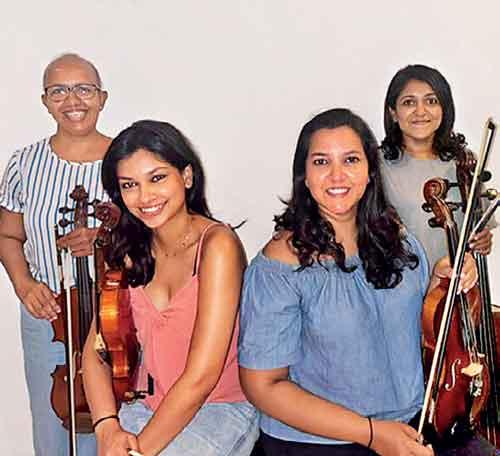
Andrea Leitan: Playing a piano quintet brings with it a very intimate music experience. It is very personal and expressive. It is not often that you find a double bass part written for a quintet, and though it is challenging to play, it is truly rewarding as it is important to pay close attention to detail. It has been a unique experience.
Tamara Holsinger: Playing chamber music is one of the most learning and rewarding experiences for me. It forges stronger bonds within the group of players while strengthening our understanding of the music, how to make it, and how to work with each other. The Farrenc quintet is a challenging work, both technically and musically, and speaks volumes for the composers mastery of the form.
Playing a work for two solo instruments like the Vivaldi concerto is quite different to performing in a larger group. It demands absolute understanding and coordination between the players, and a matching of ideas and phrasing that can be challenging but also very satisfying when it comes together.