Reply To:
Name - Reply Comment
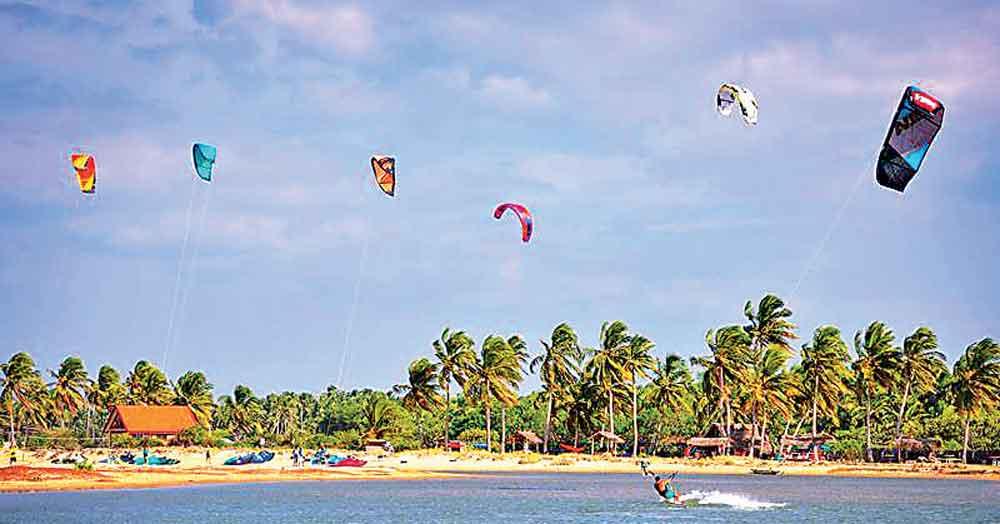
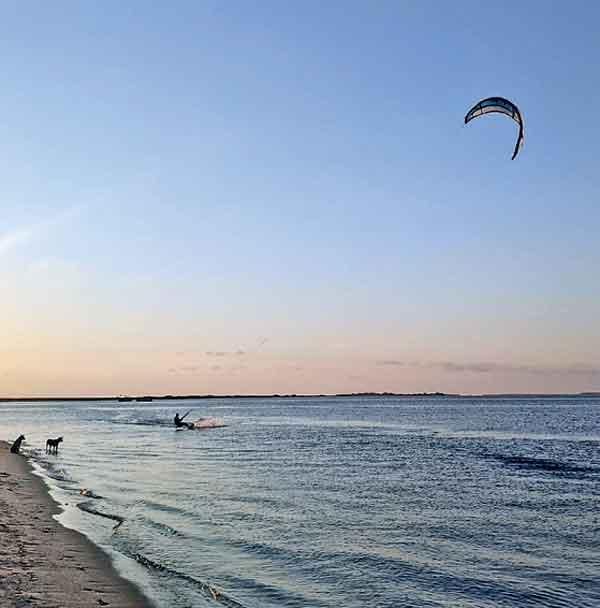
 Kite-surfing has rapidly transformed from a niche adventure sport into one of Sri Lanka’s most exciting coastal tourism experiences, drawing thrill-seekers from around Kalpitiya Peninsula, once a quiet fishing region which has steadily reinvented itself as Asia’s leading kite-surfing hotspot. With consistent trade winds, expansive shallow lagoons and uncrowded ocean stretches, Kalpitiya today holds a firm place on the global kite-surfing map, offering ideal conditions for both beginners and experienced riders.
The story of ‘Kite-surfing’ in Kalpitiya began in the late 2000s when a small group of international riders and travel entrepreneurs discovered the strong and reliable winds sweeping across the Kalpitiya Lagoon. What started as experimental sessions soon developed into organised ‘Kite camps’ and ‘training schools’, attracting visitors year after year. As the destination gained visibility through global surfing communities and travel platforms, eco-friendly resorts, professional ‘kite centres’ and community-based tourism initiatives began to emerge, shaping Kalpitiya into the vibrant coastal destination it is today.
Today, ‘Kite-surfing’ in Kalpitiya is more than an adventure activity, it represents a growing coastal lifestyle closely connected with local livelihoods and sustainable tourism. From peaceful sunrise rides over mirror-like lagoons to exhilarating downwind journeys along the Indian Ocean coastline, Kalpitiya continues to captivate travellers seeking wind, water and freedom in one remarkable setting.
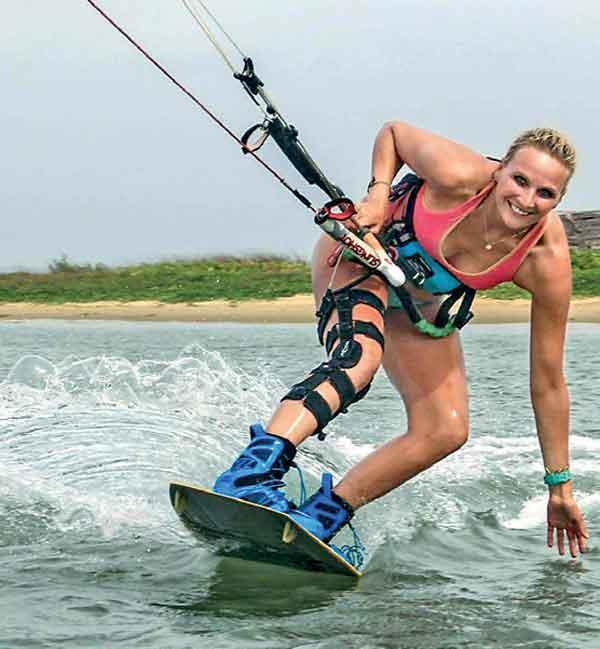
‘Kiteboarding’, widely known as ‘kitesurfing’, is a wind-powered sport in which riders use a large controllable kite to glide across water, sand, snow or other open surfaces. Combining elements of paragliding, surfing, windsurfing, skateboarding, snowboarding and wakeboarding, the sport offers a unique blend of speed, balance and aerial excitement. Although the terms are often used interchangeably, ‘kitesurfing’ generally refers to riding waves with a directional surfboard, while ‘kiteboarding’ commonly describes flat-water riding with a twin-tip board that allows jumps and freestyle drills.
Kalpitiya’s natural setting makes it particularly suited for both styles. With strong seasonal winds from May to October and again from December to February, together with shallow lagoons and open sea access, the peninsula provides a diverse playground for riders of all skill levels. Using a controllable kite, riders harness wind power to glide across the water on boards resembling wakeboards or small surfboards, with or without foot straps, enabling both smooth cruising and aerial performance. The sport itself embraces multiple disciplines including ‘freestyle’, ‘freeride’, ‘downwinders’, ‘speed riding’, ‘course racing’, ‘wake style’, ‘jumping and wave kitesurfing’, each offering a distinct experience on the water.
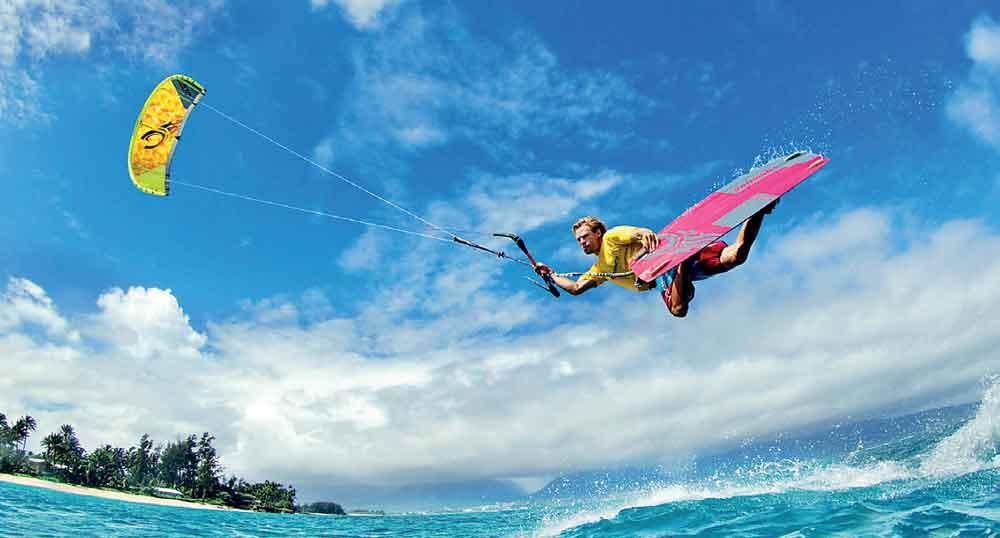
Beyond the thrill of kite-surfing, Kalpitiya’s rich marine environment adds another dimension to its appeal. Dolphins, whales and kite-surfing together form a powerful trio attracting visitors to the peninsula. Large pods of dolphins are often seen playing in offshore waters, while boat safaris provide close encounters with these marine mammals. For those eager to experience the ocean more actively, Kalpitiya’s dependable winds create some of the finest kite-surfing conditions in South Asia, allowing riders to glide across the waves much like dolphins themselves.
In Sri Lanka, kite-surfing began to appear in the early 2000s, and by the end of that decade Kalpitiya had emerged as a leading hub supported by organised tours, specialised operators and accommodation providers catering to the growing international market
Globally, kite-surfing evolved from experimental concepts developed in France and Germany during the late 1970s and early 1980s. Following years of refinement, the sport gained popularity in the late 1990s and entered the mainstream at the turn of the century. In Sri Lanka, kite-surfing began to appear in the early 2000s, and by the end of that decade Kalpitiya had emerged as a leading hub supported by organised tours, specialised operators and accommodation providers catering to the growing international market.
Until recently, Kalpitiya remained a remote rural area with minimal tourist activity. However, its growing popularity has drawn attention from both travellers and planners seeking to expand Sri Lanka’s tourism offerings. Development initiatives are now underway to transform the peninsula and its chain of offshore islands into a major beach tourism destination. At the same time, environmentalists have raised concerns over the potential impact of such projects on marine species including dolphins, sperm whales and dugongs inhabiting the waters around Dutch Bay.
Despite these challenges, Kalpitiya stands as an exceptional marine sanctuary characterised by a remarkable diversity of habitats, bar reefs, flat coastal plains, saltpans, mangrove swamps, salt marshes and sweeping sand dune beaches. Complementing this landscape is a cluster of 14 offshore islands, Battalangunduwa, Palliyawatta, Vellai I, Vellai II, Vellai III, Uchchamunai, Ippantivu, Periya Arichchalai, Sinna Arichchalai, Eramutivu, Sinna Eramutivu, Eramutivu West, Kakativu and Mutwal (Dutch Bay), covering about 1,673 hectares and forming an integral part of Kalpitiya’s coastal identity.
Together, these natural assets, adventure experiences and evolving tourism initiatives position Kalpitiya as a destination where wind, wildlife and wilderness converge, a place where Sri Lanka’s coastal tourism story continues to unfold on the strength of nature’s elements.
From the thrill of riding endless lagoons to the quiet magic of dolphins leaping offshore, Kalpitiya has grown from a sleepy peninsula into a hotspot that celebrates both adventure and nature. For those who come seeking freedom, excitement and a connection to the wild, Kalpitiya is more than a destination; it is a living testament to Sri Lanka’s coastal beauty, where every breeze of wind promises a new journey. (Pix courtesy internet)