AI SUMMARY GENERATED ONLY FROM THIS ARTICLE'S TEXT.
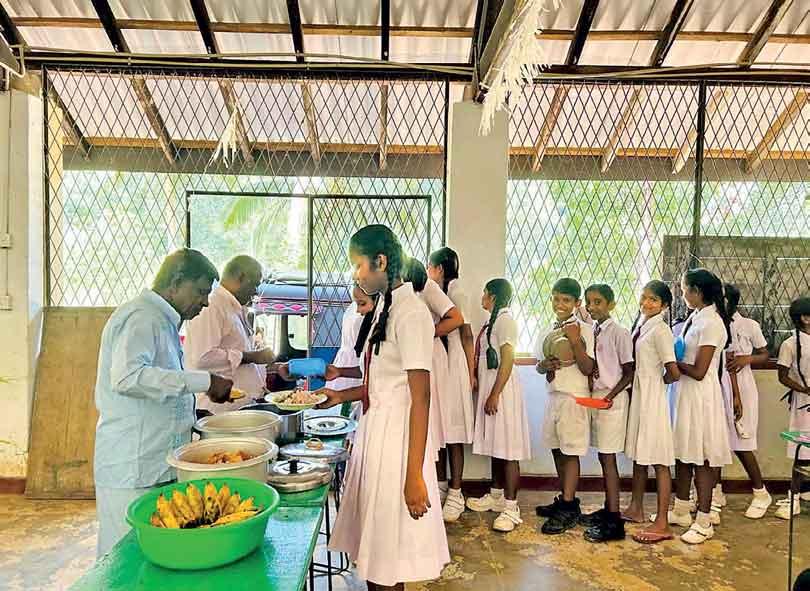
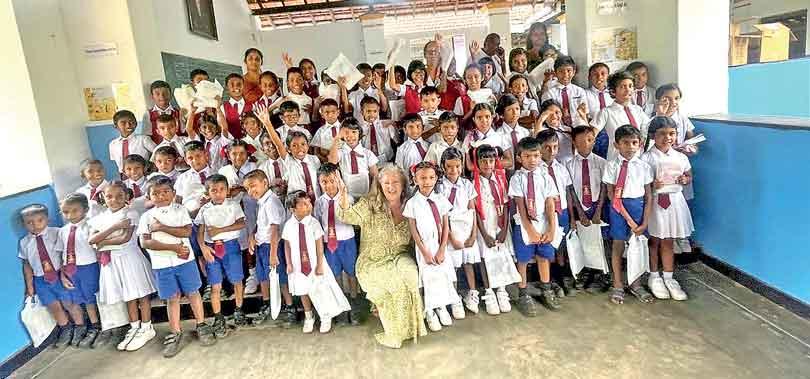
In the chaotic aftermath of the 2004 tsunami, amid devastation and displacement, Deshabandu Lynn Stanier MBE encountered a crisis that would reshape her life’s work. Volunteering on the ground in Sri Lanka, she witnessed a surge of children placed in institutions — many separated from families not by loss, but by poverty and circumstance. What began as emergency relief evolved into a 21-year mission to reform the child protection system itself.
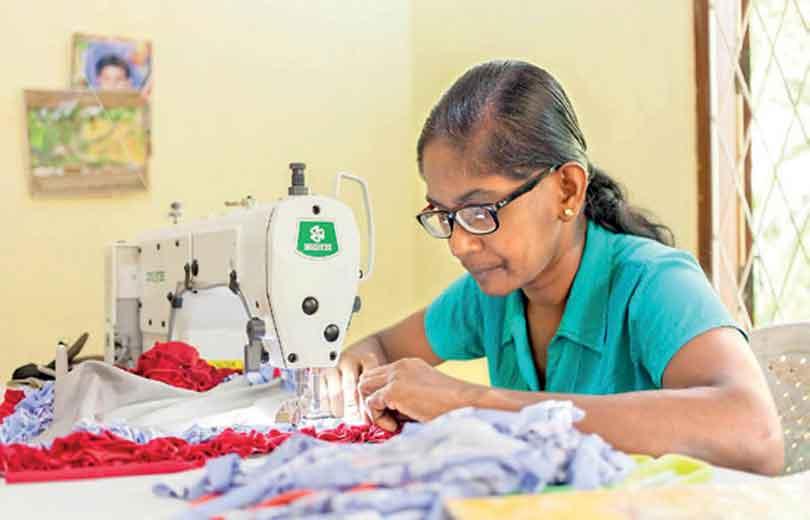
Through Their Future Today, Lynn has championed family-based care, advocating for reunification, foster care reform and preventative family strengthening. Central to the charity’s approach is vocational training — equipping young people and vulnerable parents with practical skills to generate income, restore dignity and break cycles of poverty that often lead to separation.
Today, with growing international backing and political will, Sri Lanka stands on the brink of transformative change. Lynn reflects on what has shifted — and what must happen next.
Q After 21 years of advocating for children in care, what has shifted to make this moment possible?
For more than two decades, Their Future Today has advocated for a transition from institutionalisation to family-based care. We know that over 80% of children in institutions have living families — families trapped in acute poverty.
What has shifted now is alignment. Political will has strengthened. International momentum has gathered pace. And most importantly, care-experienced voices are finally being heard.
For the first time, serious conversations about ending the institutionalisation of children are happening at the highest levels of government — within the United Nations and between the UK and Sri Lankan governments. When policymakers, probation officers, UNICEF representatives and civil society leaders sit at one table and say, “We can do this differently,” something profound changes.
This moment is possible because the evidence is undeniable: children belong in families.
Q What does “Love for Every Child” mean in practical terms?
In the weeks after the tsunami, the physical conditions in institutions were heartbreaking — overcrowded cots, limited staff, scarce resources. But what struck me most was something less visible and far more devastating.
These babies and toddlers were deprived of the most fundamental human need. Not food. Not water. Love.
Love is not a luxury — it is a biological necessity. Without it, a child’s emotional and neurological development can be compromised for life.
And I truly believe there is enough love in this world to go around. There are grandparents, aunts, neighbours and communities willing to step forward. Where reunification is not safe or possible, trained and supported foster families can provide stability and belonging.
“Love for Every Child” is not sentimental. It is practical. It means redirecting resources away from buildings and staffing structures and investing instead in families — strengthening them, supporting them and empowering them.
Q What does bilateral UK and Sri Lankan government support tangibly mean for children in institutions?
It brings legitimacy and momentum. It signals that family-based reform is not a fringe idea — it is a national and international priority.
For children currently living in institutions, this support creates a clear pathway forward: safe reunification where possible; properly assessed and supported foster families where necessary; structured oversight, accountability and coordinated reform rather than piecemeal change.
Most importantly, it means these children are no longer invisible. When governments publicly commit to reform, it becomes far harder for the issue to be ignored.
QWhat must new foster care laws include?
If foster care legislation is to genuinely safeguard children, it must be robust, detailed and enforceable.
There must be rigorous background checks and safeguarding standards for foster carers. Compulsory training and ongoing supervision are essential. Foster families must receive both financial and emotional support — goodwill alone is not enough.
Clear case management systems, led by trained probation officers, must underpin every placement. Each child should receive trauma-informed assessment and individualised care planning.
Crucially, legislation must prioritise reunification and kinship care wherever safe and possible. Foster care should never become a permanent holding pattern unless absolutely necessary. Institutional care must become the last resort — not the first response.
Q What safeguards are needed to ensure policy becomes lived change?
We need measurable targets, defined timelines and transparent data collection. Independent monitoring mechanisms must be built in from the outset.
Blended funding models — combining government investment with civil society expertise — will be key. Training must extend from national commissioners down to frontline officers.
Most crucially, care-experienced young people must have a seat at the decision-making table.
Accountability cannot be an afterthought. It must be woven into the system from the beginning.
Q What have you witnessed that underscores the urgency of reform?
I have seen babies who stop crying because they have learned that no one comes. I have held tiny children so desperate for human touch that they cling as though letting go would mean losing the only safety they have known.
I have met children who have never celebrated a birthday — who do not know their date of birth. Children who stare in confusion at wrapped presents because they have never opened one.
I have met teenagers who have spent their entire childhood behind institutional walls — who have never held a cricket bat, never seen the sea, never run along a beach. Young people whose diet has rarely extended beyond rice and soya.
I have watched young people leave institutional gates at 18 with nowhere to go. No one waiting. No safe home. No hand to hold.
Institutions may provide shelter and food. But they cannot provide consistent, unconditional love. And without love, something essential is missing.
Children do not simply need protection. They need belonging.
Q How can foster care respect Sri Lankan culture?
Sri Lanka already has a strong tradition of extended family care. Kinship support is deeply embedded in communities. Foster care does not replace that — it formalises and strengthens it.
Successful reform will require engagement with religious leaders, community elders and local authorities. Training must be culturally grounded and delivered in local languages. The model must feel Sri Lankan — not imported.
Respecting tradition while prioritising the best interests of the child is not a contradiction. It is the foundation of sustainable reform.
Q What role will Their Future Today play?
When new legislation is enacted, Their Future Today will continue providing technical expertise, training and advocacy. We will work alongside probation services, help design foster preparation programmes and strengthen vulnerable families to prevent unnecessary separation. A key pillar of our work is vocational training — equipping young people leaving care, and parents at risk of losing children, with practical, income-generating skills. Poverty is one of the primary drivers of institutionalisation. By empowering families economically, we address the root cause.
We have never believed our long-term mission was to sustain institutions. Our purpose has always been to move beyond them. That commitment will only deepen.
QWhat challenges do you anticipate?
Change inevitably unsettles established systems. Bureaucratic delays will occur. Funding gaps may emerge. Institutions will reduce gradually, and specialised care will still be needed in certain cases.
But the greatest challenge is mindset.
Moving from a “rescue and house” model to a “support and strengthen” approach requires belief — belief that families, when properly supported, can thrive. Reform demands patience, persistence and courage.
Q On a personal note, how does this moment feel?
It feels deeply humbling.
Meeting Minister David Lammy and witnessing Minister Saroja Paulraj sign the Global Initiative — committing Sri Lanka to ending the institutionalisation of children — was profoundly emotional.
For Sri Lanka to become the 35th country to sign, and the first in South Asia, is historic. To sit in that room after 21 years of advocacy and see that commitment made at the highest level felt surreal.
There were many moments when this vision felt impossibly distant. Yet here we are.
But this is not the finish line. Now comes the real work.
Turning words into action.
Turning policy into practice.
Turning commitment into safe homes, trained foster families and strengthened birth families.
Until every child grows up in a safe, loving family — the work continues.
Comments - 0
Comments - Deshabandu Lynn Stainer MBE 21 years of advocacy
222
Add comment
Comments will be edited (grammar, spelling and slang) and authorized at the discretion of Daily Mirror online. The website also has the right not to publish selected comments.




 In the chaotic aftermath of the 2004 tsunami, amid devastation and displacement, Deshabandu Lynn Stanier MBE encountered a crisis that would reshape her life’s work. Volunteering on the ground in Sri Lanka, she witnessed a surge of children placed in institutions — many separated from families not by loss, but by poverty and circumstance. What began as emergency relief evolved into a 21-year mission to reform the child protection system itself.