Reply To:
Name - Reply Comment
By A Special Correspondent
Brigadier J.P.A. ‘Japana’ Jayawardena (Rtd) leans back and smiles as he reflects on a lifetime immersed in the sport he loves. “I have lived rugby in every sense,” he says. “Player, coach, selector, referee, administrator, promoter – I have done it all. Not many can say they have gone the full circle.”
That circle began in the 1960s at Trinity College, Kandy, where rugby was more craft than collision and where his small frame and sharp agility earned him a place at scrum-half. Trinity’s boarding school routines shaped him early. Rugby began in earnest at Under-14 level, and by Under-15, he recalls, “my main task was to take the ball and run. With my small size and agility, I was able to slip through gaps and score.”
“Under-15 was really our first exposure to proper rugby at school. All of us boarders were required to go for sports in the evenings. There, we were taught how to handle the ball and based on our build and stature, we were positioned in different roles.
“I used to go early for practices, just to play with the ball and improve my passing. Everyone said, ‘You are short, but you can pass the ball well’. That made me determined to improve,” says Japana.
“One day, Marathelis our ground boy, who helped me practice, showed me a technique – he placed five barrels around me and told me to stand in the centre and hit the empty barrels one by one. I’d throw five balls, go collect them, and repeat. That’s how I developed my passing accuracy,” recalls Japana.
“When I came to the First XV, my position was already occupied by the captain, M.T.M. Zaruk, who was also the scrum-half. I couldn’t displace him, so I had to wait. During that period, I took up hockey instead, and ended up representing both school and Kandy District that year,” he said.
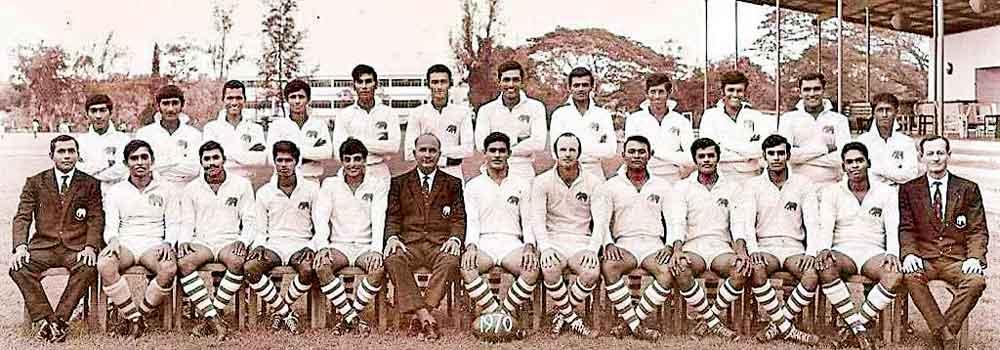
When Zaruk left school, he returned to rugby in 1966. “That was my first year playing for the Trinity First XV, and I was awarded a Lion that very year. To earn a Lion in your first season was something rare; it had been ten years since anyone had done that.
Memorable People
“Our bus driver, whom we fondly called ‘Bus Banda’, was one of our biggest critics and supporters. After matches, he’d analyse our play – ‘You didn’t tackle. You didn’t pass quickly enough. You avoided the ruck’. His criticism was constructive. On the way back from games, he’d debrief us before the coach even did!” he recalled.
Joining the Army
After playing for Havies (1967–1969), he joined the Sri Lanka Army in 1970. “I was encouraged by Brigadier P.D. Ramanayake, who scouted sportsmen for the Army. He took me to the Army Commander, who laughed and said, ‘You may be short, but you’ll be commanding men six feet tall – don’t worry!” recalls Japana.
The Army gave him huge encouragement. “General Sepala Attygalle, the Army Commander, supported us and was proud when we won the Clifford Cup twice during his tenure – once against Police (19–19) with S.P. de Silva as captain in 1973, and later in 1975, when we beat Air Force when Saliya Udugama was captain,” he said.
“We were coached by Berty Dias initially, and later by General Sena Sylva and Denzil Kobbekaduwa – both were inspiring mentors. Col. Kandiah handled our fitness, and General Seneviratne chaired rugby administration. Other notable supporters included Brigadier Halangoda, who was very keen on developing Army rugby, and General Thurairaja, who ensured injured players were treated immediately – he bypassed red tape to take care of us. His superior, Thambiah of the Medical Corps, was also a great supporter of sportsmen,” said Japana.
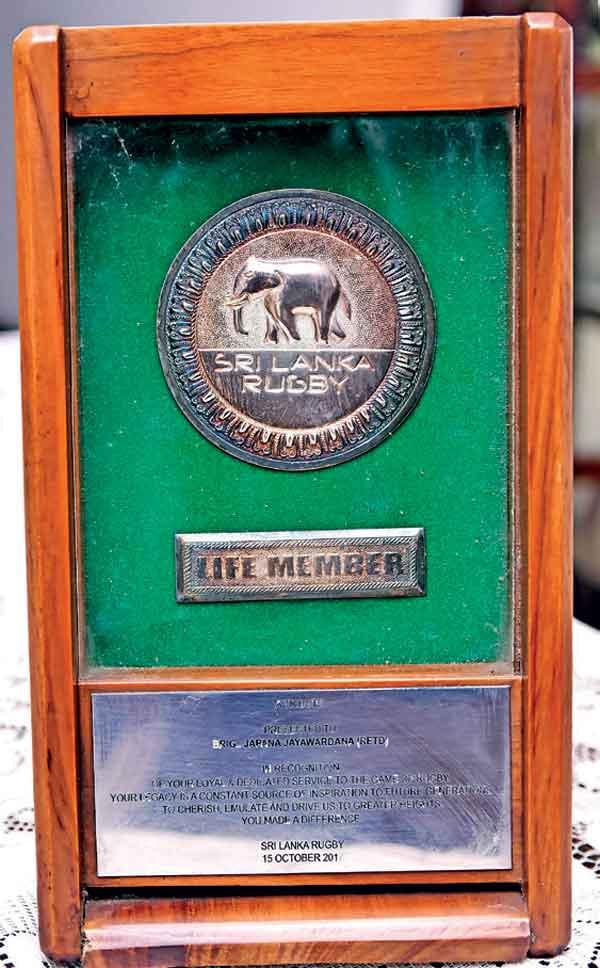
Army Rugby and Teammates
“Our captain was Bashoo Musafer, with S.P. de Silva – a double international in rugby and soccer – as vice-captain. “Only a handful of us had played rugby before. But we built a great team spirit, and eventually many of them represented Sri Lanka,” he says. Japana played for the Army until 1981, making it about 14–15 years of club rugby, from 1967 to 1981.
National and International Rugby
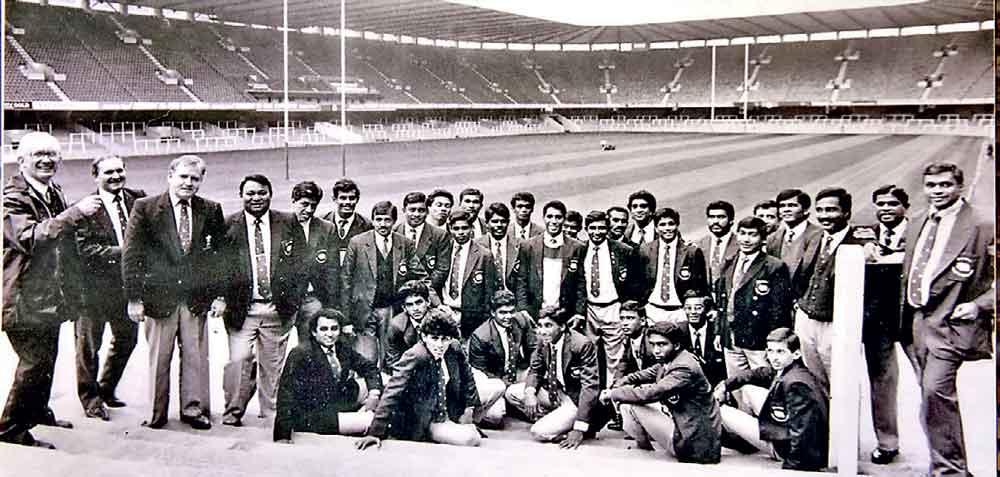
Japana first played for Sri Lanka in 1967 at the All-India Tournament. Later, he represented Sri Lanka against several foreign sides such as Bosuns (UK), Combined French Universities, Japanese National Team, London Welsh, The Far Eastern Defence Services and many All-India Tournaments.
“The nickname ‘Japana’ came from my initials – J.P.A. Jayawardena – and my small build. In the boarding house, everyone had nicknames. Because I was small, quick, and ‘Japan-built’, they started calling me ‘Japan Bonikka’. From there it became ‘Japana’,” he says.
Reflections
Rugby shaped his entire life. “Though small in stature, I was always encouraged to do bigger things – to play against men double my size and still hold my own. That encouragement from school, my coaches, and my teammates gave me the confidence to achieve everything I did – in rugby, in the Army, and in life,” he says.
“The Army Commander at the time Gen. Sepala Atygalle was very supportive. In fact, several Army Commanders over the years played a key role in encouraging rugby. Generals Dennis Perera, Tissa Weeratunga, and Hamilton Wanasinghe were all deeply involved in promoting the sport. General Wanasinghe was particularly keen, and on his request I coached Ananda. There were others too — General Cecil Waidyaratna, General Jerry Silva – all of whom gave tremendous support to Army rugby,” says Japana.
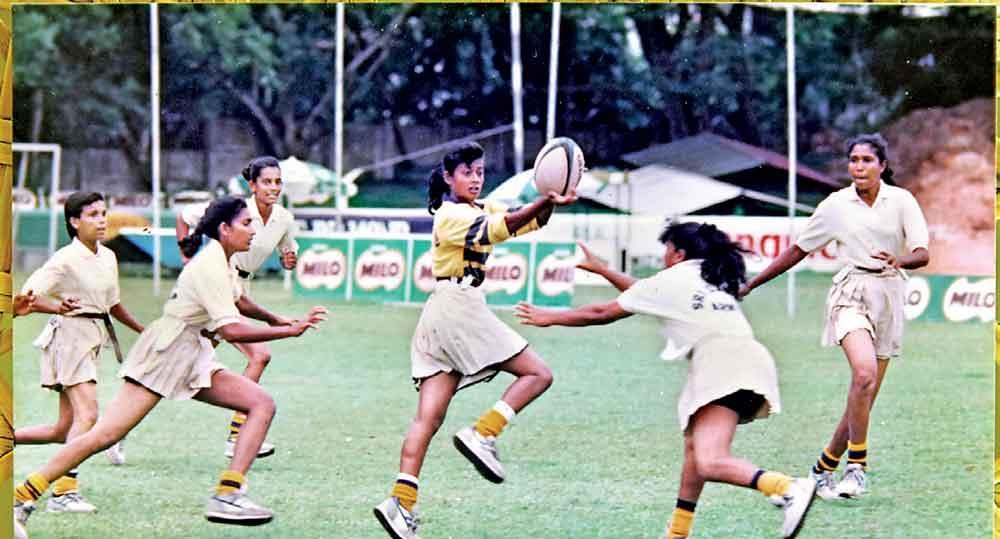
“While commanding a regiment of 2,500 men, I was also placed in charge of 5,000 women under my command. When the Women’s Corps was formed under General Denis Perera, I encouraged the formation of a women’s rugby team
“Later, General Rohan Daluwatte, himself a fine sportsman and basketball player, continued that tradition. As chairman of Army rugby, I was fortunate to have his encouragement to bring in foreign players and coaches. After we played London Welsh, I established connections there, which allowed us to invite coaches and players from Wales to train the Army team,” he adds.
“Following General Daluwatte, under General Srilal Weerasuriya, we brought down Coach Kelvin Ferrington from Australia through the efforts of Dilip Kumar and Jayantha Weerasinghe, both based in Australia at the time. Jayantha, who had coached the Army before emigrating, was a former Secretary of the Rugby Union. With Ferrington’s guidance, we achieved remarkable success, defeating several top clubs. He was an Australian league coach and introduced a new level of professionalism,” says Japana.
“Afterwards, General Balagalle also gave immense support. Throughout these years, as Chairman of Army Rugby, I always had the full backing of the commanders. Without that, it would have been impossible to run training camps, motivate players, and build a cohesive team. Our emphasis was always on teamwork – mixing officers and other ranks so that everyone played as one unit. This unity was key to our success,” he adds.
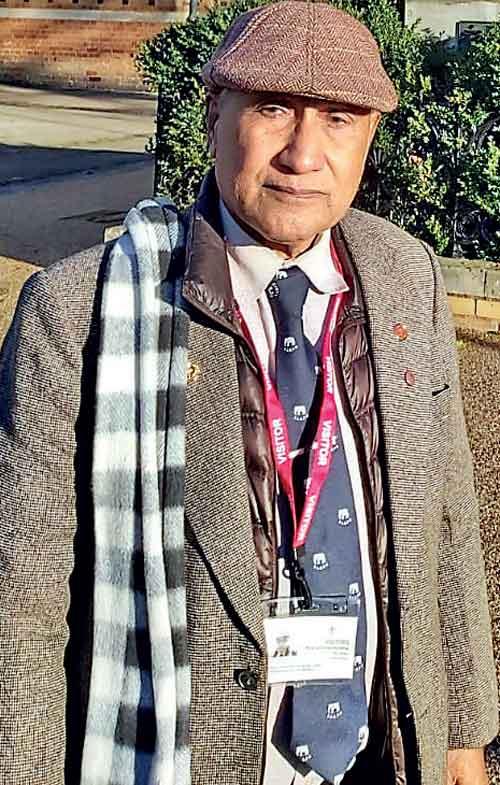
“We reached the finals many times, sometimes losing narrowly – but those achievements were commendable considering we were operating during wartime. Despite the ongoing conflict, we continued to play and maintain discipline and spirit. Today, with no war and all facilities available, the Army should ideally be performing even better across all sports ” he points out.
As Chairman of Army Rugby, Jayawardena pushed boundaries. Leveraging friendships with London Welsh players, he brought down foreign coaches from Wales and Australia. “I must also acknowledge the past rugby chairmen who contributed immensely before me”
“Together, we also focused on developing local talent. Rather than depending solely on foreign players, we sent several Army players to Wales for advanced training.
Referees Society
After Metha Abeygunawardena and Ana Saranapala, Japana took over as Chairman of Referees Society in 1997 for about two years. “We made it a practice to hold annual conferences between referees and coaches to interpret new laws together. These meetings, held twice a year, ensured consistency and avoided disputes. We also invited international referee assessors to evaluate and train our officials, and some of our referees were later sent abroad ,” he says.
“Refereeing is not just about knowing the laws; it’s about managing 30 players on the field. Mistakes happen even at the highest levels, but the goal is always to minimise them. Complaints must be formal and evidence-based – not gossip,” he said.
He is passionate about the five links that sustain rugby: players, coaches, referees, administrators, spectators. “If one link fails, the game suffers,” he insists.
He also calls for urgent reforms: random drug testing, spectator education, and non-contact mini rugby for children. In terms of administration, during his era – from 1967 to 1982 – Rugby Union presidents generally served for one or two years. “Each knew his successor in advance, ensuring smooth transitions and continuity. None interfered after stepping down. I too followed that principle."
A pioneer of women’s rugby, he was directly involved in its early development. “While commanding a regiment of 2,500 men, I was also placed in charge of 5,000 women under my command. When the Women’s Corps was formed under General Denis Perera, I encouraged the formation of a women’s rugby team.
He also pioneered the Central Provincial Referees’ Society, bringing a Referee Coach from Sydney to train referees in the region. Later, while serving in Anuradhapura in 1994, he organised an exhibition game featuring school players from Trinity to introduce rugby to the North Central Province. That effort later grew into a full-fledged regional rugby union under Lt Col Dhammika Gunasekara. He also worked with the Navy for several years on rugby development programmes.
“Looking ahead, I’ve always felt that, considering our physical build and our place in South and Southeast Asia, Sri Lanka should consider developing weight-class rugby, similar to boxing. That would allow fairer competition among players of similar size and weight. At the same time, we must also focus strongly on rugby sevens."
“In our time, rugby had a certain beauty – we worked the ball through the three-quarters, created loose play, and used our skills. The wings had space to run; the crowd loved the scissors moves, the dummies, the cross-kicks, and the punts. Today, you rarely see those. The modern game has become more physical – hit after hit, ruck after ruck, with frequent turnovers. It’s effective, yes, but the artistry, the flair of open running rugby, has largely disappeared,” he opined.
“Sadly, the gentlemanly approach we once valued so much has faded too. Many play to win at any cost. If we want to revive rugby’s full glory, the five key links must stay connected – players, coaches, referees, administrators, and spectators.”