Reply To:
Name - Reply Comment
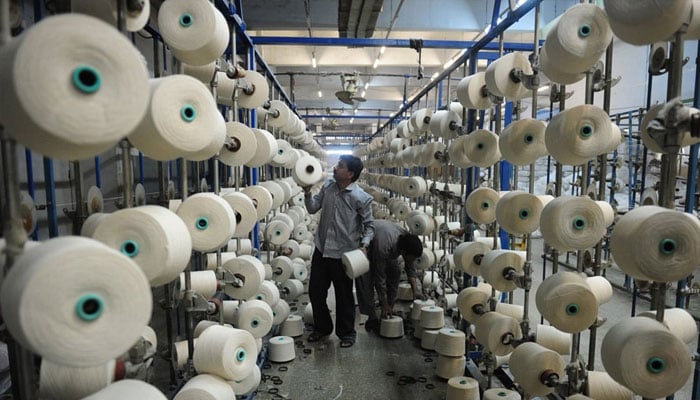 Pakistan’s textile industry, long heralded as the backbone of the nation’s economy, is facing one of its most severe crises in decades.
In the fiscal year 2024–25, the country’s cotton import bill skyrocketed by a staggering 114%, surpassing the \$2.5 billion mark, according to the latest figures from the Pakistan Bureau of Statistics.
Behind this dramatic surge lies a deeper and more troubling story of domestic agricultural decline, policy paralysis, and a growing reliance on foreign inputs for the very industry that once epitomised Pakistan’s self-reliance.
At the heart of the crisis is a collapse in local cotton production. Once the world’s fourth-largest cotton producer, Pakistan is now struggling to meet even half of the textile sector’s raw material demands domestically.
The shortfall has forced manufacturers to turn to international markets, exposing the industry to global price fluctuations, foreign exchange volatility, and rising freight costs—all of which further strain an already faltering economy.
Cotton is the lifeblood of Pakistan’s textile industry, which accounts for over 60% of the country’s total exports and employs millions, both directly and indirectly.
Traditionally, the country relied on its own cotton farmers to supply the raw material required for spinning mills and garment factories.
But as domestic output declined due to climate shocks, pest infestations, water shortages, and outdated farming practices, that equation began to shift.
In FY25, Pakistan imported more than 5.3 million bales of cotton—a dramatic leap from previous years.
The $2.5 billion import bill is not just a reflection of quantity; it is also an indictment of rising international cotton prices, a weak Pakistani rupee, and the failure of successive governments to reverse the erosion of domestic cotton cultivation.The country now imports cotton from sources such as the United States, Brazil, and Egypt, exposing its flagship industry to international supply chain disruptions and geopolitical tensions.
The situation has raised alarm bells across the board—from exporters fearing cost overruns to policymakers concerned about Pakistan’s ballooning trade deficit.
The textile sector has already been under pressure from various quarters.
Load shedding, expensive energy tariffs, cumbersome taxation, and inconsistent government policies have made it increasingly difficult for textile exporters to stay competitive.
With the added burden of costly cotton imports, many small and medium-sized units are teetering on the brink of closure.
Industrialists have warned that if the trend continues, Pakistan may lose vital export orders to regional competitors like Bangladesh, Vietnam, and India—countries that are not only sourcing cotton more efficiently but also offering better policy environments to their exporters.
Pakistan’s textile exports saw a modest recovery earlier this year due to improved global demand and post-pandemic normalisation, but the surging cost of raw materials threatens to wipe out those gains.
Profit margins are narrowing, and the cost per unit of finished goods is rising.
The sector, which once generated around $20 billion annually in exports, is now struggling to maintain its foothold in key markets such as the United States and the European Union (EU).
Much of the blame for the crisis rests with the sharp decline in domestic cotton production.
According to estimates, Pakistan produced just 6.5 million bales in FY25—down from a peak of nearly 14 million bales in the early 2010s.
That shortfall is too large to be bridged by imports alone without inflicting significant economic pain.
Farmers, especially in the cotton-rich belt of Punjab and Sindh, have increasingly shifted away from the crop due to poor support prices, a lack of government incentives, and the devastation caused by floods and pests.
In particular, the pink bollworm infestation over the past three years has decimated yields in major producing regions.
At the same time, erratic rainfall and a failing irrigation system have made cotton farming a risky proposition.
Add to this the unchecked use of substandard seeds and the absence of new, high-yield varieties, and the result is an agricultural breakdown that has pushed Pakistan’s cotton ecosystem into a spiral of decline.
The economic implications of the soaring cotton import bill are manifold.
With the Pakistani rupee hovering near historic lows against the U.S. dollar, importing raw materials has become more expensive than ever.
Each additional shipment of cotton contributes to the drain on Pakistan’s foreign currency reserves, which remain dangerously low.
The country’s trade deficit, already bloated by energy imports and a weak export base, is growing further, and the textile sector—once a net earner of foreign exchange—is now adding to the pressure.
Foreign exchange constraints have led to delays in the opening of Letters of Credit (LCs), disrupting the supply of imported cotton to mills.
Textile manufacturers have been vocal in their criticism of the central bank’s restrictive policies, which they argue are crippling the sector's ability to function smoothly.
The resulting uncertainty has made long-term planning virtually impossible.
Despite multiple warnings from industry bodies and repeated calls for intervention, the government has yet to formulate a coherent strategy to tackle the twin crises of cotton shortage and textile instability.
Instead, policy responses have been piecemeal, short-term, and often contradictory.
For instance, while subsidies are occasionally offered to farmers, they are rarely targeted or sufficient to incentivise large-scale cotton cultivation.
Meanwhile, high input costs—particularly for fertilisers and pesticides—have pushed small farmers toward bankruptcy or crop-switching.
Efforts to introduce genetically modified (GM) cotton varieties have been half-hearted and poorly regulated, leading to widespread seed fraud and low germination rates.
On the industrial side, textile exporters have complained about the lack of consistent energy pricing, export refinancing delays, and bureaucratic red tape.
The absence of a long-term textile policy, despite the sector's economic centrality, speaks volumes about the state’s prioritisation of the industry.
While much of the discussion has centred on exports and economics, the social implications of the textile sector’s crisis are equally grave.
The industry is one of Pakistan’s largest employers, with an estimated 10 million people linked to the cotton-textile value chain.
The cascading effect of mill closures, layoffs, and reduced production is being felt in communities across Punjab, Sindh, and Karachi’s industrial zones.
Many of those affected are women and informal labourers—groups with limited access to alternative employment opportunities or state support.
For them, the collapse of a factory or the loss of a spinning job means not just economic hardship but a complete breakdown of livelihood security.
Pakistan’s textile industry is not merely a commercial enterprise.
It is deeply intertwined with the country’s agricultural heritage, industrial identity, and economic aspirations.
The current crisis—symbolised by a 114% surge in cotton import costs—is not just a temporary setback.
It is a flashing red light, signalling a deeper malaise that, if left unchecked, could lead to long-term deindustrialisation and economic fragility.
The numbers may point to bales, billions, and percentages—but behind them lies a national story of neglect, complacency, and unravelling potential.
Whether this crisis becomes a turning point or a death knell remains to be seen.
But for now, Pakistan’s once-proud textile sector stands at a dangerous crossroads, weighed down by the cost of imported cotton and haunted by the absence of domestic resolve.