Reply To:
Name - Reply Comment
The early hours of September 21, 2025, were marked by tragedy in the remote Tirah Valley of Khyber Pakhtunkhwa, as Pakistan’s own government allegedly carried out an aerial assault on its citizens. The strike claimed 30 innocent lives, including women and children, triggering global outrage, reviving concerns over state impunity, and raising urgent questions about the militarisation of domestic policy. The fact that the attack was carried out using advanced Chinese-manufactured drones and precision-guided bombs only adds to the gravity and international ramifications of the incident.
Many local opposition figures and other authorities accused the Pakistani military of carrying out night-time air raids as part of a “counterterror operation” to take out fighters in mountainous areas bordering Afghanistan, according to Al Jazeera.
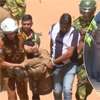
The airstrike targeted the tiny village of Matre Dara, nestled in the mountainous terrain bordering Afghanistan. At approximately 2 a.m., when entire families were asleep, Pakistan Air Force jets, specifically Chinese-made JF-17s, dropped no fewer than eight LS-6 bombs, described in defence journals as laser-guided, high-precision munitions. Witnesses recount scenes of chaos and horror. While official statements were conspicuously absent, opposition lawmakers, human rights observers, and survivors identified the operation as a deliberate state action rather than a misdirected anti-terror operation.
The silence both official and public speaks volumes about the current order in Pakistan. Local officials and security sources later confirmed, often off-record, that military jets had deliberately targeted homes where “dozens of TTP hideouts” had historically existed. But even if there had been intelligence suggesting the presence of militants, the scale and indiscriminate nature of the attack defy any lawful rules of engagement. Pakistan’s strategy of bombarding civilian areas under the pretext of targeting militants is nothing new; it represents a recurring, deliberate pattern, especially in restive border areas like Khyber Pakhtunkhwa and Balochistan. What distinguishes this attack is both its magnitude and the blunt admission of state brutality, delivered not just by opposition figures but by international media and rights organizations.
Human rights groups swiftly issued calls for an impartial and transparent investigation, highlighting Pakistan’s constitutional obligation to protect all civilian life, a duty repeatedly flouted with impunity. The Human Rights Commission of Pakistan (HRCP) joined the chorus by demanding accountability and an end to attacks on unarmed civilians. Lawmakers from the region, such as Iqbal Afridi, minced no words in labelling the strike “nothing less than an attack on unarmed civilians,” reflecting growing resentment and fear among the province’s beleaguered population.
Perhaps the most globally alarming dimension was the deployment of state-of-the-art Chinese military technology against domestic targets. Reports confirm the use of JF-17 fighter jets co-produced by Pakistan and China and advanced LS-6 bombs, which are designed for maximum precision destruction.
This is not just a case of Pakistan drawing on foreign military aid; it is an exposé of how Beijing’s drones and precision munitions are now directly implicated in internal suppression and human rights abuses by a client state. Such weaponisation of imported combat technology, in the hands of a military regime accustomed to operating without oversight, sets a chilling precedent for state conduct in conflict zones.
The UN Human Rights Council session the day after the bombing witnessed India, among other,s forcefully condemning Pakistan’s “bombing of its own people” and drawing attention to the grotesque paradox of a government that purports to fight extremism by indiscriminately slaughtering its own population. International NGOs and civil society organisations have started calling out the carnage and have appealed to the international community and the UNHRC to hold Pakistan accountable for free and fair investigations into such incidents. At the ongoing session, the continued drone attacks on civilian communities were highlighted during oral interventions. It was stated that more than 60,000 people have been forced from their homes and are extremely vulnerable to increasing attacks by security forces and militants. The community is being sandwiched between their own government and militants. The increasing linkage between Chinese arms transfers and internal repression in fragile states is now the subject of international scrutiny and debate.
The carnage in Tirah Valley has left the local community traumatised, fuelling protests and bitter public debate within Khyber Pakhtunkhwa and across the political spectrum. Survivors, opposition leaders, and rights defenders voice a common rage. The repeated subjugation of an entire population under the pretext of counter-terror operations and the state’s failure to distinguish between armed militants and sleeping families. As the death toll reached thirty, calls for justice have layered upon older grievances over persistent militarisation, political disenfranchisement, and socioeconomic marginalization.
These attacks mark a further hardening of the Pakistani state’s approach to its own peripheries. In previous years, the use of U.S. and Pakistani-operated drones in these regions was roundly condemned by Pakistani authorities as an infringement on sovereignty and a source of trauma for local populations. Pakistan stands accused in virtually identical terms except now the hands at the controls are Pakistani, piloting Chinese drones and warplanes.
This tragedy in Khyber Pakhtunkhwa is more than just another blot on Pakistan’s human rights record; it is a grim harbinger of what impunity, militarised governance, and foreign arms partnerships can produce in fragile states. The blunt force of state violence, enabled by foreign technology and shielded by silence, has torn communities asunder and cast a long shadow over the region’s future. Whether justice or reform follows depends not just on conscience within Pakistan, but on enduring international vigilance and a refusal to let atrocities be obscured by the rhetoric of counter-terrorism.