Reply To:
Name - Reply Comment
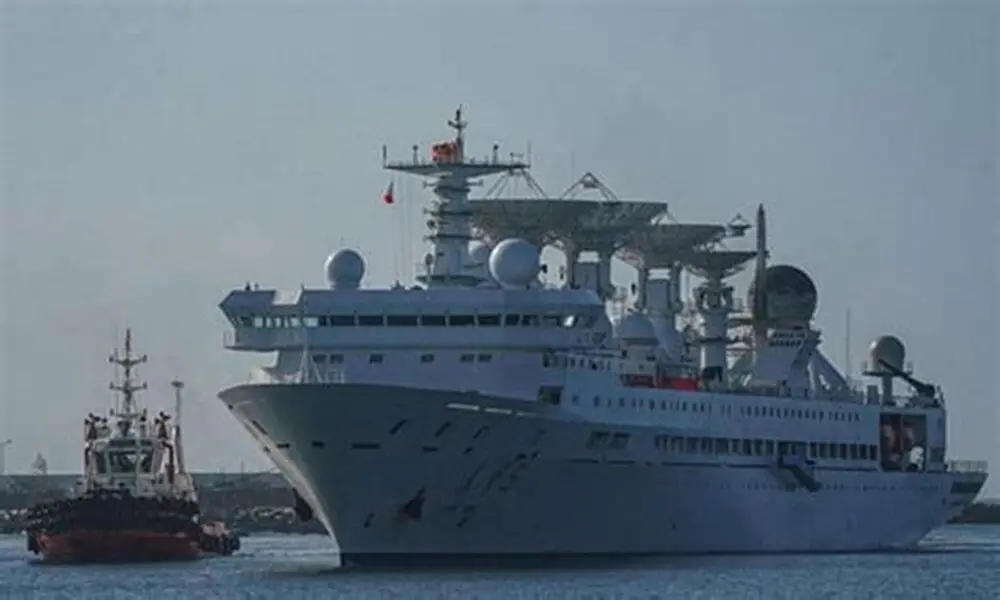 In the vast and contested waters of the Indian Ocean, Sri Lanka finds itself navigating an increasingly complex diplomatic tide. Scientific research vessels—once viewed as benign tools for oceanographic exploration—have now become flashpoints in a broader geopolitical power struggle. With global powers like India, China, and the United States vying for influence in the Indo-Pacific, Colombo’s decisions over who gets access to its maritime domain carry heightened strategic weight.
At the center of this debate lies the urgent need for Sri Lanka to finalize a transparent and enforceable Standard Operating Procedure (SOP) for foreign research vessels. Following a year-long moratorium on such visits—enacted in 2023 amid rising regional tensions—the government pledged to establish a balanced framework. But delays, conflicting interests, and mounting external pressure have raised concerns about whether this SOP will serve national interests or become a tool for geopolitical accommodation.
Scientific research vessels have become the subject of high-stakes diplomacy
Once purely the domain of scientists and marine biologists, foreign research vessels are now central players in a high-stakes geopolitical contest, especially in the Indo-Pacific region. In Sri Lanka—strategically located along vital Indian Ocean trade routes—these vessels now trigger debates not just about science, but about sovereignty, regional alignments, and external pressure.
Scientific missions, including those sponsored by the United Nations or regional research institutions, aim to gather critical data on marine biodiversity, fish stocks, and climate change impacts. However, in recent years, their entry into Sri Lankan waters has been judged less on scientific merit and more on the origin of the vessel—and the geopolitical implications it carries.
Sri Lanka’s caution stems from real concerns. India, in particular, has repeatedly objected to the presence of Chinese research and military vessels in Sri Lankan ports, viewing them as potential platforms for surveillance or strategic mapping under the guise of scientific exploration. These objections are not new, but they have gained urgency amid the Indo-Pacific power contest between India, China, and the United States.
According to diplomatic sources, India has pressed Sri Lanka to include “sensitive zone exclusion” clauses in its revised Standard Operating Procedure (SOP). These would restrict access to areas near key naval bases, submarine routes, or strategic assets—essentially transforming a scientific protocol into a security document. The United States, while more discreet, has supported India’s position, framing it as a precautionary measure against China’s expanding maritime presence.
However, some observers caution that external involvement could affect the neutrality of what is intended to be a purely technical policy matter. A policy designed to manage scientific collaboration may, in practice, become a tool to limit Chinese access—undermining the principles of scientific openness and Sri Lanka’s sovereign decision-making.
Foreign Minister Vijitha Herath, speaking in January 2025, was clear in stating that Sri Lanka is under no obligation to seek approval from India or any other country for foreign vessel visits. Yet, historical precedent complicates matters. Past administrations often opted to informally accommodate Indian concerns to avoid friction—setting a pattern that continues to shape current policies, even in the absence of a formal requirement.
In this increasingly fraught context, the need for a transparent and enforceable SOP is more urgent than ever. Without clear guidelines grounded in national interest rather than external pressure, Sri Lanka risks not only losing valuable scientific partnerships but also ceding elements of its maritime sovereignty.
The debate over research vessel access
The most recent flashpoint in this ongoing saga was the delayed visit of the UN-flagged research vessel Dr. Fridtjof Nansen, operated by the Food and Agriculture Organization (FAO). Originally scheduled to dock in Colombo in mid-July 2025, the vessel was intended to conduct marine research vital to Sri Lanka’s fisheries and climate resilience initiatives.
However, a delayed government response—stemming from the absence of finalized Standard Operating Procedures (SOPs)—resulted in the Food and Agriculture Organization (FAO) redeploying the research vessel to Madagascar. Although President Anura Kumara Dissanayake granted special approval at a late stage, the opportunity had already been lost.
According to FAO sources, the consequences of this delay are significant. The vessel may not return to Sri Lanka until after 2030, creating a major gap in vital oceanic and climate research. Additionally, the country faces a direct loss of over USD 1 million in funding and technical resources that were allocated for the mission.
More critically, the missed deployment has compromised valuable research opportunities that could have supported Sri Lanka’s applications to international financing bodies such as the Green Climate Fund and other aid mechanisms. These setbacks may hinder future climate resilience efforts and scientific collaboration.
Local scientists and fisheries officials have expressed deep frustration over the bureaucratic delays, warning that Sri Lanka risks falling behind in both regional research and international environmental cooperation.
The mission had been in planning since late 2023, yet bureaucratic gridlock and political hesitation undermined it. This incident has exposed how the lack of a consistent, transparent SOP is affecting Sri Lanka’s scientific capabilities and diplomatic standing.
SOP development: Between policy need and political pressure
The SOP issue is not new. Following increased scrutiny over the visits of Chinese research vessels in 2023, the former government imposed a one-year moratorium on all foreign research ships. The goal: draft a detailed, science-based SOP to regulate future visits.
However, that moratorium expired in December 2024 without the SOP being finalized. Only in January 2025 did the new administration appoint a committee—chaired by Foreign Minister Vijitha Herath and comprising senior Navy officials, legal experts from the Attorney General’s Department, and representatives from the Marine and Fisheries sectors.
Even with the committee in place, progress has been slow. As of July 2025, no final SOP has been announced. This delay reflects deeper political tensions. Some factions advocate for strict, security-oriented protocols to appease India and the U.S., while others argue for science-led procedures that preserve Sri Lanka’s autonomy and global research partnerships.
Foreign Ministry officials have admitted that the current committee has struggled to balance these competing interests. One senior official noted, “A purely technical SOP won’t satisfy those with strategic agendas. That’s the reality.”
India and the U.S.: Cooperation or coercion?
India has consistently expressed concern over Chinese research vessels operating in Sri Lankan waters, particularly near sensitive military and economic zones. In recent years, India objected to the docking of two Chinese research ships—one in Colombo and the other in Hambantota—on grounds that they could conduct underwater surveillance and map critical submarine routes.
India's influence on Sri Lanka’s SOP debate is significant. According to diplomatic sources, New Delhi has urged Colombo to incorporate "sensitive zone exclusion" clauses in the new Standard Operating Procedure (SOP). These clauses would limit access to strategically significant areas, including naval bases, submarine operating zones, and infrastructure developed through Indian partnerships, such as the Trincomalee oil tank complex.
While the United States has been less vocal in public, it has conveyed similar concerns through diplomatic channels. Washington views China’s expanding presence in the Indian Ocean as a strategic challenge and has quietly supported India’s efforts to counterbalance Beijing’s maritime activities in the region.
However, many Sri Lankan observers and former diplomats warn that this pressure risks transforming a technical document into a political one. By giving foreign powers de facto veto power over scientific missions, Sri Lanka could set a dangerous precedent. “It’s no longer a question of science,” said one retired ambassador. “It’s about who gets to decide what happens in our waters.”
The concern is not theoretical. Some in the Ministry of Fisheries say the FAO mission was stalled partly because India raised informal concerns over the ship’s itinerary—even though the vessel flew a UN flag and had a purely scientific mandate.
The Indo-Pacific contest and the limits of neutrality
Sri Lanka has long embraced a policy of non-alignment, engaging diplomatically with multiple powers while avoiding formal military alliances. However, the intensifying contest between China and the India-U.S. axis in the Indo-Pacific is testing the limits of that neutrality.
Sri Lanka’s maritime geography—positioned along critical sea lanes and near several strategic chokepoints—makes it a pivotal player in regional naval diplomacy. As Chinese influence deepens through port investments and soft power initiatives, both India and the United States have intensified their own strategic engagement with Colombo.
In April 2025, Sri Lanka signed a maritime security Memorandum of Understanding (MoU) with India, signaling closer defense cooperation. Simultaneously, however, Colombo unveiled a new maritime cooperation framework with China, highlighting its attempt to balance competing interests.
This diplomatic tightrope, while tactically advantageous in the short term, is unlikely to be sustainable over time—especially in the absence of strong internal mechanisms, such as a well-defined SOP, to clearly assert and protect Sri Lanka’s strategic boundaries.
Even a technically robust SOP may not resolve this issue. Geopolitical actors are unlikely to respect procedural fairness if it conflicts with their strategic interests. As one think tank expert put it, “Sri Lanka could have the most scientifically sound SOP on Earth, and it still wouldn’t stop New Delhi or Washington from objecting to a Chinese ship—or vice versa.”
This dynamic places enormous pressure on Sri Lankan institutions. Ministries, scientists, and naval officers are left juggling contradictory demands: meet international research commitments, avoid upsetting regional powers, and maintain public trust.
The issue surrounding the SOP is more than just an exercise in bureaucratic housekeeping—it represents a critical test of Sri Lanka’s sovereignty in an era marked by intensifying great-power rivalry. While the country certainly needs a robust, science-based SOP for managing foreign research vessels, what it needs even more is a comprehensive maritime strategy. Such a strategy should reinforce national institutions, ensure transparency and public accountability, and promote regional cooperation without compromising autonomy.
As the Dr. Fridtjof Nansen departs and geopolitical pressure escalates, the path ahead is clear but demanding. Sri Lanka must avoid turning every foreign vessel visit into a geopolitical litmus test and instead ground its decisions in long-term national interests. The ocean may be vast and contested, but Sri Lanka’s sovereignty within it must remain unequivocally non-negotiable.