Reply To:
Name - Reply Comment
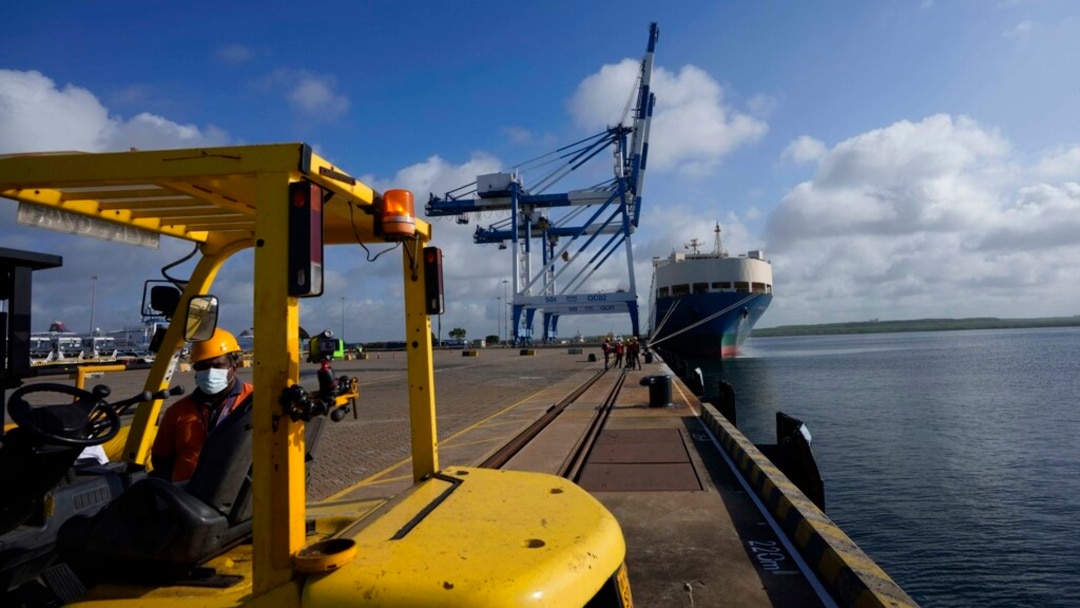 The Northern Province of Sri Lanka, one of the country’s most underdeveloped and impoverished regions, has become a focal point for Chinese investments. These efforts, driven by both commercial and strategic interests, are reshaping the region’s economic and social landscape. However, they are also raising concerns about the long-term implications for local communities, particularly the Tamil population.
In January 2023, the Center for Strategic Studies – Trincomalee released a report titled *"Is Sea Cucumber Farming in Northern Sri Lanka a Chinese Checkpoint in Palk Bay?"* Sea cucumbers, considered a delicacy in China and Southeast Asia, are a lucrative business for Chinese companies. The study highlights how the rapid expansion of Chinese-backed sea cucumber farming in Jaffna has systematically weakened local fisheries. Over time, this could lead to the disappearance of traditional fishing in northern Sri Lanka, making the region’s seafood supply entirely dependent on China. The current situation strongly validates the report’s concerns.
Chinese investments in sea cucumber farming are significantly impacting the livelihoods of Tamil fishermen in the Northern Province. These firms, often operating directly or through proxies, have established extensive farming operations in the region, reducing the fishing areas and catch available to local fishermen.
The rapid expansion of Chinese-backed sea cucumber farming in Jaffna and surrounding districts—Kilinochchi and Mannar—has systematically weakened local fisheries, reducing the traditional fishing areas available to Tamil fishermen. The industry has grown aggressively, with 616 acres officially designated for sea cucumber farming and 265 operational farms, over 50 of which are suspected to be funded through Chinese proxies. Additionally, one of Sri Lanka’s two hatching farms, located in Ariyalai, is fully operated by Chinese entities. Under the direction of former Fisheries Minister Douglas Devananda, plans were introduced in June 2024 to establish a 70-acre Chinese sea cucumber farm on Kannativu Island, further limiting access to fishing zones. The Chunman Cultural Business Group has even proposed an expansive 36,800-acre sea cucumber farm, intensifying concerns among local communities. As Chinese firms take over more coastal areas for farming, Tamil fishermen are being pushed out, threatening their livelihoods and the sustainability of Sri Lanka’s traditional fishing economy.
China's involvement in Sri Lanka’s Northern Province extends far beyond sea cucumber farming, with the region emerging as a hub for Chinese-funded projects aimed at advancing both economic and strategic interests. Chinese diplomats have encouraged collaborations with Chinese fishing companies, proposing investments in local fishing activities while offering surveillance equipment to the Sri Lankan Navy and Coast Guard to curb illegal fishing. Additionally, China National Energy Engineering and Construction Company Ltd. (CNEECC) has pledged USD 800 million to five renewable energy projects, including those in the Northern Province, aiming to generate 400 MW of clean energy. Meanwhile, Chinese firms are vying for redevelopment contracts to modernize fishing harbors across the North. Notably, China Railway International Group Co. Ltd. (CRIG) has expressed interest in building a fishery harbor at Point Pedro in Jaffna and upgrading harbors in Pesalai, Gurunagar, and Cod Bay, reinforcing China's expanding footprint in the region’s infrastructure and economic landscape.
China’s interest in Northern Sri Lanka appears to have begun sometime in 2021 with Chinese Ambassador Qi Zhenhong’s visit to Jaffna. Donning local attire, he visited cultural landmarks like Nallur Kandaswamy Temple and the Jaffna Library, while distributing aid to fishermen reportedly impacted by Indian fishing activities.
By 2023, Zhenhong returned, addressing a public gathering to highlight Chinese investors’ growing interest in the region. After the November 2024 elections, he became the first foreign diplomat to visit Northern Sri Lanka, commending the victory of President Aruna Kumar Dissanayake and reinforcing China’s deepening economic and strategic engagement in the region.
When speaking of the extent of Chinese involvement in Northern Sri Lanka, one cannot overlook the humanitarian initiatives that have accompanied its growing presence. China has strategically positioned itself in the region, offering food packages, medicine, diesel fuel, and school uniforms under a 500 million yuan assistance program. While these efforts appear charitable, they also provide an opportunity for Chinese embassy delegations to engage with fishermen’s associations and religious organizations, subtly influencing discussions on poaching by Indian fishermen and environmental concerns linked to bottom trawling.
In March 2025, senior Chinese officials engaged with representatives of fishermen from the Northern Islands, ostensibly to understand their grievances. However, the timing and nature of the discussions suggest a potential attempt to exploit the situation to further China's strategic interests in the region. Its recent interest in Jaffna reflects a broader geopolitical strategy, given the ethnic, linguistic, and cultural ties between this region and Southern India. As China strengthens its presence, questions remain about the true motives behind its diplomatic outreach and economic investments in the region.
Beneath its diplomatic gestures lies a more calculated strategy—China’s consistent support for the Sri Lankan government in UN resolutions on human rights violations against Tamils raises serious doubts about its true motives. Having remained silent on Tamil rights for years, China’s sudden outreach seems less about genuine concern and more about deepening political and economic influence in the region. This shift suggests a broader geopolitical play, one where humanitarian efforts serve as a stepping stone to securing long-term strategic footholds.
By leveraging educational and cultural programs, Beijing is intertwining academic engagement with geopolitical interests. Through scholarships, exchange programs, and research grants, Chinese entities—such as Huawei Technologies Lanka—are forging ties with institutions like Jaffna University, with select undergraduate placements reinforcing this outreach. Additionally, China has extended its influence into specialized training, with the Chinese Embassy nominating 26 Sri Lankan participants in 2024 for a program showcasing Chinese expertise in sea cucumber farming and seafood processing, indirectly strengthening its control over the marine sector.
Beyond academia, China’s cultural initiatives aim to cement its presence. Efforts to establish Confucius Centers at Jaffna University and Eastern University signal a push to institutionalize Chinese language and cultural studies. An MoU between Eastern University and Yunnan University further advances linguistic exchanges. Meanwhile, a Chinese delegation led by Pan Yue, Minister for the National Ethnic Affairs Commission (NEAC), proposed a Sri Lanka-China Cultural Affairs Center in Jaffna, raising concerns given NEAC’s controversial track record in suppressing minority cultures within China.
China's expanding footprint in Sri Lanka’s Northern Province is more than just an economic endeavor—it reflects a calculated strategic interest in the region. While these investments create new economic opportunities, they also raise concerns about the long-term implications for local communities, cultural identity, and national sovereignty. The growing presence of Chinese-backed initiatives—ranging from infrastructure projects to cultural exchanges—suggests a broader effort to embed China’s influence deeply within Sri Lanka’s economic and social fabric.
Particularly noteworthy is China’s sudden outreach to the Tamil population, a community it has historically overlooked in discussions on human rights and political autonomy. This shift in engagement underscores the complexity of China’s involvement, raising questions about whether its renewed interest in Northern Sri Lanka stems from genuine collaboration or strategic positioning. As China strengthens its presence, Sri Lanka must carefully navigate these developments to safeguard local interests while assessing the true motivations behind foreign investments (Vaishali Basu Sharma) -
The author is an analyst on geopolitical and macroeconomic issues