 SUSITHA FERNANDO
  Empowerment is also such an over-hacked word. As soon as women they come in we say empower, empower, empower, empower. We literally ruin the world. But actual empowerment is the commitment you have in the balance 364 days that you have in the calendar. It is not only for the 8th of March. It is to do with you providing sufficient training, sufficient counselling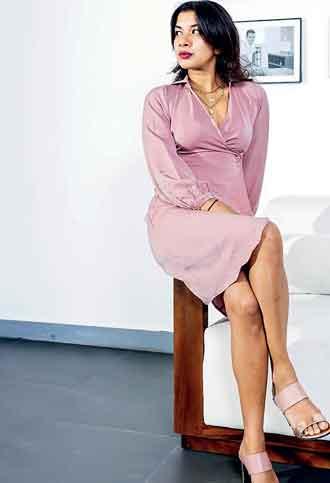
Reply To:
Name - Reply Comment
|
|
 My inspiration could be my parents who aren’t from hotelier background
Female representation is not normalised in hospitality
I think human beings have to be equal. Not genders
My different out of the box thinking has definitely helped
|
|
 |
As March 8 (yesterday) marked the International Women’s Day and with the month being dedicated to honour contributions, achievements, and the historical struggles of women in society, Daily Mirror interviewed one of the youngest achievers in her chosen profession, Ms. Sriyangani Dhanapala. She is still in her mid-thirties, handles her responsibilities as the first female Resort Manager of Cinnamon Bentota Beach, a Signature Selection of the group, and is one of the youngest to shoulder such responsibilities.
Starting her career in Brand Marketing for Cinnamon Hotels and Resorts, she has engaged in versatile areas of projects in marketing covering advertising, events, activations as well as strategic involvement to research and long-term business planning. Expertised in Brand Quality Assurance and Brand Development to improve customer experience and drive operational excellence, Shriyangani, who is fondly called ‘Sri’, served as one of the youngest females representing the operations leadership team of Cinnamon and as the Director of Brand Development for Cinnamon Hotels and Resorts and an Assistant Vice President of the John Keells Group within eight years of embarking her career. Excerpts
QTo start with, what is your background to end up in hospitality industry and what is your education?
My hometown is Kandy and I attended Hillwood College, and then from there, I was literally like a, what do you call, a wild card to go into local university. I had never had ambitions to enter the local university system or study further. I wanted to actually move and start earning. But I ended up landing an opportunity to enter university at age 19. So, I went to do my business science degree in business management at the University of Wayamba in Kuliyapitiya and I ended up getting a first class degree with a batch top.
I also did my Master’s at Post Graduate Institute of Management at Sri Jayawardenapura University, which is one of the happiest experiences I had in my life. I never thought that I would qualify to get into Postgraduate Institute of Management (PIM) because for me it’s the toughest MBA available in the country. It is very difficult to get in and very difficult to complete. So I got a merit of first class in my MBA also. And I did that and managed to finish my master’s while being in the industry during Covid times.
Q So is being in hospitality your first job after education?
No I end up having my first working opportunity with Nestle and it’s from there, I got this very rare opportunity to join Cinnamon.
And with my business management background, I was able to land a job in marketing. So, over like 5-6 years, I grew in marketing. I definitely like, from the get-go, I fell in love with the industry. That’s why I’m still in the same industry in hospitality. And with the type of marketing work I used to do, I got a lot of insight to understand the operational aspects and especially people around operations.
So, 6 years down the line, I pivoted into operations. Still with the corporate team. And then, I get my ABCs into the insights around hotel operations through something called “Brand Quality Assurance”, which is to look at standards, processes, procedures that are there across the organisation.
So, from Brand Quality Assurance, I then move into something called “Brand Development” which is to look at operational excellence areas, to look at customer experience and things like that. Over a span of 8 years, I managed to become the Director of Brand Development for Cinnamon Hotels and Resorts.
And after I settled down in that role, I became Assistant Vice President also for the John Keels group eight years into my career. And from there, I had a kind of nerve wracking and kind of once in a lifetime sort of an opportunity to whether to completely join operations full time or not. I took a bit of time to deliver it because of course, there is not many people who are coming from a non-hoteliering background who enter into full time hoteliering without going to hotel school and without having the pretext into hotel management, the traditional way. There will be a few examples in Sri Lanka. So, I also took my time to think it through and then finally I decided. At that time because I had 10 years of experience in the industry, so trusting that experience, I decided to join Cinnamon Bentota Beach, the flagship resort that the group has which goes under the brand called ‘Signature Selection’. So, I got appointed as the first female resort manager for the group on July 1 2024. So, it has been quite fulfilling. That’s the summary of my career highlights.
Q Do you think that coming from a non-hoteliering background, helped you in a way to think differently and think out of the box?
Hundred percent. Definitely, because not to discount on good practices and ways of work around hospitality, that is definitely not my intent. But being someone whose mould is a little bit different to the usual mould it is meant to be sometimes my approach and thought process on seeing things through, people management, sometimes how to kind of improve processes, how to drive operational excellence, sometimes my approaches might be a little bit different to like a traditionally groomed hotelier. So, all those things, I mean, the company also I need to give credit has kind of allowed me to be myself in this whole journey. I have changed over the years from an assistant manager to a manager to a director and now to a resource manager who is in charge of about 375 people here. The different out of the box thinking has definitely helped as well as enabled me to do, take certain very bold decisions which were right to the business at any given time.
Q We don’t find female participation in the management in the hospitality industry. What is your inspiration to tread on terrain many women would not dare to?
My source of inspiration could be my parents who are not from hotelier background. You don’t get many women who are open minded and who are very bold, who don’t fit into the traditional mould. You do get very good examples but you don’t have enough stories in the hotel industry for sure because female representation is not normalised in hospitality. It is a rare factor especially in management, in higher seats, in decision making seats you don’t get many examples in Sri Lankan context and even globally it is the case.
My parents have allowed me to grow over time as well as enabled me to stand for what is right for the occasion without doubting myself. But other than that I think I have met a lot of people who have mentored me. So, when things get I think a little bit tough, I always go back to my own set of values and ask myself whether this is aligning or not or whether this is meaningful or not. So, that also gives you a source of inspiration to remind yourself.
Q And hospitality industry has a history in Sri Lanka and maybe several decades. But why there were such few numbers of women especially in the management level compared to any other industry or professions. What is the challenge?
I think one part of the story is that with a lot of people, I mean as one particular person I am looking at the entire employee cycle of people who are in hospitality because I come from a non-hospitality background. I had a corporate role for like predominantly for a longer period of my life. And when I, with my fresh eyes look into the operational side of the majority, which is the bulk and the heart of the business, which is also the most important thing for the business, when you look at the life cycle of employment, a lot of people, females specifically get limited with their own choice based on how the personal life flows.
And of course by default, because the industry has a certain, I wouldn’t use the word demanding, it is a demeaning word to use, it says that the industry requires you to have a certain work ethic.
Even a doctor works very hard, for an example, they have extensive hours, I mean you never go and say no, this is only for the medical industry, just like that, just like a doctor, hospitality also has the same strenuous requirements or like high levels of tolerance to go up and above in your career. If you are only doing your job just for a shift and then just having your limited scope, yes you can easily do the same thing and survive for many hours. But if you want to have upward growth, that means you need to have more leadership opportunities as well as the capacity to hold the leadership opportunity that is given to you.
One thing is the fact that you are presented with opportunities to be leaders in non-conventional, non-traditional roles that are there even. And the other one is the fact that you have the capacity also insight to carry the responsibilities and the level of leadership that you need to drive to hold those positions. So these two must be married together and then only you can become successful. I mean the same philosophy applies for males as well.
But in this equation a lot of females do have a bit of challenges when they try to settle down in the industry and I am not saying no for that. But I think one of the critical things is that the organisation’s management, management philosophy believes in the capacity of females that are there in their workforce and that they do their ultimate best to empower them.
Q Empowerment and empowering women is a popular slogan or mantra. As we marked the women’s day on March 8 how far we could go to achieve this?
Empowerment is also such an over-hacked word. As soon as women they come in we say empower, empower and empower. We literally ruin the world. But actual empowerment is the commitment you have in the balance 364 days that you have in the calendar. It is not only for the 8th of March. It is to do with you providing sufficient training, sufficient counselling. Not even coaching. You need to sometimes counsel people through.
Do you have enough facilities to employ females? From accommodation to you know certain facilities that even mothers need to have and do you have a very eco-friendly structure to balance mental health, openly talk about females at workplace even specially with the males. And have that healthy environment that a woman also can again equally work. Males and females have their own little beauty around them. I am not a person who says everybody has to be equal. I think human beings have to be equal. Not genders.
So I think in that light I mean you need to have that fertile healthy environment for males and females to grow in their life.
I think that commitment depends on organisation to organisation, brand to brand and that is why you see the numbers are limited, the capacity to trust on senior level decisions you need to be exposed and you need to be able to hold responsibility at certain level, especially when you are representing a resort or specially heading operations in a certain business or a couple of businesses when you are having the profit and loss responsibility and people responsibility only you can hold that weight. So for that these enablers have to be around.
Q And you did talk about training and importance of counselling. And I know one of the feathers in your cap is that you are a trainer. So how important is training especially for young people, female, girls getting the proper training and counselling?
I would say 200%. You know the biggest challenge I think this also I would say what I am telling doesn’t have a gender barricade to be very honest because certain industrial realities hit you beyond gender and of course you have to be gender smart also because sometimes based on the global dynamics of how employment works even globally also you have a lot of men in the hospitality industry so opportunities for men also are much more higher overseas. So a country like Sri Lanka for an example there are a lot of talent that has gone off or washed off into other places into different brands in different destinations based on various developments that happened in the country and as well as people’s choices. So in that light the market is actually very dry for seasoned talent.
People who really know their craft and art people who really have the capacity and the technical knowhow around on what to do in their job and how to do their job in different scales of responsibilities are very less. So the market reality post-covid to post economic crisis and all the other tantrums that we have gone through as a world as a country also market is very limited now in terms of good talent.
So in that light we do have a pool of people who are youngsters males and females, both who like to enter the industry, but don’t have the technical knowhow to deliver what the business requires. So in that light 200% training and development is so critical. Because from serving a basic wine to everything they wouldn’t know but you have to have training and development and investment for it to grow the middle management for an example. You need team leaders for example supervisors.
You need to invest on these people for them to grow into senior positions. So I would say training and development or like learning and development in an organisation is 200% important. And as much as things like coaching counselling and things that are personally crafted for people to have an individual plan to grow their own lives and careers is very critical.
Q Is there any other challenges that you feel are too difficult to handle?
I would say, you do need to especially as a non-hotelier coming to this industry and coming to the operational side of things, you do need to have some degree of thick skin.
I must say you need to have thick skin for sure. But how I like to see it is, if you are working for a healthy organisation, whenever there are challenges for the right reason, you should never ever feel alone. Because the organisation itself should nurture your journey and help you to cross over hurdles whenever they come. And even through difficult times with certain challenges that would come up for somebody’s career or current situation, I would say the organisation has a critical role to play to ensure that whether the person is supported or not. It’s not that there are certain hurdles that needs to be cleared. There are. Obviously that is a part of continuous growth and improvement. But if you ask me are there challenges that cannot be overcome, it would be very simple; nothing is impossible. There are no such things as you cannot do or cannot be done. That’s bullshit in my opinion. If you have the heart and the mind, the mind mounted and start moving.
So I live through that philosophy and I always like to bring that energy to wherever I go and I have been very blessed to manifest through that journey and to share that energy with various sorts of people that I have met across avenues of my life in this industry. So I would say nothing is impossible.