 KELUM BANDARA
 Reply To:
Name - Reply Comment
 A clear and bloody precedent has been set and there is no telling where this will lead the region
The countries of the Indian Ocean region have historically been vocal in their efforts to keep their region free of big power military rivalries
With the sinking of IRIS Dena, they will need to confront an uncomfortable new scenario of possible big power military confrontations
The US clearly intended to attack Iran and its assets, wherever they are located and deprive Iran of their use
Sri Lanka got entangled in this situation due to circumstances not created by itself. Now we need to be respectful of the applicable rules
The ICRC Guidelines on neutrality require that the surviving sailors from IRIS Dena be interned till the end of the conflict. Should they claim refugee status they will be processed under the refugee laws
In the wake of widening conflict in the Gulf and an Iranian ship being attacked close to Sri Lankan waters, former Foreign Secretary Dr. Palitha Kohona, in an interview with Daily Mirror, takes questions regarding its implications for Sri Lanka and what it should do. Dr. Kohona also served as the Permanent Representative to the UN and Sri Lanka’s Ambassador to China once. Excerpts-
QThe Iranian ship was attacked just outside Sri Lankan territorial waters. How does the United Nations Convention on the Law of the Sea and the International Humanitarian Law apply in this instance?
 |
 |
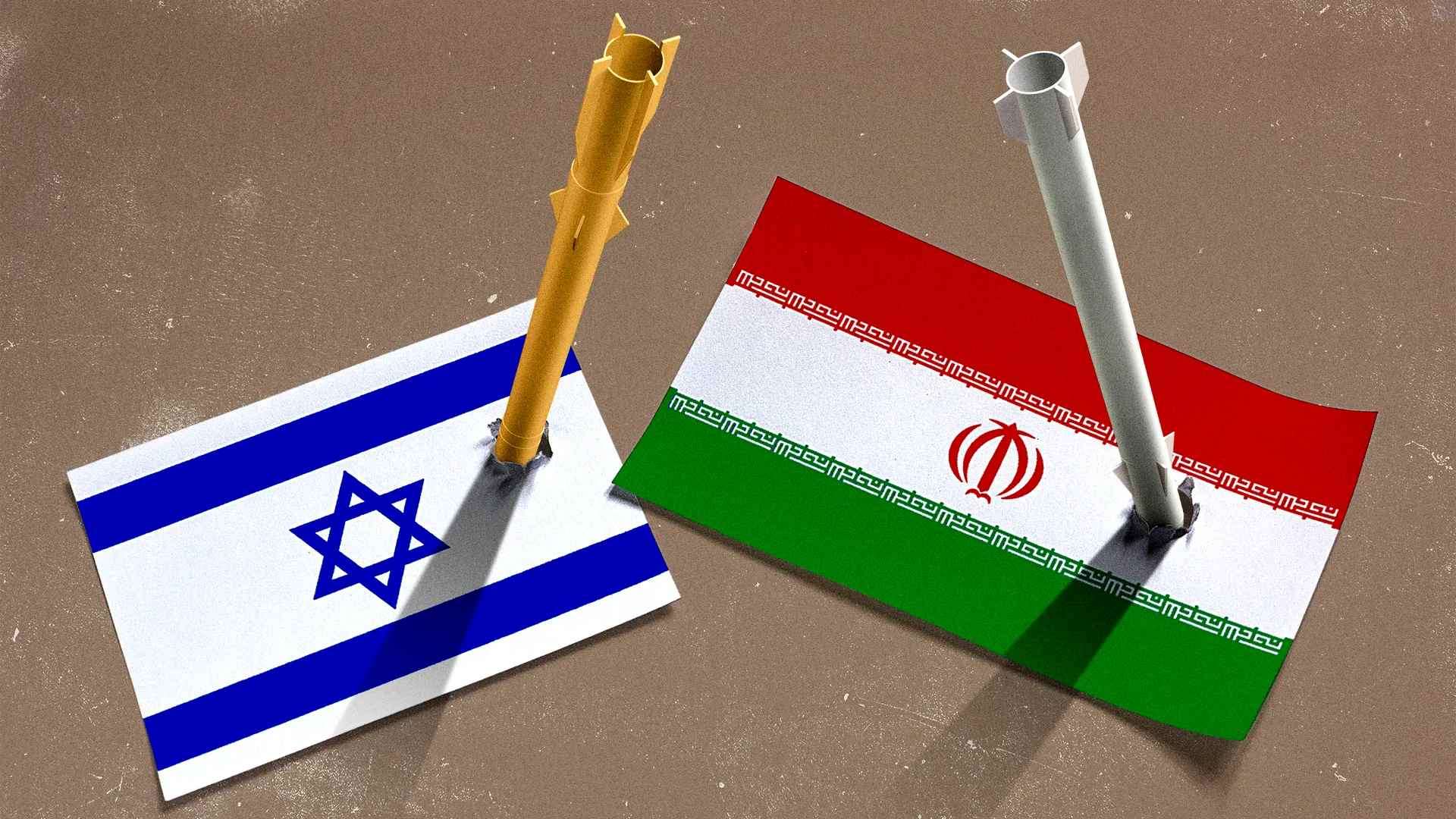
Two issues arise here. One is whether the US deliberately intended to expand the theater of conflict to areas outside the Middle East and is this act consistent with the UN Charter. Against the background of the ongoing war between the US/Israel and Iran, the US clearly intended to attack Iran and its assets, wherever they are located and deprive Iran of their use.
It could be argued that this action may not necessarily be incompatible with the Charter given that a war exists. The US may also have intended to convey a message to other interested parties located outside the immediate theatre of war that they too would be targeted should they attempt to get involved in the conflict.
In the circumstances the torpedoing of IRIS Dena would seem to be calculated and intentional and consistent with the war objectives of the US. There are ample precedents from previous wars to support the action of the US.
Secondly, did the US deliberately seek to challenge the applicability of the rules embodied in the Law of the Sea Convention of 1982 (LOSC).
The US is not party to the LOSC but adheres to those elements of the Convention which it considers to reflect customary international law. Reports suggest that the torpedoing of IRIS Dena occurred outside Sri Lanka’s territorial waters but within its Contiguous Zone (stretching up to 24 nautical miles from the baseline) and its Exclusive Economic Zone. Although a hostile act of this nature is not prohibited under the LOSC, one can question the morality of this act which resulted in dozens of deaths. IRIS Dena had just participated in a friendly fleet review in India and was unlikely to have carried its normal complement of offensive weaponry. Furthermore, it was clearly sailing in close proximity to a declared a non-party to the conflict which was raging thousands of miles away and it is a stretch to suggest that the IRIS Dena posed any threat to anyone. An interesting question is whether India, the host of the fleet review, had any foreknowledge of the US attack. It has been claimed that this was the first sinking of an enemy ship by a US submarine since the end of the Second World War although US aircraft and ships have sunk vessels in the Caribbean Sea and off Vietnam during the Vietnam conflict. (The UK also sank Argentinian vessels during the Falklands/Malvinas war).
One recalls the sinking of the aging troop carrier, Belgrano, on its way home by a British submarine during the Falklands/Malvinas War, the morality of this act is still being discussed and suggestions of the commission of a possible war crime have circulated in academic circles. While, the legal justification for the sinking of the IRIS Dena continues to be interest commentators, there is good reason to suggest that an established maritime tradition was ignored by the submarine which sailed away leaving the survivors of the sinking IRIS Dena to fend for themselves (See obligations of an attacking vessel towards sailors in trouble, in the San Remo Manual on International Law Applicable to Armed Conflicts at Sea.).
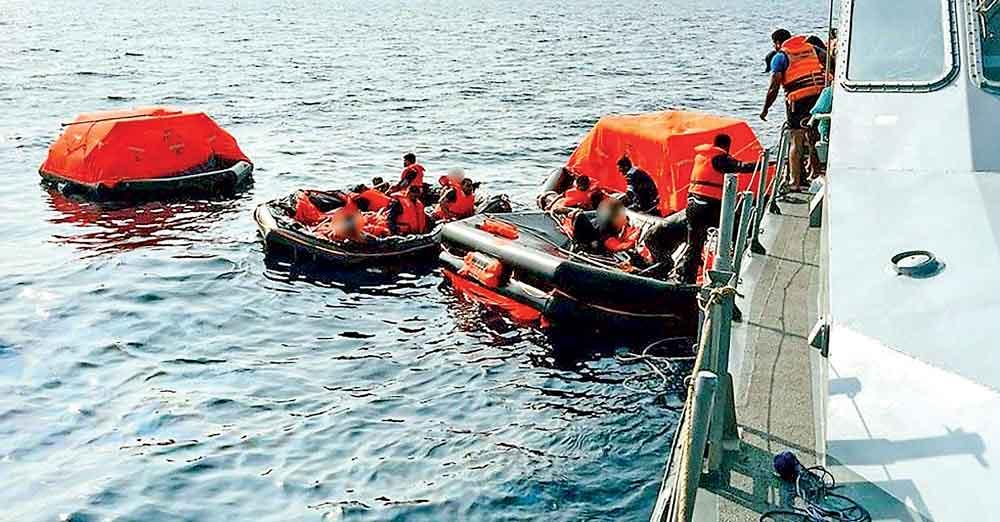
This act of blatant disregard for the plight of the sailors of the sinking IRIS Dena may have contributed to a higher death toll than would have been the case otherwise. It was left to the Sri Lankan navy and air force to engage in the rescue effort to save as many lives as possible and retrieve the dead bodies. The Sri Lankan navy performed admirably.
Q What are the new Indian Ocean Security dynamics you see in the wake of this attack?
Sri Lanka and other Indian Ocean states are now confronted with the reality that powers with global reach are likely to engage in armed confrontations in the Indian Ocean for genuine reasons of defence/security or simply to emphasize their intention to advance any of their claims. A clear and bloody precedent has been set and there is no telling where this will lead the region. The countries of the Indian Ocean region have historically been vocal in their efforts to keep their region free of big power military rivalries. But with the sinking of IRIS Dena, they will need to confront an uncomfortable new scenario of possible big power military confrontations. It may still be worth for Sri Lanka and like-minded countries from the region to make a reinvigorated push to keep big power rivalry out of their backyard and specifically in order to avoid being dragged into conflicts not of their making. At least a strong moral foundation might be established at this stage.
Q What are the areas Sri Lanka, as a security provider and a humanitarian responder, should now focus on?
While it would be the easier and intellectually less challenging option to decide that small countries like Sri Lanka have no choice but to roll over and succumb to whatever pain the big powers choose to inflict, small countries could combine to develop a moral force that is difficult for the big boys to ignore.
The world does not consist of only thugs, bar room brawlers and street fighters. We know that from history. The devastation caused by the Second World War encouraged well meaning world leaders to strive for a new world governed by transparent and predictable rules agreed by all, on global governance, on trade, on human rights, on environmental issues, etc. which emphasized negotiations and diplomacy and not brute force.
Admittedly, it was an imperfect world system that they put in place, but we were gradually moving forward and improving it, until it was brutally disrupted. Similar disruptions occurred in the 1930s, the world as a whole paid a massive price for letting that happen and then from the ashes of a disrupted and tortured world, a new world order began to emerge. Countries like Sri Lanka (with like-minded countries) have the opportunity to take a new message of hope forward.
From a practical angle Sri Lanka has no choice but to devote additional resources to strengthen its inshore defences and naval capabilities. While we may not be able to successfully dis-incentivise a potentially hostile actor, we could make any incursion to our territory too costly.
In the meantime, Sri Lanka should modernize and aggressively expand its free trade agreements, its investment protection agreements and diversify its markets and sources of vital imports.
The investment climate in the country needs strengthening and the country as a lucrative investment destination needs to be aggressively promoted. Economic strength resonates clearly with assertions of independence. Today, Sri Lanka is too dependent on a few distant sources for its energy supplies despite its recognised status for renewable energy, its overseas markets have not changed much over the years, it is still struggling to attract sufficient investments, and its image as a reliable business partner requires aggressive revamping.
Q What are your views on India- Sri Lanka collaboration for Indian Ocean security?
While Si Lanka and India should collaborate in providing a secure environment for shipping in the Indian Ocean region, it has to be remembered that India’s security concerns may not always coincide with Sri Lanka’s. Therefore, it will be critical to build up our own capabilities without always having to depend on India’s.
Over 36,000 vessels criss cross the Indian Ocean within sight of our southern coast. A significant portion of East Asia’s energy requirements are carried past the Dondra light house. We have an obligation to ensure the safety of this sea traffic. In addition, we also must ensure that the pristine ocean is kept pure.
This will be our sacred duty. We will have to strengthen our maritime capabilities to discharge these functions. Already ocean pollution by ships is recognised as a amjor problem. A giant gyre of plastic waste is circling in the middle of the Indian Ocean. While under the Oceans Treaty protected area will be set aside for the regeneration of ocean genetic material, ensuring that these protected areas are adequately maintained for the benefit of all mankind would a responsibility of all states, including Sri Lanka.
Q Sri Lanka, along with Tanzania, proposed the Indian Ocean Zone of Peace (IOZP) initiative. How applicable is this resolution in the current context?
Unfortunately, the Sri Lanka’s UN initiative of 1971 to establish a zone of Peace in the Indian Ocean region, despite being supported enthusiastically by the Non-Aligned Movement, did not secure much support from the developed world, in particular from the global powers.
(The vote at the UN General Assembly was 95 for the resolution, 0 against with 33 abstentions). While one might suggest that the time for a zone of peace has slipped from our hands, it may also be time again for small and medium powers of the region to revive it.
QAccording to international law, how should Sri Lanka deal with the Iranians now in its care?
Sri Lanka got entangled in this situation due to circumstances not created by itself. Now we need to be respectful of the applicable rules. The ICRC Guidelines on neutrality require that the surviving sailors from IRIS Dena be interned till the end of the conflict. Should they claim refugee status they will be processed under the refugee laws. Any equipment taken in to custody needs to be kept till the end of the conflict. It would be prudent for Sri Lanka to firmly declare that it is neutral in this conflict but on numerous occasions in the past, neutral countries have been trampled under the hurrying boots of invading powers.
Q The presence of Chinese research vessels was seen as a threat to security. You were the ambassador to Beijing at one point. How do you see this phenomenon?
Sri Lanka came under considerable pressure from India for having agreed to let a Chinese research vessel berth at Hambantota. India alleged that the vessel was actually a complex intelligence gathering craft while the Chinese denied this suggestion. It was also clear that if the Chinese vessel were in fact on an intelligence gathering mission, it could have done so from beyond the territorial waters of Sri Lanka without ever entering Hambanthota. And, in fact, many naval craft from a range of countries had entered Sri Lankan ports over the years. I suggested that Sri Lanka develop a clear set of guidelines for naval vessels seeking to enter Sri Lankan ports. Sri Lanka, as a sovereign State, then would have the right to deny entry to vessels which in our determination did not comply with the criteria that we set.