Reply To:
Name - Reply Comment
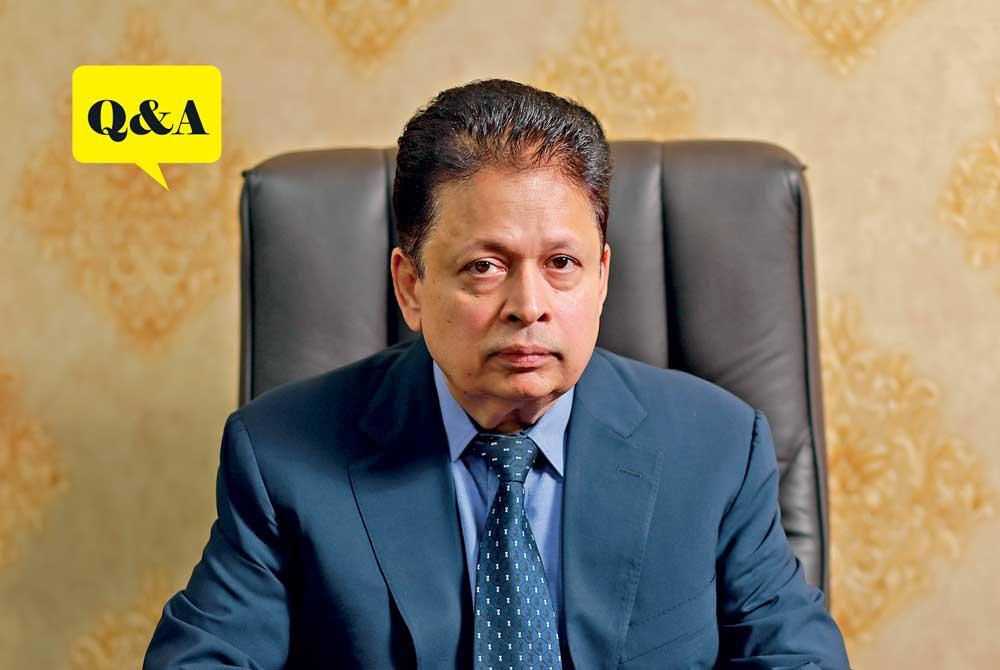
Dr. Saman Weerasinghe, former Ambassador of Sri Lanka to the Russian Federation, shares his views on the current war situation in the Middle East and its implications for Sri Lanka. He is also the General Secretary of the Sri Lanka Russia Friendship Society and Chairman of the Centre of Russian Geographical Society in Colombo.
Excerpts:
QPursuant to the targeted strikes against the leadership of Iran and the reported passage of the Supreme Leader on February 28, the IRGC has moved to close the Strait of Hormuz. How is this tactical move by Tehran threatening the structural stability of the global energy market?
The closing of the Strait of Hormuz is the ultimate catastrophic event of global trade. We are talking about a maritime corridor used for the transit of about 20.5 million barrels of oil a day - nearly 20% of the world’s consumption. When the Iranian Revolutionary Guard declares that this passage is closed, it is not just a regional military move; it is an attack on the global supply chain.
The sudden shortage of supply has driven global prices to unprecedented levels. This week, crude oil prices in the UK market have already increased, and they are expected to continue rising if the situation persists. As oil prices rise, the cost of production in all sectors - agriculture, manufacturing and services - skyrockets. This results in “cost-push inflation”, which is far more challenging for central banks to control than demand-driven inflation.
QYou’ve warned about the “depreciation-appreciation” trap in the case of the Sri Lankan Rupee. Could you say more about the relationship between global conflict and instability in our home currency?
During periods of high-intensity conflict, we observe a “flight to safety” in global capital markets. Investors pull out of emerging market currencies and run into “safe harbour” assets, mainly the US Dollar. This leads to an acute appreciation of the Dollar rate. For Sri Lanka, the consequences are binary: our import costs for necessary commodities - fuel, medicine and food - increase as we have to pay more in Rupee terms for every Dollar of goods. This depletes our government reserves at a time when we need them the most in the form of debt servicing and social welfare. Due to the prevailing situation in the Middle East, worker remittances are likely to decline, while tourist arrivals may also fall sharply. As a result, the inflow of foreign currency through remittances and tourism will be significantly reduced.
QBeyond the direct cost of fuel, how is the “security leverage” of the shipping and insurance companies affecting our export competitiveness?
This is where the crisis impacts the “real economy.” Global shipping conglomerates are currently taking advantage of the instability in the Persian Gulf and the Red Sea to charge large surcharges. War-risk insurance premiums have risen to the extent that shipping through the Indian Ocean has become a luxury. For Sri Lankan exporters, especially in the garment and tea sector, these transport charges are unsustainable. The increased “landed cost” of our products in European and American markets means that the demand will eventually contract. We are in effect being priced out of our own export markets.
QThe war in Ukraine has now been going on for four years. Following the August 2025 Russia-US Summit in Alaska, why is there no diplomatic breakthrough?
The Alaska Summit was a major step in talking, but it revealed a fundamental conflict of basic beliefs. Russia sees the war as a fight for its very survival and a means of preventing the Western military alliance from moving closer to its borders. In contrast, the European Union - concerned about its own safety - is concerned with sending more and more weapons to Ukraine.
Without a “mutual agreement” on the broader security architecture of Eurasia, we are witnessing the formulation of a “Long War” doctrine. The mediation attempts of the USA have been slowed down by their own elections and the fact that European countries cannot agree on what to do. Until both parties believe the cost of war is higher than the cost of compromise, the stalemate will continue.
QRussia recently repeated the National Security Doctrine on “adequate responses” to EU involvement. What meaning for a Non-Aligned country such as Sri Lanka shall this escalation hold?
It is a signal of “strategic deterrence.” By stating that the involvement of EU armies or a threat to national security will lead to an “adequate response,” Moscow is taking a hard line. This is a warning that the conflict may rise beyond the borders of Ukraine. If other countries join the conflict directly, the war is no longer regional and becomes systemic. As a Non-Aligned nation, we need to understand that our security is tied to de-escalation around the world; total war in Europe would, in effect, collapse the global financial system as we know it.
QYou mentioned that the US is coming into greater conflict with the EU’s position. Is the transatlantic alliance cracking under the pressure of this conflict?
“Fracture” may be a powerful word, but there is certainly a parting of perspectives. The USA is becoming concerned with the ‘forever war’ narrative. A key sign was the US decision to “abstain” during the voting at the UN for a temporary ceasefire, a decision that clearly signaled they are no longer in lockstep with more hardline elements of the EU. Internal divisions among the EU. In particular, the conflicting attitudes of Hungary and Slovakia only complicate the Western position further. This absence of a “common agreement” means that Russia can hold its strategic patience.
QDespite enduring heavy international sanctions, how has Russia been able to maintain its economy and show resilience?
Russia has taken a turn through a deliberate economic pivot. By redirecting energy exports to China and India, expanding trade in non-dollar currencies, and greatly enhancing its gold reserves, the Kremlin has minimised its exposure to Western financial systems. At the same time, investments in domestic infrastructure, agriculture and transport networks have stabilised internal demand.
According to the IMF World Economic Outlook (Jan 2026), Russia’s GDP is expected to reach approximately $2.5 - 2.6 trillion USD. 0.6% growth in 2025 and 0.8% growth in 2026 is projected. These projections indicate the level of resilience that Russia’s shift to alternative markets has added to its economy against external shocks as a symptom of the emergence of decentralised trade networks that challenge the traditional Western-led economic order.
- “As a Non-Aligned nation, we need to understand that our security is tied to de-escalation around the world; total war in Europe would, in effect, collapse the global financial system as we know it.”
- “War-risk insurance premiums have risen to the extent that shipping through the Indian Ocean has become a luxury... we are in effect being priced out of our own export markets.”
- By knowing what our neighbours believe, and knowing how the world market for energy works, we can insulate our people from the worst of the coming storm
QSouth Asia is a theatre of high tension at present, specifically in the case of India-Pakistan and India-Bangladesh relations. What is the diplomatic value of Sri Lanka’s “friendship practice” in this environment?
In a region characterised by bilateral friction, Sri Lanka’s value is as a “neutral facilitator”. Our ability to stage events such as the India-Pakistan T20 matches is diplomatically important. It offers “neutral space” for the informal. In the current geopolitical situation, being a “Non-Aligned” country is our biggest asset. We have the potential to neutralise tensions just by establishing a space for dialogue outside the glare of high-stakes summits.
Sri Lanka has the room to showcase itself through a non-alignment policy framework and defining unique terms and conditions for national development to attract foreign investors and build up the direct investment flows. At present, countries like Dubai, Qatar, and other Middle Eastern countries that were considered safe havens in the global investment world had their stability threatened by the ongoing Iranian conflict.
This disruption provides a crucial opportunity for Sri Lanka to project itself as a peaceful and friendly country with stability and security to the rest of the world. By highlighting our resilience and neutrality, Sri Lanka can tap the current geopolitical realities to attract more investment and strengthen our position as a reliable investment destination for the world.
QEconomically, you’ve brought up the key integration of the markets with India. Why is the “Era of India” the most important factor for the outlook 2026 for Sri Lanka?
As BlackRock’s Larry Fink said in early 2026, we are entering the “Era of India.” With its projected 20-25year period of sustained growth, India is emerging as the world’s main growth engine. The fact that the President of the European Commission, Ursula von der Leyen, is actively looking for a trade agreement with New Delhi proves that the world is betting on India. For Sri Lanka, the Free Trade Agreement (FTA) with India is not only a trade deal, but it is a “growth bridge.” We need to integrate our supply chains with theirs so that we can take advantage of this huge momentum in the region.
QTourism is essential for our reserves, but the number of European arrivals is threatened because of “security concerns.” How does the Ministry of Tourism need to adapt?
We need to change our “market focus.” While we would like to attract European tourists, the combination of high aviation fuel costs and security fears in the West is sure to lead to a reduction in arrivals. On the other hand, the Indian middle class is growing and is geographically closer. By looking towards regional tourism and encouraging Indian direct investments in the tourist sector and in our infrastructure, including hotels and other facilities, we can develop a more resilient model of tourism that is less reliant on long-haul Western travel. At the same time, Sri Lanka can actively promote tourism from the Asian region specifically targeting countries like Japan, Singapore and China.
QWhat does this mean for our manpower, especially those of the Middle East and Israel?
This is perhaps the most sensitive human element to the crisis. With more than 10,000 Sri Lankans in Israel and many more living throughout the Gulf, an increase in the conflict could see a “mass repatriation” event. Not only would this bring an “economic downturn” to the families involved, but it would also strain our domestic labour market. We must take the proactive step to explore new labour markets, and ensure that our “migrant worker” policy is diversified so as to avoid reliance on one region of the world, a region that is volatile.
QFinally, what is your message to policymakers regarding GDP and growth expectations in Sri Lanka for the year ahead?
The fact is that our “expected growth rate” will not be achieved if we continue with “business as usual” policies. The external shocks - oil prices, shipping costs and currency depreciation - are too great. We have to pursue a policy of “Strategic Pragmatism.” This means going deeper in FTA with India, continuing to maintain our Non-Aligned status to have all trade doors open and being extremely disciplined with our government reserves. Our survival is dependent on our capacity to get through the in-between of these global powers without being crushed by them.
The world situation in 2026 is a challenge to the national character and diplomatic ability. As the global economy struggles to grow, Sri Lanka has to locate its own “growth niche.” By knowing what our neighbours believe, and knowing how the world market for energy works, we can insulate our people from the worst of the coming storm. The “Era of India” provides a lifeline, but only if we are strong enough to hold on with both hands.