Reply To:
Name - Reply Comment
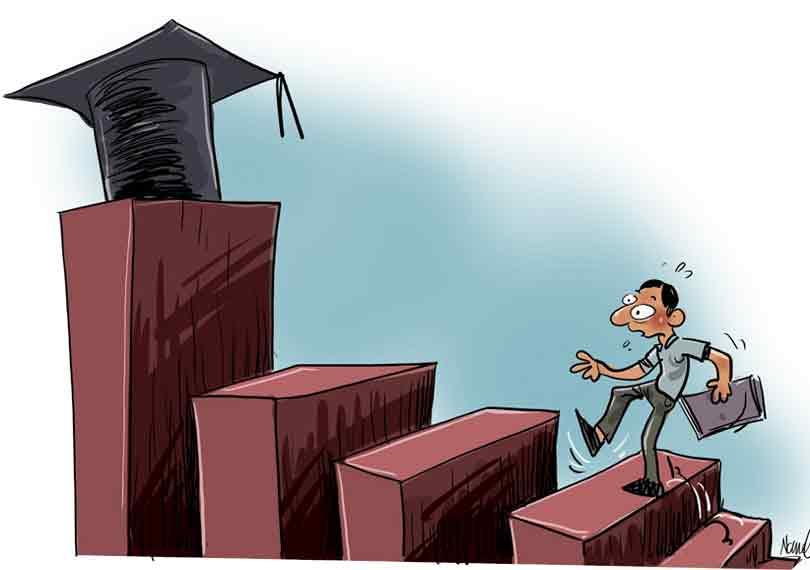
 State universities running on half the required academic staff- FUTA warns
By Charithya Kumarasiri
Sri Lanka’s state university system is facing a critical shortage of academic staff that could compromise the quality of higher education and professional training, Prof. Prageeth Weerathunga, President of the Federation of University Teachers’ Associations (FUTA) has warned.
Speaking to Daily Mirror, Prof. Weerathunga said the state university system requires 12,000 - 13,000 permanent lecturers to effectively cater to its student population. However, as of the end of the year 2025, there were approximately 6,800 permanent academic staff members serving across state universities. “The university system requires approximately 12,000 to 13,000 permanent academic staff members for its efficient functioning. In addition, around 4,000 temporary lecturers are needed,” he said.
According to Prof. Weerathunga, the ideal lecturer-to-student ratios vary depending on the discipline. Management faculties require one lecturer for every 18 students, Information Technology programmes require one lecturer for every 10 students, while highly specialised fields such as veterinary science and dentistry require one lecturer for every five students.
Despite these requirements, he noted that universities continue to lose experienced academics at an alarming rate. “Every month, between 20 - 30 lecturers leave the system. While recruitment does take place, it is mainly at the entry level, mostly probationary lecturers who have obtained first-class honours degrees or completed master’s qualifications. However, those leaving are often academics with years of experience and higher qualifications,” he said. As a result, Prof. Weerathunga said the gap between recruitment and departures continues to widen, affecting the quality of education delivered to students.
Prof. Weerathunga also acknowledged that maintaining the ideal staffing level at all times may not be realistic but stressed that a minimum of 8,000 permanent lecturers is necessary for the state university system to function effectively. He revealed that although the government granted approval last year to recruit around 1,400 lecturers to fill existing vacancies, less than half of those positions have been filled so far. “Only about 48 to 49 percent of the approved positions have been filled. Some universities have managed to fill nearly 70 percent of their vacancies, while others have filled as little as 15 percent,” he said.
He attributed the poor recruitment rate to a shortage of qualified applicants, particularly in medicine, science and technology-related fields. “There is a lack of qualified lecturers applying for these positions. In many cases, what appears as recruitment is actually a transfer of lecturers from peripheral universities to city-based institutions, rather than the addition of new academics to the system,” he explained.
Prof. Weerathunga further identified several factors contributing to the exodus of university academics, including limited facilities, inadequate incentives and taxation policies. He pointed out that university lecturers are subject to income tax rates of up to 36 percent while being restricted by the nature of their profession from pursuing alternative sources of income. “As a result, many qualified academics choose to join the private sector or seek employment overseas. Some who leave the country for doctoral studies do not return,” he said.
He also highlighted concerns regarding research funding. Although academics receive a research allowance amounting to 20 percent of their salary, the allowance itself is subject to taxation. “The research allowance is intended to support academic research activities, but it is also taxed, creating additional difficulties for lecturers and discouraging research engagement,” he noted.
Another challenge facing universities is delays in filling vacancies. Prof. Weerathunga said that in the past, universities had the authority to recruit replacements when a lecturer retired, resigned or passed away. However, this responsibility now falls under the Department of Management Services. “Universities can no longer fill vacancies independently. The process now has to go through the Department of Management Services, and it can take months before approval is granted and a replacement is recruited,” he said.
While emphasising that the university system remains operational, Prof. Weerathunga warned that the long-term consequences of the staffing crisis could be severe. “It is not impossible to run the state university system under these conditions. However, the quality of the degrees being offered is inevitably compromised. This is particularly concerning for professional degree programmes. The decline in educational quality is not something that will be immediately visible. Its effects will become evident in the years ahead through the graduates produced by the system,” he said.
Prof. Weerathunga further remarked that the lecturer shortage is a longstanding issue that has persisted for many years. “Sri Lanka is already lagging behind in providing students with the latest global knowledge and skills in a timely manner. This ultimately hinders the country’s development and growth,” he said.