Reply To:
Name - Reply Comment
By Chaturanga Pradeep Samarawickrama
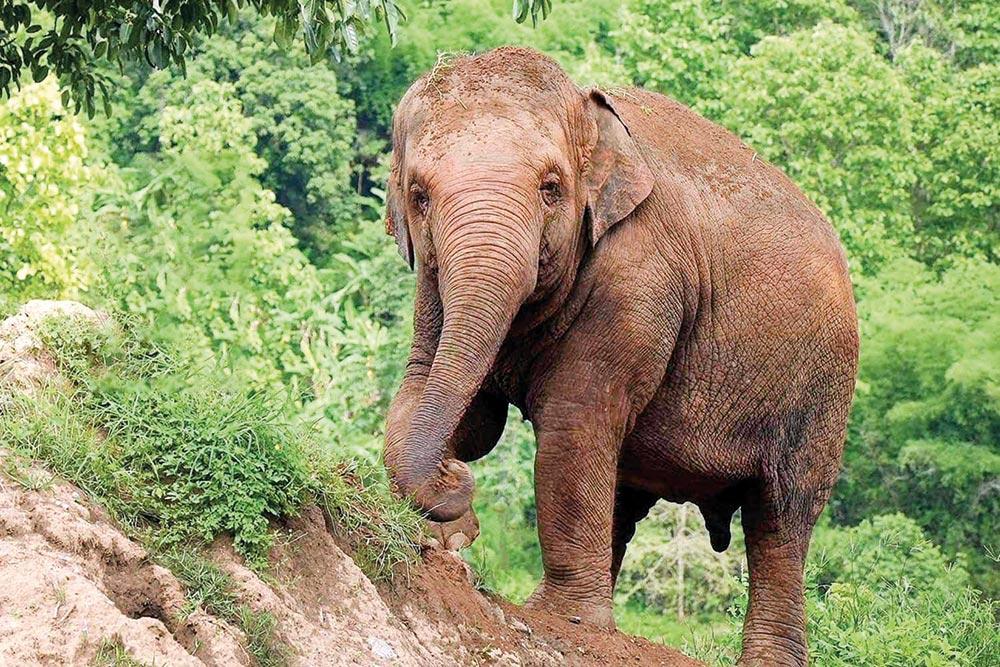
 The number of juvenile (young male elephants) in Sri Lanka has increased over the past three national elephant surveys, contributing to a rise in elephant–elephant conflict, Acting Director General of the Wildlife Conservation Department Ranjan Marasinghe said yesterday.
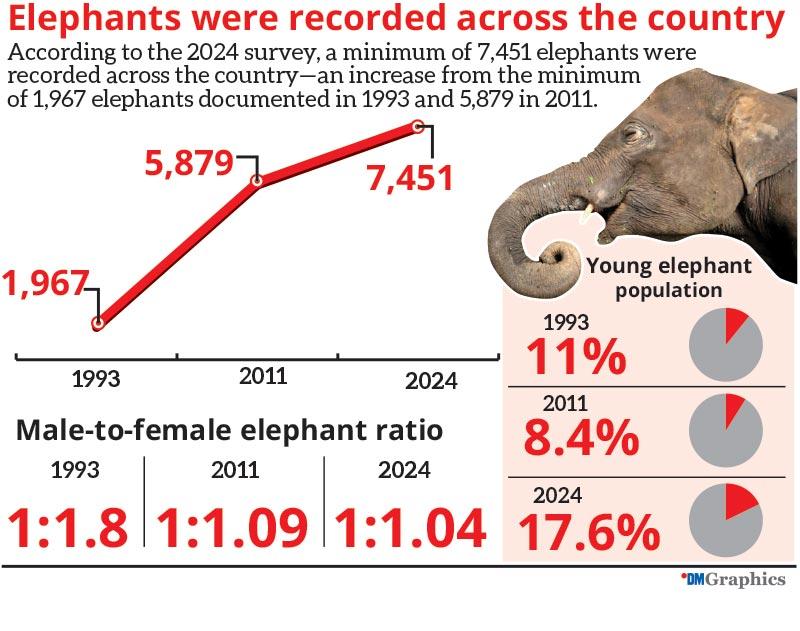
He said that the male-to-female elephant ratio, which stood at 1:1.8 in the 1993 survey, had narrowed to 1:1.09 in 2011 and further to 1:1.04 in the 2024 survey.
“The percentage of crop damage, loss of life, and property damage is significantly lower from female herds compared to male elephant herds,” Marasinghe said.
Survey data also indicate a notable rise in juvenile elephants. While 11% were recorded in 1993, the figure dropped to 8.4% in 2011 and then increased sharply to 17.6% in the 2024 survey.
According to the 2024 survey, a minimum of 7,451 elephants were recorded across the country—an increase from the minimum of 1,967 elephants documented in 1993 and 5,879 in 2011.
However, the proportion of calves has declined. Calves made up 23% of the elephant population in 1993, 18.8% in 2011, and 16% in 2024. In contrast, the number of adult elephants has risen steadily, from 52.8% in 1993 to 55.9% in 2011 and 61% in 2024.
Wildlife Conservation Department Deputy Director Dr. U.L. Taufeek said that nearly 60% of the country’s wild elephant population has now been documented. He noted that the Department cannot confine the rapidly growing elephant population to the 20% forest conservation area currently designated.
“About 95% of wild elephants are found in the dry zone. Nearly 5,600 electric fences have been erected to manage human–elephant conflicts,” he said.
Taufeek added that as Sri Lanka continues to expand infrastructure projects as a developing country, increasing land use is placing further pressure on wildlife habitats, intensifying human–elephant conflict.