Reply To:
Name - Reply Comment
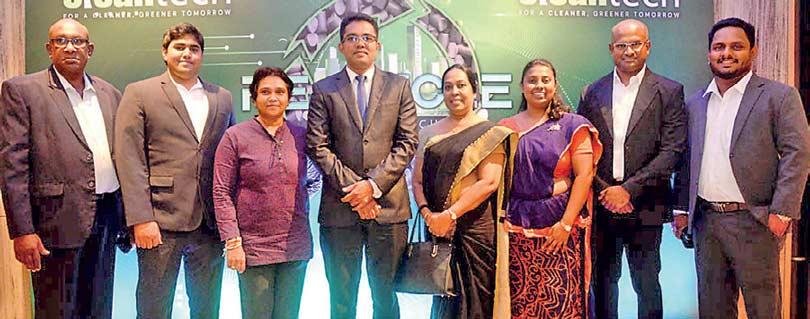
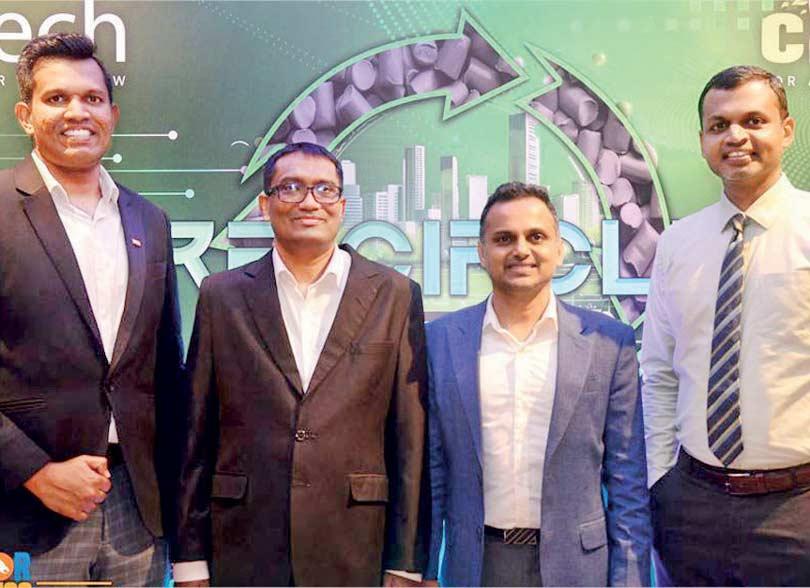
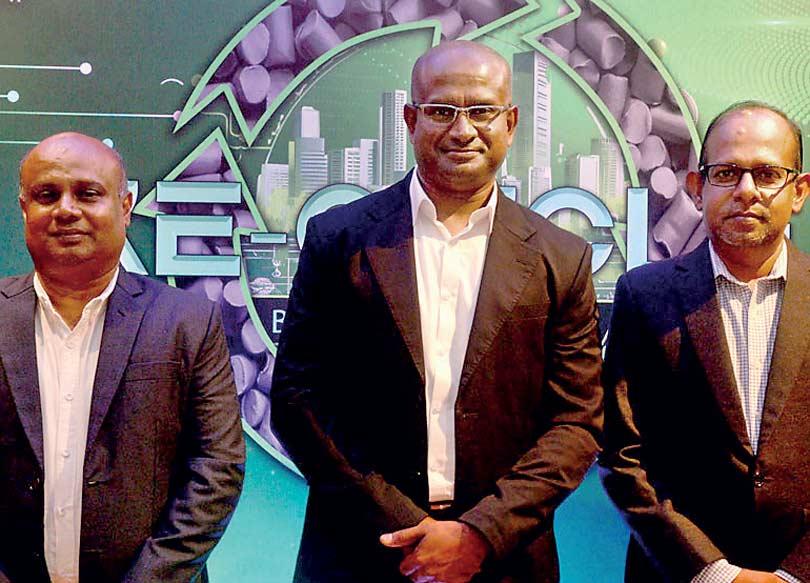
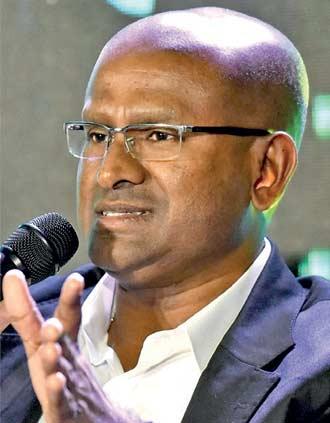
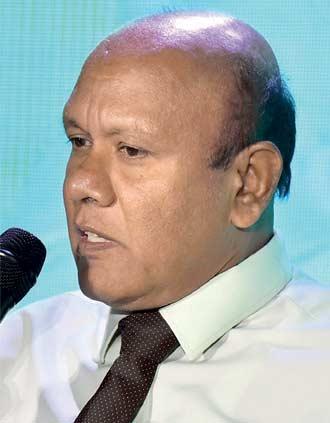
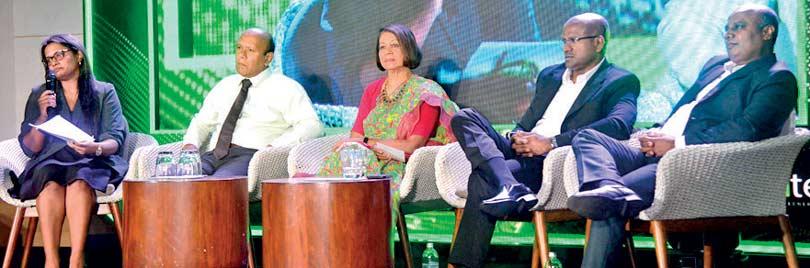
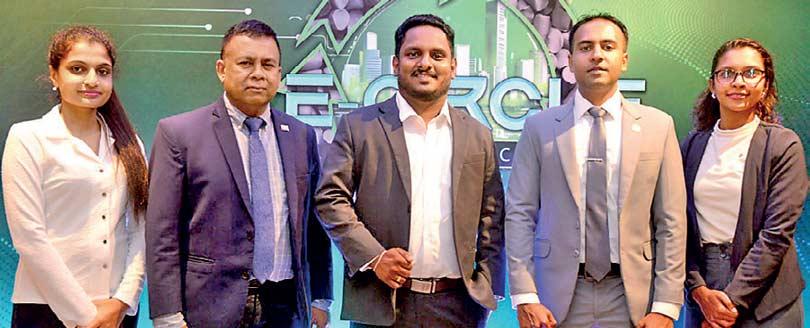
Abans Electricals CEO Jagath Jayasundara IEPSL President Shiranee Yasaratna Cleantech CEO Rukitha Nanayakkara Defense Ministry Assistant Project Director Gamini Subasinghe Pix by Kithsiri de Mel BY Rukaiya Riza As plastic waste chokes coastlines and clogs supply chains, Sri Lanka is looking inward, not to ban plastic altogether, but to reinvent how it’s used, reused, and valued. At the heart of this rethink is a shift from clean-up campaigns to market-driven recycling models that can stand on their own feet. At a recent panel discussion at an event themed ‘Re-circle by Cleantech’, thought leaders from government, industry, and manufacturing converged to chart a new path: one where policy reform meets commercial sense, and where discarded plastic finds its way back into production lines as a resource, not just refuse. EPR policy to take centre stage Ministry of Defense and Urban Development Assistant Project Director Gamini Subasinghe, outlined Sri Lanka’s regulatory landscape, highlighting the government’s ongoing efforts to curb plastic pollution through policy reform. “The government has prohibited the use of certain single-use plastics like straws, cutlery, and carry bags,” Subasinghe said, adding that these measures fall under a broader natural environment framework currently overseen by the Ministry of Environment. A significant policy tool in progress is the Extended Producer Responsibility (EPR), which places the onus of waste management across the life cycle of plastic products on the producers themselves. “Under EPR, producers are mandated not just for manufacturing, but also for the collection, recycling, and disposal of their products after consumer use,” he explained. “The Ministry is currently in the process of amending the National Environment Act to incorporate these elements.” Subasinghe also noted Sri Lanka’s commitment to global sustainability frameworks such as the Basel Convention and the UN Sustainable Development Goals (SDGs), specifically SDG 12 (Responsible Consumption and Production) and SDG 14 (Life Below Water). Despite these efforts, implementation remains a challenge. “While action plans have been drafted, particularly around waste minimisation and sustainable alternatives, execution is where we need more cohesion,” he noted. Recyclers call for realism and profitability Cleantech CEO Rukitha Nanayakkara offered a ground-level perspective, underscoring the practical difficulties of plastic recycling in Sri Lanka. “Unlike virgin plastics, recycled plastics are discarded, contaminated materials that need to be cleaned are sorted, and reprocessed,” Nanayakkara said. “If you don’t maintain high quality, your plastic won’t be reused. It’s a dead end.” He stressed that many recycling projects fail once initial donor funding dries up, especially when commercial sustainability is not factored into project design. “We must first survive to save the world,” he remarked. “Recycling has to make commercial sense. If recycled plastic is more expensive than virgin plastic, no one will buy it. That’s the reality.” Nanayakkara warned against sustainability initiatives that are superficial or tokenistic. Citing an anecdote where the same beach was cleaned three times a day to stage photo opportunities, he said: “Sometimes we lose the intent. Sustainability has become a PR stunt.” He urged corporates to form meaningful partnerships with recyclers and adopt a results-based financing model: “If certain KPIs are met, only then should funds be disbursed. That way, everyone including corporates, recyclers, and the environment benefit.” Corporate collaboration key to scaling impact While many recycling operations in urban centres are viable, the challenge lies in transporting waste from rural or outstation locations. “We’ve proposed tripartite agreements where corporates reimburse us upon achieving measurable outcomes. This model can be replicated with other recyclers too,” Nanayakkara said, inviting collaboration across the industry. Such partnerships, he argued, can unlock scale and efficiency. “When corporates know their ESG budgets are making real impact, recyclers can grow, and the environment wins. That’s the model we should aim for.” Manufacturers grapple with technical and operational barriers From a manufacturing standpoint, Abans Electricals CEO Jagath Jayasundara acknowledged the technical complexities of using recycled plastics in industrial applications. “As a manufacturer of consumer appliances, we primarily use virgin plastics. Switching to recycled plastics poses operational risks, especially in injection moulding where consistency in material properties is essential,” he said. Jayasundara cited staggering global statistics to contextualise the issue: “In 2024, global plastic consumption stood at 220 million metric tons. Of this, 70 million metric tons (about a third) was mismanaged.” Sri Lanka’s own waste mismanagement index stands at 89.2 percent, reflecting a dire need for systemic improvement. Highlighting the unpredictability of plastic collection streams, Jayasundara said, “When you don’t have control over the origin of collected plastic, the sorting and pelletising process becomes chaotic. Fortunately, this burden was taken on by Cleantech with our collaboration.” He commended the joint effort, noting that the quality of recycled plastic they now use is “almost equal to the original.” However, he cautioned that operational KPIs such as defect rates and machine throughput remain harder to manage with recycled materials. “With virgin plastic, once you set parameters, you can run production for weeks or months. But with recycled material, these variables keep shifting.” Policy, practice and the path forward Joining the panel was President of the Institute of Environmental Professionals Sri Lanka (IEPSL) Shiranee Yasaratne, who brought a seasoned policy lens to the conversation. She applauded the initiative for being “part of the solution” rather than simply spotlighting problems. Yasaratne pointed to Sri Lanka’s heavy reliance on a linear economy, where nearly 90 percent of plastic waste ends up unmanaged in the environment, and stressed the pressing need to transition to true circularity. While praising the upcoming Extended Producer Responsibility (EPR) legislation, she cautioned that data, enforcement, and coordination remain key. “Nothing voluntary works in Sri Lanka. Only when the law becomes a stick, will people comply,” she said, citing low participation by producers in a pilot data portal designed to track PET and HIPS recovery. Yasaratne called for greater innovation, especially from small and medium manufacturers, and urged regulators to update outdated laws—like the Food Safety Act that bans recycled plastic in food-grade applications. “If you can demonstrate that recycled pellets can match virgin quality, then we must reform the system to reflect that,” she said. “We need to work not in silos but in coordination—to create a solution, not more problems.” She also highlighted the potential of community-led beach clean-up efforts, especially among women, to plug into plastic credit schemes, linking grassroots action with national circularity goals. “There is enormous potential to support women through beach caretaker roles and plastic credit systems. It’s heartening to see agencies like Cleantech showing the way forward.” (From left): Moderator Kavindya Basnayake, The Institute of Environmental Professionals Sri Lanka (IEPSL) President Shiranee Yasaratne, Ministry of Defence and Urban Development Assistant Project Director Gamini Subasinghe, Cleantech CEO Rukitha Nanayakkara, Abans Electricals CEO Jagath Jayasundara Athula Nanayakkara, M. G. M. Chandralal, Athula Jayawardhana (AB Securitas (Pvt) Ltd), Sudath Berugodaarachchi (Head of HR - Abans Environmental Services (Pvt) Ltd) Prof.Ranjith Dissanayake (Chairman - gapHQ (Pvt) Ltd), Kasun Thennakoon (Asisstant General Manager - Cleantech (Pvt) Ltd), Dr. Pradeep Gajanayake (Senior Lecturer - University of Peradeniya & Research team at gapHQ) and team Priya Ram, Samudrika Divithurugama, Chandani Kahaduwa M.P.J. Seneviratne (COO – Cleantech (Pvt) Ltd), Zev Pestonjee (Director - AB Securitas (Pvt) Ltd), Ruwini Dharmasiri (Director – Cleantech (Pvt) Ltd), Chathura Ruwan (Chairman – Waste Management Authority), Nadeeka Niroshani (Central Environment Authority), Ganga Dematawa (Waste Management Authority), Rukitha Nanayakkara (CEO – Cleantech (Pvt) Ltd), Kasun Thennakoon (Asisstant General Manager - Cleantech (Pvt) Ltd) Waruna Mendis (Head of Brand & Communication - Abans Environmental Services (Pvt) Ltd), Danushka De Silva (Director – Cleantech (Pvt) Ltd), Chanaka Tissera (Abans Corporate Communications Lead) Jagath Jayasundara (CEO – Abans Electricals PLC), Rukitha Nanayakkara (CEO – Cleantech (Pvt) Ltd), Keneth Mathusinghe (Senior General Manager - Abans Electricals PLC) 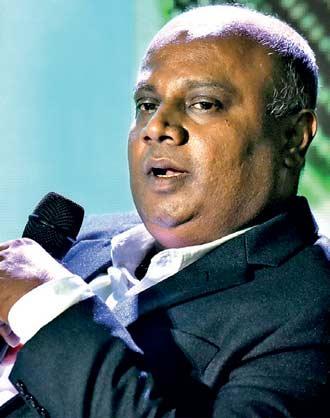

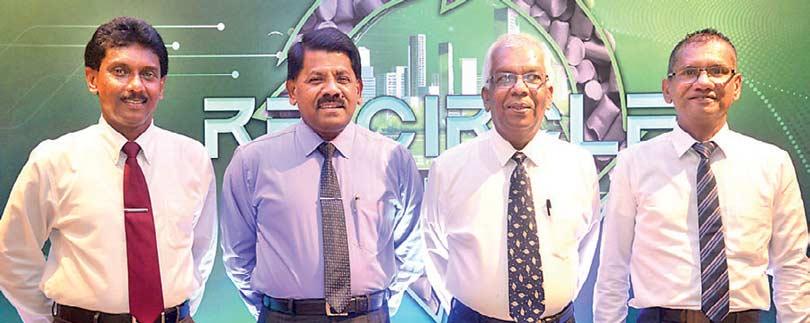
(Waste Management Authority) and team