Reply To:
Name - Reply Comment
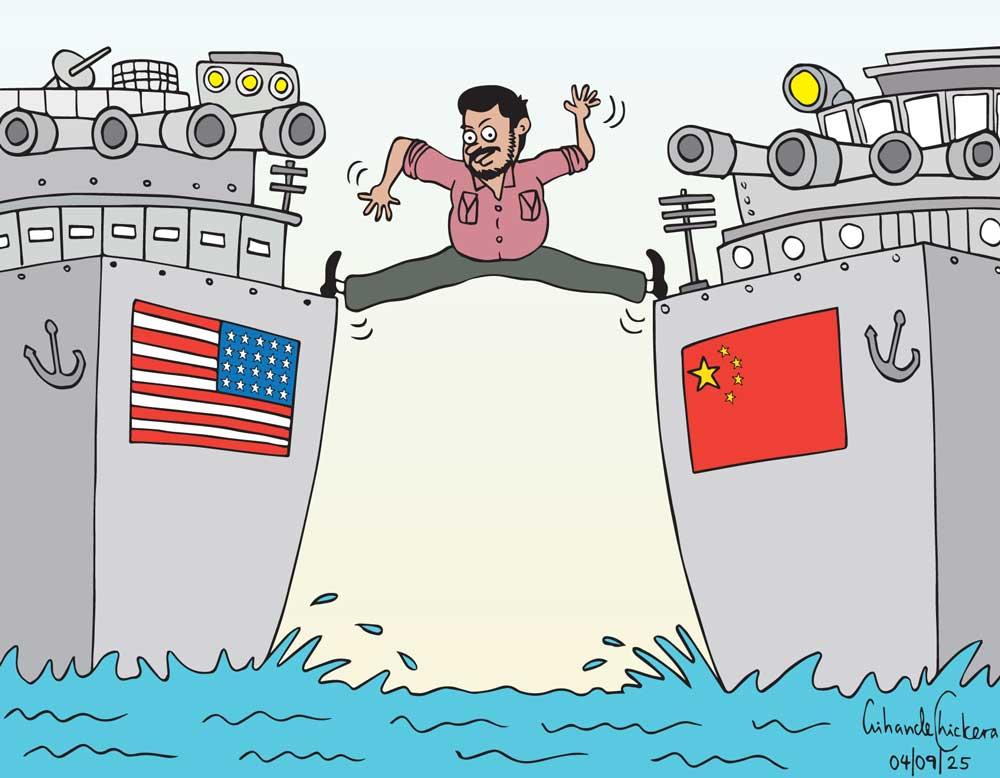
The cartoon shows a man performing a dangerous split between two massive warships—one flying the American flag, the other the Chinese. His expression is strained, his arms flailing for balance, and beneath him churns a restless sea. It is a vivid metaphor for the precarious position of smaller nations caught in the rivalry between global superpowers.
The warships represent more than just the United States and China—they embody competing worldviews, economic systems, and strategic ambitions. Both loom large, powerful, and armed, their sheer size dwarfing the lone figure struggling to keep his footing. The sea below symbolizes the chaos and risk: one slip, one miscalculation, and the man plunges into dangerous waters.
The man’s split is the essence of geopolitical tightrope-walking. For nations like Sri Lanka, survival often requires extracting benefits from both powers while avoiding outright allegiance to either. But this balancing act is not graceful—it is painful, unsustainable, and full of peril. The image suggests that such a stance may delay a fall but cannot prevent one.
The cartoon also critiques leadership. Rather than charting an independent course, the figure is reduced to a contortionist act—reactive, defensive, and fragile. It implies that foreign policy risks becoming less about vision and more about survival, less about sovereignty and more about not angering either side.
The larger insight is sobering: when small nations are trapped between superpower rivalries, their autonomy shrinks. Choices are no longer about what serves their people best, but about what avoids immediate disaster. The cartoon leaves us with a pressing question: can a country truly stand tall if its strategy is reduced to a painful split between giants?