Reply To:
Name - Reply Comment
By Nishel Fernando
“We need more international chains coming into the country.”
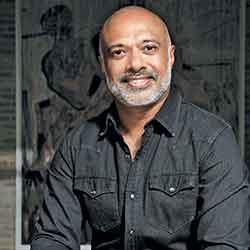 |
| Rohit Sachdev |
The sentiment, expressed by entertainment icon and entrepreneur Santhush Weeraman cuts to the heart of a paradox in Sri Lanka’s hospitality sector. Weeraman, who has spent decades in the ‘experience business’ of music and events, argues that while the island possesses immense local talent, it often lacks the “global experience” and rigid “international standards” in service and systems that today’s global traveller—and the increasingly sophisticated local diner—demands.
Speaking at a media roundtable held at Twin Peaks this week ahead of the launch of ‘Charcoal Tandoor Grill’, Weeraman drew a sharp parallel between show business and the restaurant trade.
“It’s about art, expression and the whole experience,” he noted.
“Just as we put 200 instruments into a song to get the perfect output, global brands go into micro-details—from the acoustics to the specific wood of the furniture—to ensure the experience is next level.”
This ‘experience gap’ is the primary driver behind the decision by Weeraman, his partner Bathiya Jayakody and Sanken Construction Director Nuwan Gunatilaka to partner with Bangkok-based Soho Hospitality. The move is not just about importing a menu; it is about importing a system of excellence that standalone restaurants in Colombo have historically struggled to maintain.
‘Hotel trap’ and Michelin void
For decades, Colombo’s answer to luxury dining has been the five-star hotel. These institutions have served as the training grounds for talent and the gatekeepers of quality. However, this model has created a sterility in the market.
In global culinary capitals like Bangkok, Singapore or Dubai, the most exciting, Michelin-starred venues, are rarely found inside the security perimeter of a large hotel chain. They are independent, chef-driven or concept-heavy standalone establishments.
Currently, Sri Lanka has zero Michelin-starred restaurants. While the Michelin Guide does not yet cover the island, the industry experts argue that even if it did, the market currently lacks the density of standalone, high-calibre venues required to attract such scrutiny. Gunatilaka identifies this as a “cumbersome” barrier for the consumer.
“A lot of places you can go and eat but ‘dining’ is something more,” Gunatilaka observed.
“To get to a good restaurant now, you have to stay in a car park for an hour and walk through a lobby. There is a massive vacuum for luxury-level standalone restaurants that offer exclusivity and ease of access.”
Digital democratisation of taste
Crucially, the demand for this level of quality is no longer confined to the elite circles of Colombo 7. Weeraman pointed out a significant shift in consumer behaviour, driven by the internet and social media.
“Because of social media, the exposure to global trends is massive. It’s not just in Colombo; even outside the city, people are watching, learning and aspiring,” Weeraman explained.
The digital window to the world has democratised taste; a young professional in the suburbs knows exactly what a ‘fun dining’ experience looks like in Dubai or Bangkok. They see the cocktails, plating and ambiance on Instagram, creating a pent-up demand for similar experiences domestically.
Economics of ‘fun dining’
The solution being introduced at Twin Peaks is ‘fun dining’—a concept championed by Soho Hospitality CEO Rohit Sachdev that bridges the gap between high-end culinary rigor and social entertainment.
“We are the antithesis of stuck-up fine dining,” Sachdev explained.
“We encourage people to eat with their hands. We have a bib. We encourage people to share the food and fight for the last piece of chicken.”
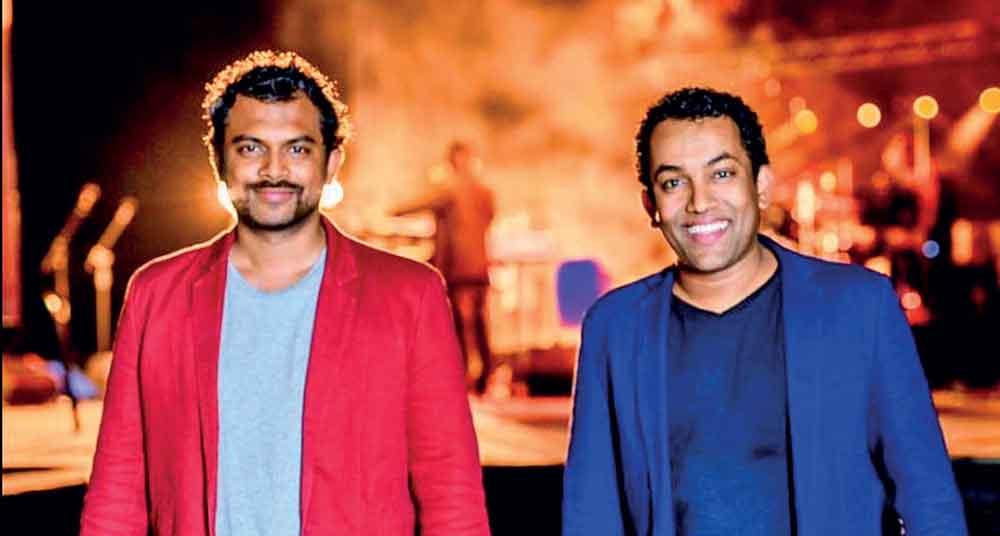
From left: Santhush Weeraman and Bathiya Jayakody
But behind the casual bibs and cocktails lies a serious financial commitment. Developing a standalone venue that meets global specifications involves a capital expenditure comparable to hotel infrastructure, without the safety net of room revenue.
The project represents one of the largest financial commitments to a single standalone restaurant in Sri Lanka’s history. According to the investors, the return on investment is projected over a period of five to six years. This extended timeline signals a shift in investor sentiment—moving away from quick-return cafes to long-term infrastructure plays that bet on the enduring growth of Sri Lanka’s lifestyle economy.
Beyond Twin Peaks: A southern expansion?
The Twin Peaks venture may just be the beginning of Soho Hospitality’s footprint in Sri Lanka. The group, which owns multiple high-performing brands in Bangkok such as Above Eleven, Havana Social and Cantina, sees potential beyond the capital.
During the discussion, Sachdev confirmed that Above Eleven—a Peruvian-Japanese rooftop concept—is already slated for a location in Colombo.
Furthermore, the conversation hinted at the potential for the group’s concepts to migrate down south, capitalising on the booming tourism corridor along the southern coast.
If successful, the arrival of Charcoal could trigger a ‘demonstration effect’, encouraging other international operators to look at Sri Lanka not just as a market for hotel chains but as a destination for global restaurant brands. For now, Colombo waits to see if ‘fun dining’ can finally break the hotel stranglehold on the city’s night out.