AI SUMMARY GENERATED ONLY FROM THIS ARTICLE'S TEXT.
About 96% of businesses obtain services of registered auditors
Registered auditors established through a Gazette are not regulated
Auditors in middle-income countries need better skills
By Chandeepa Wettasinghe
The local auditing industry, a sizable portion of which is unregulated, should be governed to improve the investor climate and strengthen small and medium enterprises (SME), a World Bank report said.
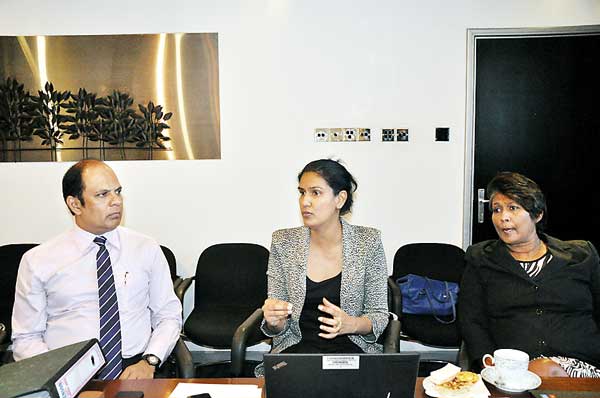
“At the top end we’ve got firms which are equal to or better than international standards. We’re not concerned about them. We want to raise the standards of the rest of the auditors in the country,” World Bank Sri Lanka Senior Financial Management Specialist Jiwanka Wickramasinghe said.
She said that the Report on Observance of Standards and Codes (ROSC) Accounting & Auditing, which outlines recommendations to improve accountability and transparency in the private sector, will be presented to the government towards the end of the month.
ROSC Consultant Aruni Rajakarier said that many existing laws and regulations would have to be amended in order to facilitate the recommendations.
According to the Inland Revenue Act No. 38 of 2000, only specified business enterprises (SBEs), which include listed entities, companies with a turnover of Rs.250 million or a net profit of Rs.100 million, and proprietorships and partnerships with a turnover of Rs.100 million or a net profit of Rs.50 million, are required to submit annual audited financial statements.
Wickramasinghe said that only 4 percent of the country’s businesses fall under this category and a vast majority of the remaining 96 percent—largely small and medium enterprises—avail themselves of registered auditors, who were established in a Gazette Notification in 1964.
“Registered auditors are retired public servants from a few state departments like Inland Revenue. They aren’t being governed and aren’t required to follow any regulations. There are registered auditors in other countries but when the profession improves, they are phased out but not in Sri Lanka. The numbers are growing,” she added.
Institute of Chartered Accountants Sri Lanka (CA Sri Lanka) President Arjuna Herath said that the government had in the past hired public servants without any qualification into the departments which supply Registered Auditors, which degrades the quality of the audits.
“Chartered Accountants was established in 1959 and the number of auditors the country required then was not enough, so the Registered Auditors was created in a 1964 Gazette. There are political issues, so we can’t get rid of them. So what we’re asking is to maybe regulate them,” he added.
Rajakarier said that since books prepared by registered auditors do not have to conform to any standards and are yet accepted by the Registrar of Companies, SMEs sometimes pay up to 10 times the value of the taxes they are liable to, in order to evade those taxes by hiring Registered Auditors.
She said that the disadvantage will ultimately be with the SMEs, as transparency and accountability are required in order to attract investments and take loans. Further, if the business advances to an SBE level, it will be in trouble for not paying taxes.
“At some point in a company’s life, it will have to go for further financing to expand... Also, when they reach the SBE threshold, what will happen with the taxes they haven’t paid?” she asked.
ROSC’s 19 recommendations include that all audit firms be registered with CA and that all tutors and tuition centres providing professional accountancy education be accredited by CA Sri Lanka.
ROSC is an update on the 2004 ROSC. Of the 14 policy recommendations made then, seven have been fully implemented, another five are under implementation.
“We thought it was a perfect time to come up with a new ROSC, since there have been many changes and the goalposts are changing. A middle-income country requires different skills,” Wickramasinghe said.
Comments - 0
Comments - WB report sheds light on SL’s unregulated audit industry
222
Add comment
Comments will be edited (grammar, spelling and slang) and authorized at the discretion of Daily Mirror online. The website also has the right not to publish selected comments.