Reply To:
Name - Reply Comment
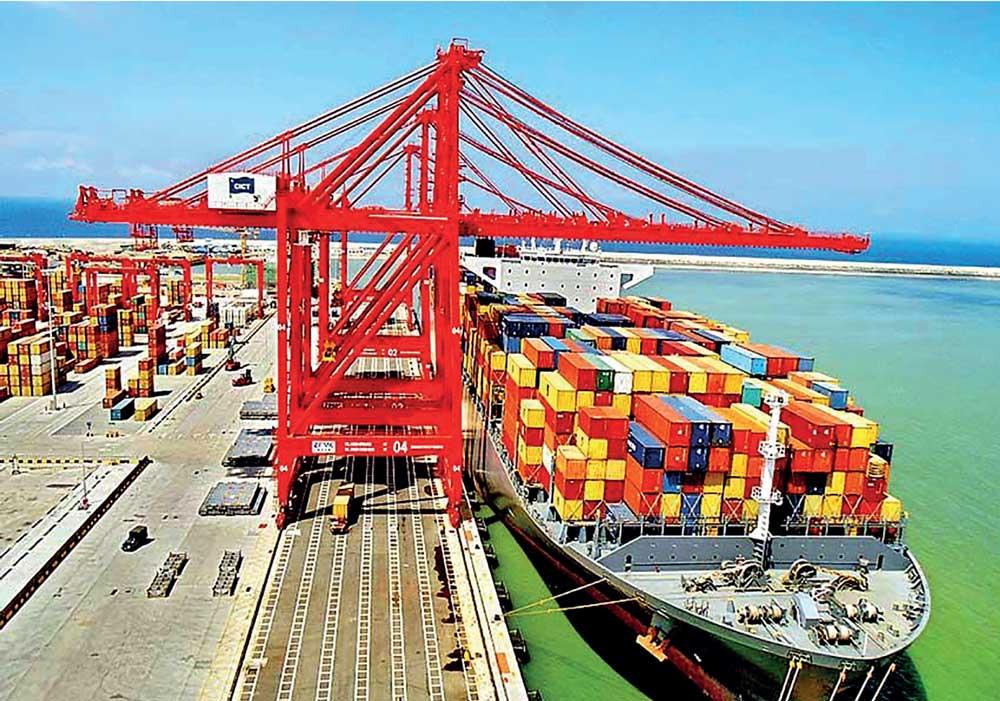
As neighbouring nations invest heavily in new deep-water terminals, challenging Colombo’s long-held dominance, the need to scrutinize and reform policy has become more critical than ever
 In the bustling world of global logistics, where billions of dollars in goods traverse oceans daily, Colombo has long stood as a vital intersection—a strategic transshipment hub connecting East and West. Yet, for a decade, a contentious domestic policy has cast a long shadow over its port operations, creating friction with international partners and, according to industry experts, undermining the nation’s competitive edge.
The policy in question governs Terminal Handling Charges (THC), and a growing chorus of maritime stakeholders is now calling for an urgent return to global best practices to ensure Sri Lanka can navigate the increasingly competitive waters of the 21st-century shipping industry.
This debate, which has recently resurfaced in public discourse, centers on a 2014 government gazette that fundamentally altered a decades-old system, sparking controversy that has simmered ever since. As neighbouring nations invest heavily in new deep-water terminals, challenging Colombo’s long-held dominance, the need to scrutinize and reform this policy has become more critical than ever. A deep dive into the issue, based on insights from maritime industry experts, reveals a policy at odds with international norms, one that has created a cascade of negative consequences ranging from a loss of transparency and a drain on foreign reserves to direct conflicts with the legal bedrock of international trade.
Understanding the Core Component: What exactly is THC?
Before delving into the complexities of the 2014 regulation, it’s essential to understand what Terminal Handling Charges represent. THC is not part of the ocean freight—the cost of moving a container from one port to another. Instead, THC refers to the collection of local, shore-based costs associated with the handling of a container at the Port of Loading (POL) and the Port of Discharge (POD).
These are tangible services performed on land. At the origin port, this includes receiving the container from an exporter’s truck, lifting it, stacking it in the container yard, and eventually moving it from the yard to the quayside to be loaded onto the vessel. At the destination port, the process is reversed: the container is unloaded from the ship, moved to the yard, stored temporarily, and finally loaded onto the importer’s truck for inland transport.
The globally accepted standard is that these charges are borne by the local service recipient. This means the exporter pays the THC at the port of origin, and the importer pays the THC at the port of destination. The shipping line (the carrier) acts as a collection agent, paying the terminal operator for these services and then invoicing the local exporter or importer accordingly. This model is not arbitrary; it is the standard operating procedure in virtually every leading maritime nation for two key reasons:
Sri Lanka followed this universal practice until a sudden policy shift a decade ago.
The 2014 Mandate: Departure from Global Norms
In 2014, the Sri Lankan government issued a gazette notification that upended this established system. The new regulation unjustly mandated that THC must be included within the freight rate. This meant the cost was no longer a separate, local charge but was instead bundled into the overall shipping cost paid by the freight payer.
According to industry insiders, this radical change was implemented without any prior consultation with the stakeholders in the maritime industry. It was introduced abruptly through the national budget via a “surprise gazette,” a method that was viewed as highly unprofessional by the international maritime community, where such fundamental changes are typically made through transparent dialogue with industry experts.
The reaction was immediate and critical. The International Chamber of Shipping, which represents ocean carriers worldwide, voiced its concern over what it deemed
“Inappropriate interference by the government into commercial relationships” between carriers and their customers. The manner in which the regulation was introduced sent a negative signal about Sri Lanka’s policy-making process, damaging the country’s reputation for regulatory stability and predictability—a crucial factor for international investors and shipping lines.
Cascade of negative consequences
The 2014 policy was not merely a procedural change; it set off a chain reaction of adverse effects that continue to impact Sri Lanka’s economy and its standing as a maritime hub.
1. Damaged Competitiveness and Negative Perceptions
The primary consequence has been the erosion of Sri Lanka’s competitiveness. By prohibiting the direct recovery of shore-based costs from service recipients, Sri Lanka became an outlier. Ocean carriers and other stakeholders developed a negative perception of the market due to this deviation from global norms. While Colombo’s strategic location once gave it an almost unassailable advantage, that is no longer the case. Today, new, state-of-the-art deep-water terminals are emerging in neighboring countries, actively vying for the same volumes that have been enjoyed by the Port of Colombo.
To remain a leading regional hub, Sri Lanka cannot afford to have policies that create operational friction. International shipping lines prioritize efficiency, predictability, and alignment with global standards.
A market that imposes unique, non-standard regulations becomes less attractive. The solution, experts argue, is to align with global practices by allowing THC to be paid locally, thereby making Colombo a more seamless and appealing port of call for these critical international partners.
2. The Loss of Transparency and Market Distortion
A core principle of free and fair markets is transparency. The 2014 regulation directly undermines this by forcing THC into the freight rate without a clear cost breakdown. This creates an opaque pricing structure that distorts the actual freight rate and prevents customers from making informed decisions. Importers and exporters cannot easily compare the pure ocean freight costs offered by different carriers because the rates are artificially inflated with a bundled local charge.
Leading ports and carriers globally do the opposite; they provide clear, itemized breakdowns of charges, including THC, which empowers customers to understand their costs and compare service providers effectively. Instead of government intervention, these hubs allow competitive market forces to shape freight pricing, ensuring efficiency and fairness through the natural dynamics of supply and demand. The Sri Lankan policy, by contrast, places freight payers under duress, compelling them to absorb local port charges that were traditionally managed by the party operating at the local end.
3. Critical Drain on Foreign Reserves
Perhaps the most damaging and tangible consequence for the national economy is the significant and unnecessary outflow of foreign currency. The majority of import shipments to Sri Lanka arrive under CIF (Cost, Insurance, and Freight) terms. Under these terms, the overseas supplier arranges and pays for the shipping.
Because the 2014 regulation mandates that THC is part of the freight, the importer in Sri Lanka pays for the destination THC in US Dollars to their overseas supplier as part of the total CIF value of the goods. This means millions of dollars are sent out of the country to pay for a service that is rendered entirely within Sri Lanka, by a Sri Lankan terminal operator.
The alternative is starkly beneficial. If THC were excluded from the freight and billed separately, the importer would pay this charge locally in Colombo to the carrier’s agent in Sri Lankan Rupees (LKR). This simple change would directly reduce the need for USD outflow for every single import container arriving under these terms, helping to preserve the nation’s precious foreign reserves. In a country facing economic challenges, this self-inflicted currency drain represents a significant policy failure.
Direct Conflict with the Language of Global Trade: Incoterms
Beyond the economic impact, the THC regulation creates a direct clash with Incoterms (International Commercial Terms), the globally recognized set of rules that are legally binding in most international trade contracts. Incoterms define the allocation of costs and responsibilities between the buyer (importer) and seller (exporter).
The billing of THC is a key component of these terms, and its responsibility shifts depending on the Incoterm agreed upon in the sales contract. For example:
The key principle is flexibility and negotiation. Incoterms allow the trading partners to decide these terms. However, the Sri Lankan regulation “undermines the intent of Incoterms and complicates international trade logistics” by forcibly bundling the THC into the freight, regardless of what the commercial contract says. This creates legal and logistical contradictions, forcing businesses to find complicated workarounds and sowing confusion in a system designed for clarity.
The Way Forward: Return to Global Standards
The solution proposed by maritime professionals is clear and direct: Sri Lanka must repeal the 2014 regulation and allow THC to be invoiced and recovered separately as a local charge. This is not a radical proposal but a return to the standard practice followed by Sri Lanka’s chief competitors and the rest of the world.
The future of Sri Lanka as a premier logistics and transshipment hub depends on its ability to offer operational flexibility and pricing clarity. Adopting this change would unlock a host of direct benefits:
As the maritime landscape evolves, Sri Lanka stands at a crossroads. It can continue with an outdated and damaging policy that isolates it from global norms, or it can make the pragmatic choice to realign with the practices of the world’s leading ports.
For the sake of the nation’s economy and its strategic maritime ambitions, industry experts believe it is time to return to global best practices.