Reply To:
Name - Reply Comment
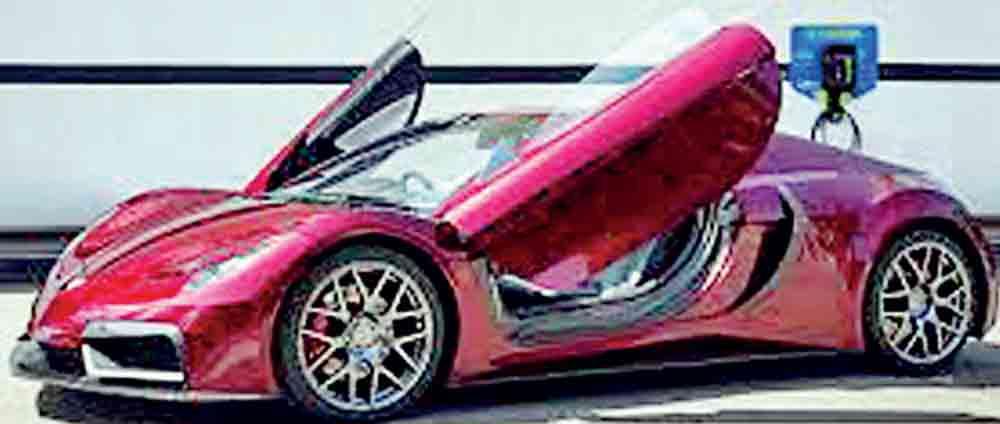
The all-electric supercar Vega EVX, Sri Lanka’s first, at the 2020 Geneva International Motor Show
Vega, the pioneering electric vehicle (EV) manufacturer behind Sri Lanka’s first supercar, is developing the nation’s first autonomous vehicle, leveraging advanced Artificial Intelligence and robotics.
The announcement was made by Dr. Harsha Subasinghe, the founder and CEO of Vega’s parent company CodeGen, during a panel discussion at the National AI Expo and Conference 2025 in Colombo, organised by the Ministry of Digital Economy and SLT-Mobitel.
Dr. Subasinghe revealed that the ambitious project is already in motion, building on the company’s deep expertise in AI and complex engineering.
“We have a completely different business in Vega that is also using AI. We hope that we can be the very first one (in Sri Lanka to develop an autonomous vehicle),” said Dr. Subasinghe speaking on a panel discussion that featured some of Sri Lanka’s top technology leaders.
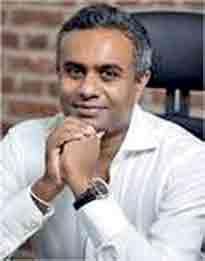 |
| Dr. Harsha Subasinghe |
The move is a significant leap forward from Vega’s acclaimed EVX electric supercar, which placed Sri Lanka on the global map for high-performance automotive engineering.
The new focus on autonomous driving aims to position the company and the country at the forefront of next-generation transportation technology.
Dr. Subasinghe went on to share key details into the technology powering the initiative where he confirmed Vega is employing a sensor fusion strategy - a standard in the global autonomous vehicle industry.
“We use vision-based navigation as well as LiDAR. This approach combines data from cameras (vision) with laser-based 3D mapping (LiDAR) to create a highly detailed and reliable real-time model of the vehicle’s surroundings, a critical requirement for safe and effective self-driving capabilities,” he shared.
The project is an extension of CodeGen’s broader work in robotics and automated systems.
Dr. Subasinghe noted that the primary challenge lies in optimising the complex AI models to run efficiently on in-vehicle processors, a crucial step in translating large-scale AI into a practical, real-world automotive application.
However, Dr. Subasinghe did not specify a timeline for the vehicle’s launch. (NF)