Reply To:
Name - Reply Comment
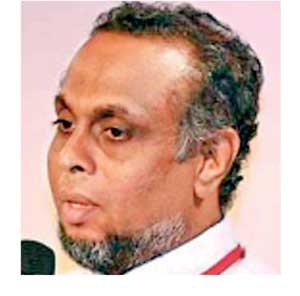 Going into the heart of contract law and judicial processes, an economist recently pointed out that the free trade agreements (FTAs) already implemented and currently under negotiation are undemocratic in nature.
“I have a totally different view point of FTAs looking at the foundations of these agreements. You are violating the very fundamental principles of democracy,” Colombo University Senior Lecturer Dr. Lalithasiri Gunaruwan said at a recent trade discussion.
He pointed out that due to the lack of an exit clause or a termination period in past and future FTAs, Sri Lanka will be bound to these agreements forever, even if shortcomings in the agreements and grievous disadvantageous to the country stemming from them are found later.
However, Verite Research Executive Director Dr. Nishan de Mel rebutted, saying that any party entering into an FTA can renegotiate or exit the agreement at any time, precisely due to the lack of an exit clause, since there is no international treaty or court to enforce legal action.
Verite Research’s Law Research Associate Viran Corea added that it is possible to leave an FTA at any time, though with great economic and diplomatic consequences, but noted that it would be more realistic to renegotiate agreements as time goes on.
Even with Brexit, where there was a comprehensive exit process from the European Union, Britain is now facing huge political and economic backlash internationally.
“You can go for renegotiation, but if the other party does not agree to renegotiate, you’re stuck,” Gunaruwan said.
Corea noted however, that a basic principle of a contract is that it cannot bind one party to a contract forever.
Gunaruwan however pointed out that one of the three pillars of democracy, the judicial process, is not present in these agreements, which throws conventional contract laws out of the window.
“There is no jurisdiction, so you can’t tie in the government of Sri Lanka, or a country X with another country eternally to an agreement which has no jurisdiction. Therefore this is not something simple like one person or company negotiating with another company in a jurisdiction within a country’s boundary,” Gunaruwan said.
He added that companies too will suffer due to the absence of a judiciary if countries drop out of an FTA without an exit clause.
“Let’s say I’m a company, I go into an agreement with another company under the protections of this trade agreement, and simply because the other government went out of this thing, abrogate or whatever, I have a huge loss. Where do I complain? I have to go for arbitration. No other jurisdiction,” he said.(CW)