Reply To:
Name - Reply Comment
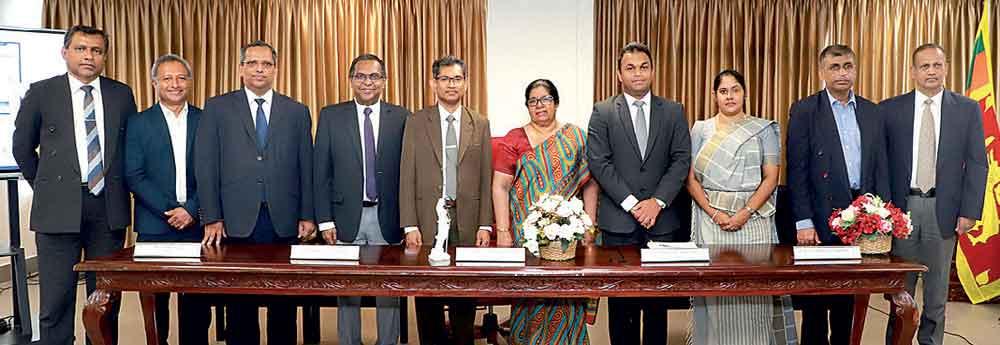
Digital Government/Digital Economy Lead Udaya H. Kasthurirathne, LankaPay Deputy CEO Dinuka Perera, LankaPay Global Legal Advisor Jayantha Fernando, LankaPay CEO Channa de Silva, Digital Economy Ministry Acting Secretary Waruna Sri Dhanapala, Chief Justice Murdu N.B. Fernando, PC, Supreme Court Registrar/Sri Lanka Judicial Service Judge Aravinda Gunaratne, Supreme Court Deputy Registrar/Additional Magistrate Udumbara Dasanayake, Central Bank Director H.M.P.B. Herath and Justice, Prison Affairs and Constitutional Reforms Ministry CEO Marshal Air Vice Marshal Eng. L.M.S.K. Leelaratne (Rtd)
In a landmark move towards digital transformation within Sri Lanka’s legal system, the Supreme Court officially launched online payment acceptance via GovPay, at a ceremony held on May 15, 2025, at the Supreme Court Complex in Hulftsdorp, Colombo 12, under the distinguished patronage of Chief Justice Murdu Fernando, PC.
This digital initiative enables both legal professionals and public to make real-time, secure online payments via any GovPay-enabled internet banking, mobile banking platforms and fintech applications for a wide range of services offered by the Supreme Court, including brief fees, certified copying fees, Commercial High Court appeal filing fees, compensation, cost, enrolment fees (attorney-at-law), good standing certificate fees, new plaint filing fees and online payments for affidavits.
At the initial phase, the GovPay payments to the Supreme Court have been enabled via several online banking platforms and fintech apps, including BOC Smart Pay Mobile App, Peoples Pay Mobile App, NSB Online Banking, Pan Asia Online Banking, Sampath Vishwa Online Banking, HNB PayFast, Seylan Bank Online Banking, DFCC Online Banking, Nations Direct Online Banking/Nations Direct Mobile App, ComBank Digital Online Banking and ComBank Digital Mobile App, NDB Neos Online Banking, Helakuru Mobile App, iPay Mobile App, FriMi Mobile App and Genie Mobile App.
The integration with GovPay ensures secure, seamless and transparent transactions, accessible from anywhere anytime, bringing a new level of convenience and efficiency to the legal community and public using courts. Moreover, the entire GovPay digital process, including the receipt, which is generated via the system, is legally valid under Electronic Transactions Act No. 19 of 2006 (as amended).
Speaking at the launch, Murdu Fernando, PC emphasised the significance of this initiative in modernising the judicial system.
“This marks an important milestone in our journey towards a more accessible and technology-enabled judiciary. By embracing digital platforms such as GovPay, we are not only improving efficiency and transparency but also enhancing public trust and ease of access to all stakeholders of the judicial system,” Murdu Fernando, PC stated.
Integration with GovPay aims to reduce the reliance on physical cash transactions, long queues and administrative difficulties that have historically burdened the court users as well as legal professionals. It also aligns with the national agenda of leveraging digital infrastructure to improve public service delivery. The Supreme Court’s adoption of technology-based payments is expected to serve as a model for similar implementations across other courts of law throughout Sri Lanka. Several high-ranking legal professionals, officials from LankaPay, ICTA and representatives of the legal and banking sectors were present to witness this historic occasion.
This transformation is the result of collaboration between the Supreme Court Registrar, Registry Staff, Justice Ministry, Digital Economy Ministry and key financial and technological institutions committed to enhancing digital inclusion within the public institutions, with the support of the Central Bank of Sri Lanka.
As the legal landscape evolves, digital platforms such as GovPay will play a critical role in ensuring the justice system remains adaptive, inclusive and future-ready. The Supreme Court’s forward-thinking initiative is expected to pave the way for comprehensive judicial digitalisation nationwide.