Reply To:
Name - Reply Comment
Sri Lanka’s insurance industry is poised to abandon conventional, static underwriting in favour of dynamic, risk-based pricing, following the official launch of the National Insurance Information Repository.
Spearheaded by the Credit Information Bureau (CRIB) of Sri Lanka, the centralised database aims to modernise the sector by aligning the domestic practices with the mature international markets, where the individual data profiles directly dictate the premium costs.
The repository was inaugurated on Tuesday, with the processing of the first batch of policy and claim records from SLIC General, marking a definitive shift away from the isolated corporate data silos toward a shared national ecosystem.
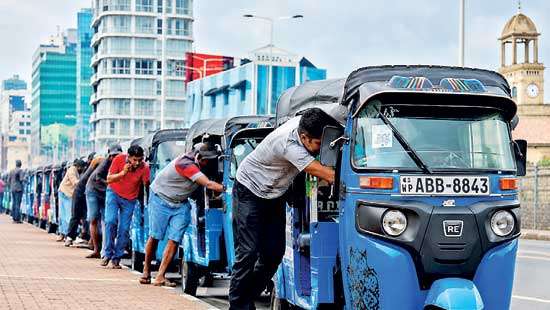
For decades, Sri Lankan insurance pricing, particularly in the motor sector, has relied heavily on the static value of the asset rather than the behaviour of the policyholder.
Addressing the stakeholders, Creditinfo Country Manager Sri Lanka Joe Bowerbank illustrated this disparity by contrasting the local practices with the United Kingdom.
He noted that while obtaining an insurance quote in Sri Lanka is highly efficient, the pricing mechanism remains fundamentally flawed because it fails to evaluate the actual risk presented by the driver.
In mature markets, the insurers leverage the centralised bureau data to assess a multitude of variables, including the policyholder’s address, claim history and broader financial behaviour.
Bowerbank emphasised that a consumer’s credit score is strongly indicative of their propensity to claim, noting that in the UK and US, the individuals with high-risk bureau scores consistently generate higher loss ratios for the insurers.
The integration of the insurance data into the CRIB is designed to fundamentally rewire how the local institutions assess these risks and reward positive consumer behaviour.
CRIB Executive Director and General Manager Pushpika Jayasundara stated that the organisation currently manages data for over nine million individuals, representing 50 percentage of the adult population.
He challenged the prevailing industry stigma that characterises the bureau merely as a regulatory blacklist.
Jayasundara clarified that 95 percentage of the current borrowers pay on time, yet the negative characteristics of the defaulting 5 percentage are often unfairly projected onto the entire system.
“What we are doing today is taking this message to the public that we are in the forefront of enhancing credit access [and] financial product empowerment to the public,” he explained, emphasising that the primary objective is to reward the disciplined customers.
Access to comprehensive data will be particularly transformative for marginalised demographics, often referred to as “thin file customers”, who are routinely rejected for financial products simply because the institutions lack the visibility to assess their risk.
Jayasundara noted that the regional peers such as India, Thailand and Malaysia have successfully abandoned traditional underwriting methods—which often relied on unreliable manual field visits—in favour of digital tools powered entirely by data analytics.
Highlighting that data is the “new collateral”, he assured the industry that pooling this information would enable more accurate risk profiling, lower operational costs and the capability to generate real-time fraud alerts.
The CRIB has outlined a strategic, multi-phase roadmap to roll out these capabilities. The initial phase focuses on establishing comprehensive motor insurance profiles and providing advanced analytics for industry decision-making. Phase two will expand the repository’s utility by introducing a digital e-KYC system linked directly to the national personal registration department, alongside non-motor general insurance data and sophisticated propensity-to-claim models.
The final phase will carefully integrate life insurance and related products. Through this phased digitalisation, the insurers will eventually be equipped to analyse the entire market’s performance, from identifying the claim rates for specific vehicle models to pinpointing demographic risk trends, ultimately facilitating a more equitable and profitable insurance landscape.
(NF)