Reply To:
Name - Reply Comment
BY Nishel Fernando
|
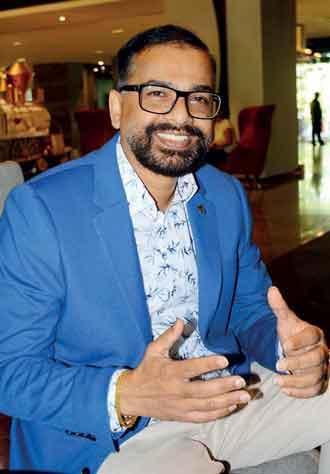
Dual Investment Group Australia Managing Director Manjula N.U. Don |
While Sri Lanka grapples with the lingering aftershocks of its agricultural policy pivots and soil degradation, a Sri Lankan-born innovator making waves in Australia’s agribusiness sector believes the solution lies not in more chemicals but in radical efficiency.
Dual Investment Group Australia Managing Director Manjula N.U. Don, a globally recognised figure in sustainable agriculture, argues that Sri Lanka is sitting on a massive opportunity to modernise its agricultural framework by adopting a “less is more” philosophy grounded in advanced science.
Don, who was named Australian Inventor of the Year in 2015 and holds seven patents in agricultural technology, says the traditional approach to farming—dumping vast quantities of mineral fertiliser into the soil—is obsolete.
Sitting down for a discussion with Mirror Business on the sidelines of a recent visit to Colombo, Don outlined a comprehensive sustainability model that has already attracted major global investors, including the Canadian Super Fund, to his Australian operations.
Efficiency paradox
“If a farmer needs 100 kilos of standard mineral fertiliser dug from the ground to show a result, with our improved fertiliser technology, they might only need one or two kilos,” Don explained.
This staggering differential is achieved through what he calls ‘Chelation Technology’. By using amino acids derived from plants and a patented molecule known as Complex Polymeric Polyhydroxy Acid (CPPA), nutrients are encapsulated at a molecular level.
“When this mixture is sprayed, the plants do not identify it as a foreign material. They welcome it, absorbing it immediately through the leaf surface,” he said.
This efficiency addresses a critical economic and environmental pain point for Sri Lankan farmers: the high cost of inputs and the immense waste associated with traditional fertiliser application.
Breaking ‘vicious circle’
According to Don, Sri Lankan farmers—particularly in the paddy sector—are currently trapped in a “vicious circle” of low productivity and high costs, a cycle that cannot be broken without a fundamental shift in how the state manages soil data. He argues that the country’s agricultural sector is operating on “autopilot”, relying on generalised recommendations that are often decades out of date.
“We can’t break this circle without sticking to soil analysis. It looks very simple, perhaps even crazy to some but we need to establish a soil nutrition profile for each area,” Don asserted.
He pointed to the “blind” usage of standard mixtures such as the perennial application of ‘Pol Pohora’ (Coconut Fertiliser) or standard tea fertiliser mixes, without any regard for what the soil actually holds. This is most acute in the rice belt, where the officers often prescribe the same nutrient mix year after year, regardless of soil saturation.
“For example, we have the Tea Research Institute. But in some cases, the manuals being used were made 20 or 30 years ago. They have not been revised to reflect the current soil realities,” he noted.
“Every year, farmers put in the same fertiliser. But it needs to be customised according to the estate or the crop zone.”
Rethinking seasonality
Beyond soil mechanics, Don urged the Sri Lankan policymakers to study how developed agricultural nations manage production cycles, specifically challenging the country’s rigid adherence to traditional harvesting seasons.
“The policymakers need to look at how other countries manage their agriculture, especially regarding seasonality,” Don said.
He noted that relying solely on traditional seasonal patterns without integrating modern management techniques limits the country’s potential. By studying global best practices, Sri Lanka could smooth out production peaks and troughs, ensuring better market stability and food security throughout the year.
 “In Sri Lanka, there is no mechanism to protect the public’s health. We are killing the natural environment and by extension, our own internal health.”
Invisible health crisis
Don also issued a stark warning regarding the “invisible” health costs of the current agricultural system, moving beyond the well-known kidney disease crisis to highlight the damage being done to the human gut.
“This is directly linked to our health, specifically our microbiomes. Excess chemicals are killing the microbial balance in our natural environment and leading to disasters inside the human body,” he said.
He illustrated the danger with a common practice in the local vegetable market.
“I have been in the Sri Lankan agriculture industry for a long time. I know that for crops like beans, farmers apply chemicals every five days. They spray pesticides and pick the harvest the very next day to send to the market.”
In Australia, such produce would never reach the shelf. Don explained the concept of the Maximum Residual Limit (MRL) certificate, a mandatory requirement in Australia where the farmers must prove chemical residues are below a safety threshold before selling.
“In Sri Lanka, there is no mechanism to protect the public’s health. We are killing the natural environment and by extension, our own internal health,” he cautioned, advocating for immediate random testing in supermarkets to force a reduction in chemical overuse.
Soil testing imperative
A central theme of Don’s proposal is the pragmatic operationalisation of soil testing. He does not suggest that every impoverished smallholder bear the cost of high-tech labs. Instead, he proposes a “train the trainer” model, where the government’s existing infrastructure—specifically Agrarian Service Officers—is upskilled to create ‘Soil Nutrition Profiles’ for specific zones or ‘Yaya’ (tracts).
“The government sector area division officers need to be trained to take soil samples from different areas, get them analysed and then adjust the fertiliser programme accordingly,” Don proposed.
“If a region is rich in nitrogen, stop subsidising nitrogen for that area. If it lacks potassium, focus on that. Then you save a lot of money from the national fertiliser bill and efficiency goes up.”
In Australia, his firm advises the farmers to test their soil annually, providing only the specific nutrients required to balance the land.
“To perform like a healthy body, soil needs fibre, microbials and organic matter,” Don noted.
“Just putting chemical fertilisers will not help in the long term. If you put too much, it affects the quality of the harvest.”
Academic disconnect
Perhaps Don’s most trenchant observation regarding Sri Lanka’s recent agricultural failures, specifically the organic fertiliser crisis, concerns the composition of the country’s advisory boards. He argues there is a dangerous imbalance in the government’s reliance on pure academia over commercial experience.
“The government is making a bit of a mistake by consulting university professors and high-end academics for practical issues,” Don said candidly.
“There is nothing wrong with academia; I have academic qualifications myself. But unfortunately, they can often advise only on the theoretical side.”
He cited the organic fertiliser disaster as a classic example of this disconnect.
“Organic fertiliser is a very good concept. But in the way it was implemented, it was not commercial. Theory does not always work in agriculture.”
Don urges the policymakers to diversify their inner circle of advisors.
“The government needs to identify who are the people really doing commercially viable business in Sri Lanka. There are successful business people who also have the correct academic background. We need a balance. Rather than relying 100 percent on the opinions of the academically qualified, we need to involve people who have a commercial sense of what actually works in the field.”
Navigating organic trap
Addressing the organic pivot further, Don warned that it clashes with the reality of high-producing crop varieties currently used in the country.
“The varieties we are using are high producing crop varieties. We are no longer using traditional varieties. These crops are bred to require high input to give high output,” he explained.
“When you switch straight to organic, which is considered a low input, the yield crashes.”
He advises that organic farming should be treated as a niche market for premium pricing—a luxury segment for the health-conscious wealthy—rather than a mass-market solution for national food security.
“The government is making a mistake by consulting university professors and high-end academics for practical issues. Theory does not always work in agriculture.”
Ethical branding as a competitive edge
Beyond the soil, Don highlighted a strategic advantage Sri Lanka possesses over competitors: labour standards. He pointed out that while some competitor nations keep costs low through poor labour practices or child labour, Sri Lanka generally upholds better standards. However, the country fails to market this ethical value.
“We need to market what we do correctly to the overseas buyers. We are not using child labour; we are better than the work standards in many competitor nations. Organisations such as the United Nations Global Compact or the Institute of Environmental Professionals Sri Lanka (IEPSL) can validate these practices,” he said.
He noted that modern global investors and buyers are increasingly looking for “responsible” partners. His own company’s adherence to ISO 14001:2015 (Environment Management System) and ISO 9001:2015 (Quality) certifications has made it a magnet for institutional capital.
Closing loop on waste
He also touched on the critical issue of plastic waste in agriculture. Don’s Australian operations run on a “circular economy” model, eliminating single-use fertiliser packaging by using reusable 1,000-liter intermediate bulk containers (IBCs) and bulk delivery trucks.
While acknowledging that Sri Lanka cannot completely eliminate single-use plastics like water bottles, due to convenience and cost, Don advocated for a deposit scheme similar to Australia’s, where returning a bottle yields a refund.
“There should be a mechanism to motivate recycling. We cannot get completely out of plastic but we need to capture it and clean the environment.”
For Don, the path forward for Sri Lanka requires a pivot from volume to precision, from blind application to scientific management and from theoretical policy to commercial realism.
“We are not telling people in Sri Lanka they are incapable,” Don said.
“But the message of efficiency needs to come from the top.”