Reply To:
Name - Reply Comment
By Nishel Fernando
|
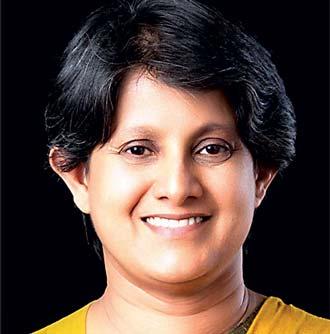
Subhashini Abeysinghe |
A top Sri Lankan trade economist has called for a strategic overhaul of the nation’s approach to international trade deals, urging investment in a permanent, skilled institutional framework for negotiations rather than relying on ad-hoc teams of retired officials.
The remarks came from Colombo-based think tank Verité Research Research Director Subhashini Abeysinghe during a panel discussion at the 4th Annual Economic and Tax Symposium hosted by CA Sri Lanka last week.
She argued that Sri Lanka’s current method of assembling temporary teams, often flying in retired officers from various locations, is inadequate for securing beneficial trade agreements in a complex global landscape.
“We can’t negotiate trade agreements by flying all retired officers from various places and formulate temporary teams to negotiate,” Abeysinghe stated emphatically. “Negotiation is a skill and an art, and it has to be developed over time. You need to have seasoned negotiators, which means you need that kind of institutional support, backed by good research, to be able to negotiate these agreements.”
Her critique highlights a fundamental weakness in the country’s trade strategy, suggesting that without a professional, permanent body of experts, Sri Lanka is ill-equipped to navigate the intricacies of modern Free Trade Agreements (FTAs).
“Just talking about trade agreements doesn’t make sense if we want to actually protect our interests and for agreements to deliver benefits to the country,” she added. Abeysinghe also challenged the prevailing assumption that FTAs are a panacea for Sri Lanka’s export woes. She cautioned that simply reducing barriers in markets such as India, China, or Thailand will not automatically boost exports if Sri Lanka fails to address critical domestic issues. “Free trade agreements reduce barriers Sri Lankan exporters face in another country,” she explained. “Now, this is on the assumption Sri Lanka is failing to export because of barriers in India, because of barriers in China and not because of the reasons that...our product is not what they want.” She stressed that for many products, Sri Lanka already has market access. The primary obstacles, she argued, are a stagnant export product basket and a high-cost domestic environment.
“You need to make sure your firms can succeed, and that is by helping them reduce the cost of doing business here and by supporting the diversification of the product basket,” Abeysinghe noted, pointing to burdensome approval processes and a lack of automation that disadvantage local companies.
By focusing solely on external market access through FTAs without strengthening the domestic industrial base and fostering innovation, she noted that Sri Lanka is setting its exporters up to compete on an uneven playing field.
“You are made to compete with companies that do not face these costs,” she remarked, contrasting the local environment with the advanced processes adopted by other Asian nations.