Reply To:
Name - Reply Comment
By Nuzla Rizkiya
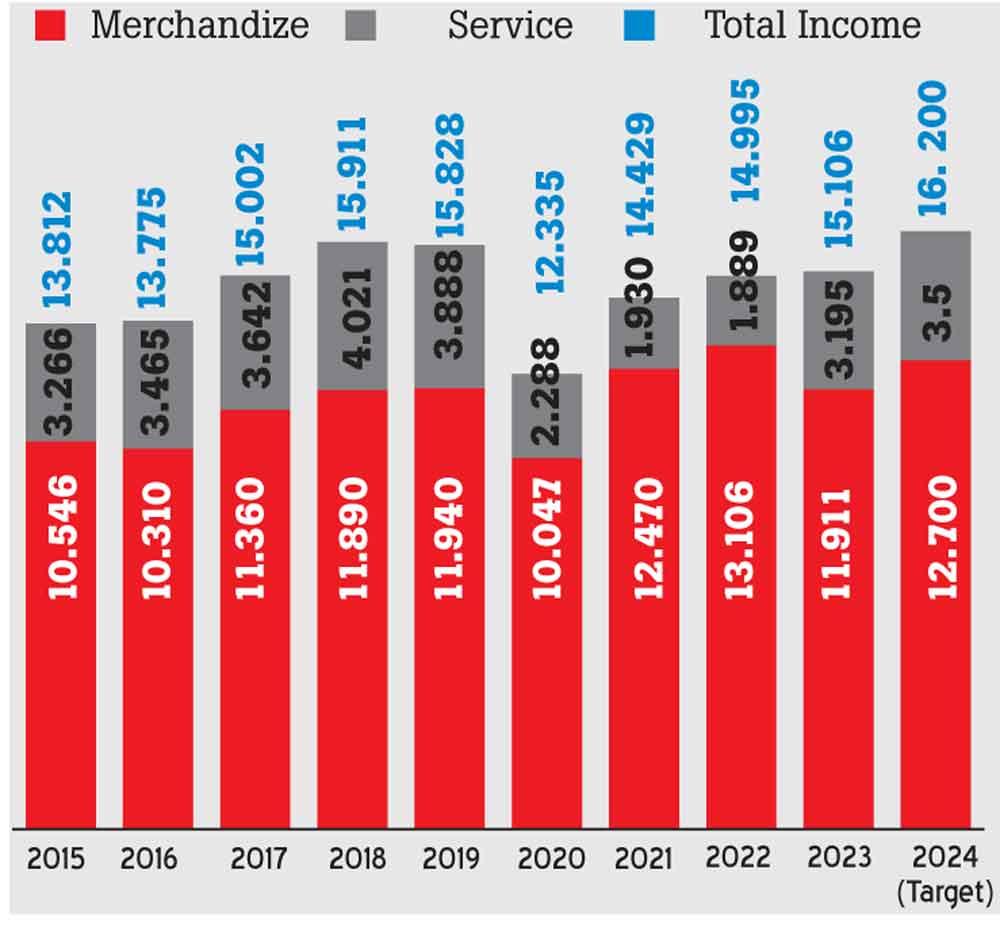
Sri Lanka through its latest trade and export policy is targeting annual export revenue of US$ 18.2 billion for 2025.
The plan, as outlined by EDB Chairman Mangala Wijesinghe, is to increase merchandise exports from last year’s target of US$ 12.7 billion to US$ 14 billion, while elevating service exports from US$ 3.5 billion to US$ 4.2 billion within the next 12 months.
The apparel sector is expected to lead the growth with a revenue target of US$ 5.2 billion whereas tea exports are expected to contribute with US$ 1.4 billion.
Rubber exports are expected to reach US$ 1 billion and other export crops are projected to generate revenues surpassing US$ 100 million for 2025.
Substantial contribution is anticipated from the gem and jewellery sector, with a revenue target of US$ 650 million—more than double of last year’s projected revenue of US$ 300 million.
“The construction industry is also expected to have a similar growth momentum, with a target of US$ 450 million compared to last year’s US$ 250 million,” said Wijesinghe addressing a press-conference held to announce the latest edition of the Presidential Export Awards.
“The government is actively looking into the industry’s proposal to reduce bank guarantees at the Central Bank from US$ 100 million to US$ 5 million,” he added.
Moreover, electronics and electronic components from the merchandise sector are expected to generate US$ 550 million in revenues in 2025 while food and beverage exports are projected to reach US$ 485 million.
Earnings from coconut exports are expected to remain at US$ 800 million, according to the EDB. However, boat manufacturing, identified to be an emerging sector, is anticipated to cover the setback by generating over US$ 200 million in revenues.
EDB is looking at the seafood sector to bring in US$ 300 million while other export products are projected to bring in a combined revenue of US$ 640 million for the country in 2025.
Adding to the boost from the construction industry, the government aims to strengthen the service sector exports by increasing revenues from the ICT sector to US$ 1.7 billion and generating over US$ 1.9 billion from the transport, logistics and maritime sector within the year.
“We are aiming to increase ICT revenue to US$ 5 billion by 2030 by empowering more and more ICT professionals. The reduction of the export service tax from 30 to 15 percent will have a transformative impact in this industry,” Wijesinghe said.
The government last year announced its ambitious target to achieve US$ 36 billion in export revenue within the next five years, with US$ 25 billion coming from merchandise exports and US$ 11 billion from service exports.
Officials listed the political stability along with strategies such as stringent anti-corruption measures, attracting foreign direct investments (FDIs) and streamlining export-related approval processes under the government’s digital economy initiative as key drivers of this growth.