Reply To:
Name - Reply Comment
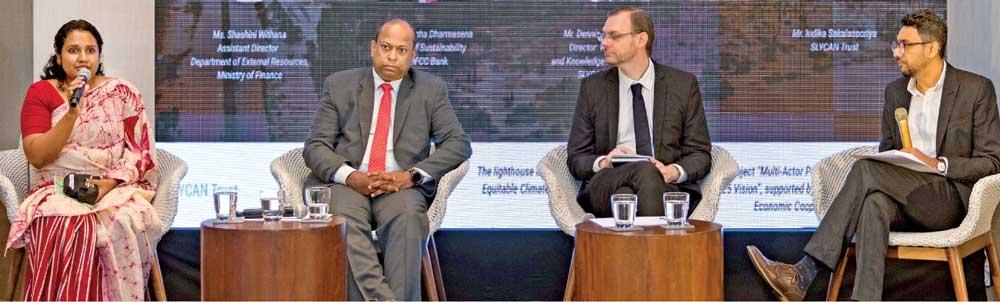
Panel discussion on ‘Translating institutional ambition into equitable financial protection’
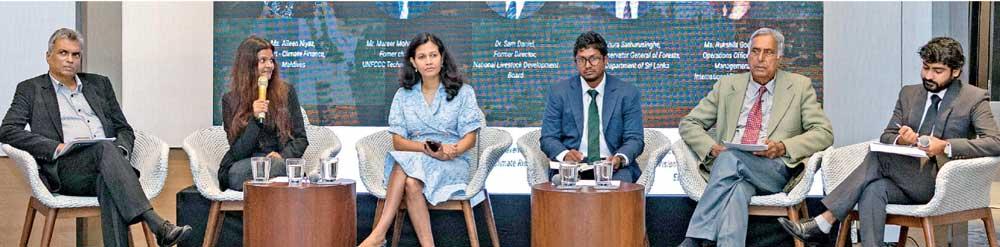
Panel discussion on ‘International corporation in CDRFI innovation and sectoral application’
 |
| Dennis Mombauer |
 |
| Hanna Bartels |
With disasters and other climate change impacts looming large, Sri Lanka needs strong social and financial protection mechanisms to help communities, businesses, and public institutions prepare and recover, according to discussions at the Lighthouse Event on Climate and Disaster Risk Finance and the Multi-Actor Partnership in Sri Lanka.
Convened by SLYCAN Trust on 21 May in Colombo, the event brought together government institutions, financial sector representatives, development partners, civil society, academia, and national as well as international experts to discuss how Sri Lanka can strengthen preparedness and resilience in the face of increasing climate risks.
The event focused on a key question facing the country: how can financial protection reach vulnerable communities, small businesses, workers, and public systems before and after climate-related shocks such as floods, droughts, landslides, and cyclones.
Speaking at the event, Dennis Mombauer, Director: Research & Knowledge Management at SLYCAN Trust, reflected on progress made and potential pathways for strengthening climate and disaster risk management and finance in Sri Lanka.
He noted the importance of risk and finance literacy, trust, and capacity-building as well as challenges around data, coordination, and inclusive financial mechanisms to effectively build long-term resilience to climate risks.
“We can quantify risks, but we need to find mechanisms and instruments to better address the remaining uncertainties and find solutions that protect people, not just when disaster strikes, but also ahead of time,” he said.
Hanna Bartels, Programme and Contract Manager for International Programmes at CARE Germany, placed Sri Lanka’s experience within a wider global context. She noted that similar work is being carried out across several countries and regions, including Bangladesh, the Philippines, Madagascar, Malawi, Senegal, and the Caribbean.
She added that the discussions in Sri Lanka come at an important time, with growing recognition among public and private actors that climate preparedness must be strengthened and that solutions need to be developed collaboratively rather than in isolation.
Key issues discussed during the event included the need for better risk data, improved access to finance, stronger coordination between institutions, and financial tools that can support vulnerable communities, farmers, and small businesses facing climate-related losses. Participants also discussed the role of commercial banks, insurance providers, development finance institutions, and public agencies in supporting more effective climate and disaster risk management.
The discussions throughout the event highlighted sector-specific climate-related risks and vulnerabilities. In the apparel sector, heat stress and worker protection were identified as growing concerns. In tourism, informal and seasonal workers were noted as particularly exposed when climate shocks disrupt business activity. In agriculture, speakers discussed the need to strengthen insurance and financial support mechanisms for farmers and rural communities.
The event also drew attention to the gendered implications of climate risks and the importance of local ownership. Community-level experiences from vulnerable areas showed that climate risk is not only an environmental issue, but also a development, livelihood, finance, and social protection issue.