Reply To:
Name - Reply Comment
 Sri Lanka is currently facing a shortage of trained medical personnel, one of the country’s leading private hospital groups said this week, in the midst of a heated battle carried out by professional medical organizations and regulators to ban private medical education in Sri Lanka.
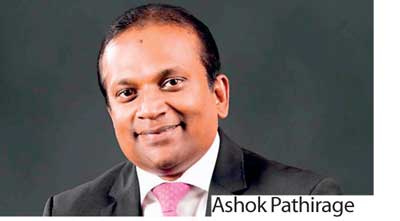
“A key constraint facing the industry is the shortage of skilled medical professionals and support teams,” Softlogic Group Chairman Ashok Pathirage said in his annual review of Asiri Hospital Holdings PLC.
Currently, the main pool of doctors is trained through state universities, while a minority of foreign university graduates is also allowed entry into the local medical system.
The Sri Lanka Medical Council (SLMC) that regulates the healthcare sector is refusing to allow graduates from the privately owned Dr. Neville Fernando Teaching Hospital to complete their clinical trials in government hospitals, which are required in order to practice medicine in Sri Lanka. This is despite President Maithripala Sirisena, while he was the Health Minister, coming to a settlement in a Supreme Court case to allow the Dr. Neville Fernando Teaching Hospital graduates to complete their clinical trials. The SLMC and the Government Medical Officers’ Association—which offers commentary on a wide array of topics—have cited inadequate entry criteria and low standards at the private institution as problems, even though approving foreign universities that accept Sri Lankans with grades lower than those required for local state universities. This is not the first time that private medical education has been offered in Sri Lanka.
The North Colombo Medical College, started in 1980 had run into somewhat similar problems, but was eventually turned into the University of Kelaniya Faculty of Medicine, along with its existing student base. Meanwhile, Pathirage said that Sri Lanka’s health sector has great potential, since the country, set to enter the middle income category soon, has a per capita healthcare spend of US$102, compared to US$ 465 in middle income countries.
However, Sri Lanka provides free healthcare for its citizens. “The public sector accounts for 75 percent of the available bed capacity. However, private healthcare accounts for more than 60 percent of the outpatient services and a larger percentage of the population utilizes private laboratory services,” Pathirage noted.
The healthcare sector is getting strong investments, due to the fast ageing population of the country. Pathirage added that increased life insurance penetration in the country may address the increases of value added tax on healthcare services.
“From a macro perspective, it is imperative that the country increases the penetration of medical insurance as this will assuage some of the fallout that may be seen in the immediate future with a possible crunch on disposable income in the coming year,” he said.