Reply To:
Name - Reply Comment

|
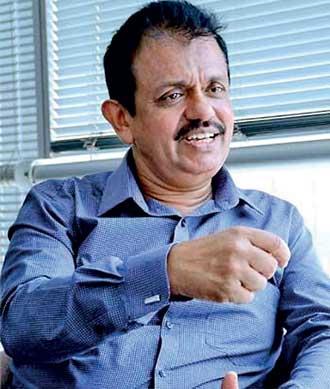
Dr. Dharmasri Kumaratunge |
The introduction of a modern electronic ticketing system or transit card for Sri Lanka’s public transport has been a hot topic of discussion for years, with several pilot projects failing to reach nationwide implementation. The challenges are numerous, ranging from technical hurdles to operational complexities and the need for seamless integration across diverse transport operators. Dr. Dharmasri Kumaratunge, a figure with extensive experience in finance and technology, having held key roles at the Central Bank, Technology Ministry, Telecommunications Regulatory Commission and Information and Communication Technology Agency of Sri Lanka (ICTA), recently shared his insights on the most viable path forward. Dr. Kumaratunga, who oversaw digital payments at the Central Bank and currently serves as a consultant at Mastercard and an independent director at Union Bank of Colombo, advocates strongly for an open-loop system. In an interview with Mirror Business, Dr. Kumaratunga elaborated on why he believes an open-loop system is the pragmatic solution for Sri Lanka’s public transport ticketing needs. Below are excerpts from the interview.
 Q:The idea of an electronic ticketing system for public transport has been discussed for a long time in Sri Lanka, with several pilot projects undertaken. Why, in your view, has it not materialised yet?
Discussions on the implementation of a digital ticketing system or travel card to replace cash transactions in public transportation have been ongoing since prior to 2016. That year marked a significant phase of planning, with the active involvement of key stakeholders, including the Central Bank, Transport Ministry, Technology Ministry, Sri Lanka Transport Board (SLTB), National Transport Commission, universities, commercial banks and ICTA. A range of proposals were considered, including systems based on top-up and stored-value cards.
Despite these efforts, the implementation of a unified card system across the entire public transport network has faced considerable challenges, primarily due to the complexities associated with integration into the existing infrastructure and administrative frameworks. While standalone top-up or stored-value card solutions were viewed as more immediately feasible, they presented their own set of limitations—most notably a lack of interoperability, inadequate top-up mechanisms and user inconvenience in acquiring and managing the cards. These issues have also been evident in similar early-stage implementations in other countries.
Q:Before we delve into the solution, could you give us a picture of the current situation regarding currency circulation and cash handling within Sri Lanka’s public transport sector, along with the scale of revenue involved?
This seems to be a significant area for potential efficiency gains.
Certainly. Understanding the sheer volume of cash involved is crucial to appreciate the need for digital transformation. Nationally, the amount of currency in circulation has seen a substantial increase, rising from approximately Rs.650 billion before the pandemic to around Rs.1.36 trillion currently. A significant portion of this, about Rs.1.1 trillion or more than 77 percent as of the fourth quarter of 2024, is held by the public outside the banking system. This persistent high level of cash holding, even with increased digital payment adoption, indicates underlying factors like a preference for cash in certain sectors or informal economic activities.
Sri Lanka’s public transport sector continues to rely heavily on cash-based transactions. In 2023, the SLTB maintained an average fleet of approximately 7,000 buses, with around 5,243 buses in daily operation. That year, the waybill revenue amounted to approximately Rs.52.5 billion, accounting for about 68 percent of the SLTB’s total income. An additional Rs.3.6 billion was generated through season ticket sales. On average, the SLTB processes over Rs.140 million in ticketing revenue each day, underscoring the substantial volume of cash circulating within the system and the operational challenges associated with manual cash handling.
When factoring in the private bus sector—which now operates over 20,096 buses, reflecting a 1.06 percent increase from 19,884 buses in 2022—the estimated daily cash circulation across the entire bus system amounts to approximately Rs.600 million. This translates to a substantial monthly cash flow in the transport sector, potentially ranging from Rs.15-20 billion. Additionally, Sri Lanka Railways recorded significant passenger ticket revenue in 2023, totalling Rs.11.605 billion.
These figures underscore the immense volume of cash handled manually across the transport system on a daily basis, raising serious concerns around security, cash handling, reconciliation, operational efficiency and revenue leakage.
Q:You’ve identified implementing an open-loop system as the most viable path for Sri Lanka. Could you explain what an open-loop system is and why you believe it’s the best approach, considering the context you just described?
The global trend, exemplified by the evolution seen in cities like London, clearly favours open-loop transit systems. Simply put, an open-loop system allows passengers to use their existing contactless debit and credit cards directly for transit payments. This offers immense convenience because users can utilise the cards they already carry every day, eliminating the need for a separate transit card.
For Sri Lanka, this approach is particularly advantageous, given the significant number of existing debit (around 19 million) and credit (around 1.9 million) cards already in circulation. Since a large portion of the population already holds these cards, they can readily use them for transit fares, tapping into those funds directly. This directly addresses the issue of needing to withdraw physical cash, specifically for bus or train journeys, thereby potentially helping to channel some of that circulating cash back into the formal banking system.
Q:Security is often a major concern with digital payments. How secure are these open-loop systems for transit?
When properly implemented using established payment infrastructure, open-loop systems offer robust security, comparable to their use at conventional point-of-sale (POS) terminals. International card schemes incorporate advanced security features into debit and credit card transactions, providing a high level of protection. Customers also benefit from consumer safeguards such as chargeback mechanisms, which allow them to dispute and recover funds in the event of fraudulent or unauthorised transactions.
Although the risk of card theft cannot be entirely eliminated, mature card networks are equipped with sophisticated tools to detect and flag suspicious activity. Leveraging the existing security protocols—such as multi-factor authentication, which enhances transaction security by requiring multiple forms of identity verification, machine learning, artificial intelligence and behavioural analytics, to detect anomalies and patterns indicative of fraud and robust data protection methods like encryption and tokenisation—provides a strong, proven foundation. These established measures offer significantly greater reliability and resilience compared to developing a new security framework from scratch for a proprietary or standalone system.
Q:What are the incentives for public transport service providers, both the SLTB and private operators, to adopt this system?
For the SLTB, transitioning to digital payments provides security and certainty of income compared to manual cash collection, which can be prone to losses. For the private bus sector, which operates a much larger fleet, the financial incentive is substantial. There are significant reported revenue leakages in daily cash collections, estimated by some to be between 08 percent and 10 percent and previously even higher. Transitioning to secure digital payments via an open-loop system offers them a direct and efficient way to potentially recover a large portion of this lost revenue, leading to significantly improved financial efficiency.
Q:A concern sometimes raised is the viability of using cards for small transactions, like typical bus fares, given the potential per-transaction costs. What’s your view on this?
While some establishments might have minimum thresholds for card payments, that’s a separate merchant decision. For a transit system, the transaction cost is typically structured differently. The Central Bank has set a merchant discount rate of one percent, which is distributed among the card issuer, acquirer (entity providing the payment terminal) and network provider. A one percent fee on a small fare is a low cost compared to the potential benefits of secure, efficient collection and reduced leakage.
Implementing this requires deploying payment terminals in buses. Discussions with service providers could explore options for providing terminals, potentially even free of charge initially. While the cost of traditional POS machines might seem high, the banks can offer favourable terms to operators, similar to arrangements with small businesses, including discounted rates or instalment plans. Some banks even offer free POS machines with associated daily cash collection services. It’s also crucial to have a contingency plan in place for machine breakdowns.
Newer technologies like mobile devices functioning as payment terminals also offer more flexible and potentially cost-effective options compared to traditional POS machines. Initially, the system might require conductors to assist, similar to tap-in methods used in other countries, before potentially moving towards more automated fare calculation based on distance.
Q:What kind of infrastructure is needed to support such a system and what lessons can be learned from the previous pilot projects in Sri Lanka?
Beyond the payment terminals in buses, a substantial back-end system is required. This includes robust infrastructure capable of handling a very high volume of daily transactions and a large database to record them all efficiently. The estimated daily cash circulation in the bus system alone is significant, suggesting a monthly flow in the billions. Therefore, opting for a scalable and robust back-end solution is essential.
Previous pilot projects, like those by HNB and Dialog, provided valuable insights. A key takeaway from the Dialog experience, which involved issuing their store Value cards, was the significant problem of interoperability – a card issued by one provider couldn’t be used on the machines of another. This lack of interoperability is precisely the primary reason why advocating for an open-loop system is critical.
Open-loop cards, based on standards like EMV technology, inherently solve this issue, as any card can be read by any compliant payment terminal, ensuring a seamless experience for the passenger regardless of which bank issued their card or which operator they are travelling with.
Q:Implementing this requires significant investment. What’s the estimated total investment and how might it be financed?
The total investment would indeed be significant, primarily in the infrastructure including terminals, the back-end system and integration efforts, rather than necessarily in issuing new cards since the existing ones are used.
The financing model for such a system can be designed with flexibility. For instance, the Maldives offers a noteworthy example, where Mastercard fully funded the development of the country’s transit payment infrastructure. The system operates as an open service, accepting any compatible card and Mastercard did not seek direct financial returns from its investment in this large-scale national initiative. The primary benefit to the country was the introduction of a digital payment ecosystem, significantly reducing the reliance on cash within the transportation sector.
Sri Lanka could consider similar investment models, potentially attracting private sector participation without the need for substantial direct government expenditure or reliance on taxpayer funds. Such partnerships can deliver mutual value—providing the private sector with strategic positioning in a growing market, while enabling the government to enhance public transport efficiency and accelerate digital payment adoption. This makes it a compelling case for public-private collaboration.