Reply To:
Name - Reply Comment
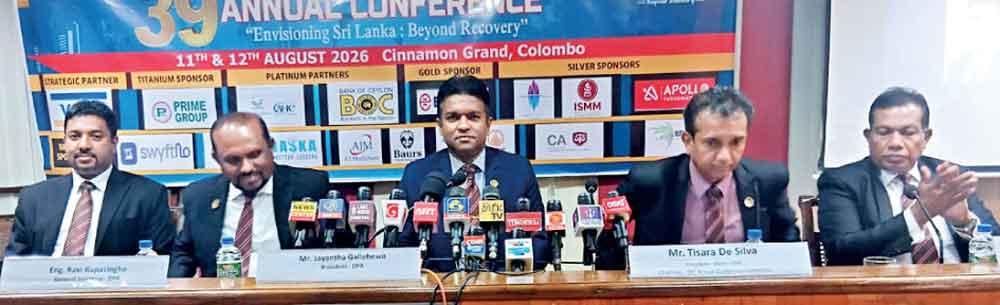
The Organisation of Professional Associations of Sri Lanka (OPA) has announced its flagship 39th Annual Conference, scheduled to take place on August 11 and 12, at the Cinnamon Grand Colombo.
As the apex representative body governing 52 member associations across 34 professional disciplines—including law, medicine, engineering, accountancy, and banking—the OPA represents a collective network of more than 60,000 professionals nationwide.
This year’s summit marks a crucial milestone as the organization enters its second half-century of public service. The inaugural ceremony will be graced by Prime Minister Dr. Harini Amarasuriya as the Chief Guest, alongside British High Commissioner to Sri Lanka Andrew Patrick as the Guest of Honour, setting the stage for a critical national dialogue on the country’s future development trajectories.
Grounded on the timely theme of “Envisioning Sri Lanka: Beyond Recovery,” the conference shifts the national focus away from temporary crisis management toward sustainable, long-term economic transformation. While recent macroeconomic indicators point to stabilizing conditions, including a notable 5.1 percent economic growth rate recorded in the first quarter, professional bodies emphasize that simple recovery from the recent economic debacle is insufficient. The upcoming forum acts as a strategic platform to dissect persistent structural constraints, fiscal management issues, and external dependencies that leave the country’s small open economy vulnerable to global shocks. The overarching objective is to transition from reactive crisis mitigation to proactive risk management and inclusive development, ensuring that the benefits of national progress reach all segments of society.
The framework of the two-day event relies heavily on an expansive technical agenda divided into four core pillars designed to address immediate macroeconomic realities. The first session focuses on resilient recovery, diving into the digital transformation of small and medium enterprises (SMEs), climate-resilient infrastructure, and sustainable agricultural models geared toward national food security. The second pillar addresses future readiness, concentrating on smart nation blueprints, clean-tech startup ecosystems, and building workforce capabilities fit for a rapidly changing global landscape. Meanwhile, policy equity and social governance comprise the remaining sessions, touching on poverty alleviation, healthcare system prevention, and the strengthening of public trust through robust anti-corruption frameworks and ethical public-private partnerships.
Speaking at the media briefing ahead of the event, OPA office bearers highlighted that the collective expertise harbored within the institution is systematically channelled directly to state planners. Rather than acting as a mere talking shop, the OPA leverages its multi-disciplinary pool of experts to draft actionable concept papers and technical frameworks. The upcoming conference, which anticipates over 250 high-level participants for its technical sessions alone, will culminate in a comprehensive policy document handed directly to government ministries.
Led by the annual conference committee, including President Jayantha Gallehewa, President-Elect Tisara De Silva, and General Secretary Ravi Rupasinghe, the OPA intends to utilize this upcoming summit to forge practical pathways, driving the nation toward a resilient, progressive, and structurally sound economic future.