Reply To:
Name - Reply Comment
Analysts anticipate that Central Bank’s revision to Loan-To-Value (LTV) ratios on vehicles, effective last Friday, will positively influence the growth of loans and leases across both banks and finance companies. This, in turn, could accelerate the overall demand for private sector credit.
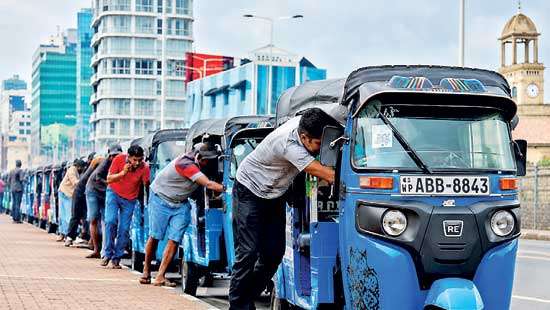
The Central Bank, effective July 18, increased the LTV ratio—the loanable share of an asset’s value—for unregistered and registered cars, Sports Utility Vehicles (SUVs), and vans used in Sri Lanka for less than one year, from 50 percent to 60 percent. For three-wheelers, the ratio doubled from 25 percent to 50 percent.
While the preferential loanable share for electric vehicles (EVs) at 90 percent was removed and harmonised with other vehicle classes, and the share for commercial vehicles was reduced from 90 percent to 80 percent (which could have some negative implications), the new LTV values are expected to generate significantly more demand for vehicles and, consequently, their financing needs, analysts opined.
Since the total lifting of the vehicle import ban in early February this year, just over 73,000 vehicles across all categories were registered with the Department of Motor Traffic in the five months through June, according to data. This includes over 7,500 motor cars, 59,000 motorcycles, and 1,700 three-wheelers, among others, bringing Sri Lanka’s total vehicle population to 8.53 million. This figure includes Electric Vehicles (EVs), which are rapidly gaining traction among Sri Lankans, particularly those manufactured by BYD in China, the world’s largest EV maker.
Capital Alliance Research (CAL) stated in a flash note released after the Central Bank’s directive that the removal of the 90 percent LTV cap on EV financing would likely pose only a limited downside for finance companies, as they generally have less exposure to EVs compared to banks.
Moreover, there have been instances where financial institutions circumvented this rule by providing the balance share of the LTV through a separate loan not directly linked to the vehicle. Therefore, as long as the borrower meets the bank’s stipulated parameters and has the income to service both facilities, financing for the entire value of the vehicle could be arranged.
The Central Bank’s directive explicitly stated that banks, finance, and leasing companies “shall not grant credit facilities for purchasing or utilising vehicles beyond the levels stipulated under the revised LTVs.”
Meanwhile, CAL further noted that the reduction in the commercial vehicle LTV could negatively impact finance companies’ growth, given their relatively significant exposure to this segment and the typically larger ticket sizes of such loans and leases.