Reply To:
Name - Reply Comment
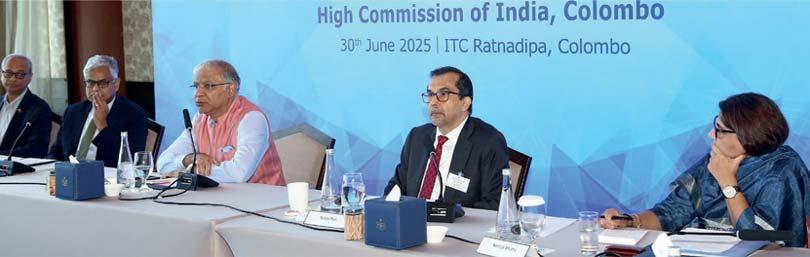
India’s ‘neighbourhood first’ policy framed talks between senior Indian and Sri Lankan executives on Monday (30 June), as business leaders from both countries pledged to deepen trade and investment links.
“India has a neighbourhood first policy, which means a more generous non reciprocal approach to the relationship towards our neighbours, and Sri Lanka is a central part of that neighbourhood first policy,” High Commissioner of India to Sri Lanka Santosh Jha told a strategic roundtable at the ITC Ratnadipa hotel.
The concept of the Neighbourhood First Policy came into being in 2008. It was conceived to bolster relations with certain priority countries such as Afghanistan, Bangladesh, Maldives, Myanmar, Nepal, Pakistan and Sri Lanka.
The meeting gathered a Confederation of Indian Industry (CII) delegation of chief executives spanning manufacturing, healthcare, logistics, renewable energy, education and tourism, alongside Sri Lankan counterparts from the Ceylon Chamber of Commerce.
Organisers included the Indo-Lanka Chamber of Commerce and Industry and the Indian High Commission.
Participants discussed aligning regulations, easing trade procedures and promoting cross-border investment, with an emphasis on sector-specific joint ventures and knowledge-sharing.
“We are lucky to be right next door to the fastest growing big economy in the world, and it’s about how we tap into that opportunity and collaborate with the private sector in India,” said Ceylon Chamber Chairman Krishan Balendra, who led the Sri Lankan delegation.
CII’s team was headed by Sanjiv Puri, the group’s immediate past president and chairman and managing director of ITC Ltd.
“There are several trends that are providing opportunities across the world and my belief is that there is a great opportunity of businesses in India and Sri Lanka to work together not only to address opportunities in their domestic markets but also for the larger global market,” Puri said.
Indo - Lanka Chamber President Raghuraman, closing the session, said past successes underscored the role of private sector initiative and called the forum a valuable platform for continued collaboration.
Both chambers agreed to keep talks structured through their networks and pursue follow-up projects.