Reply To:
Name - Reply Comment
The Ceylon Electricity Board (CEB) appears to be dragging its feet to delay or discontinue the progress of a 35-megawatt (MW) US$ 150 million wind and solar hybrid power plant in Jaffna by a Malaysian investor.
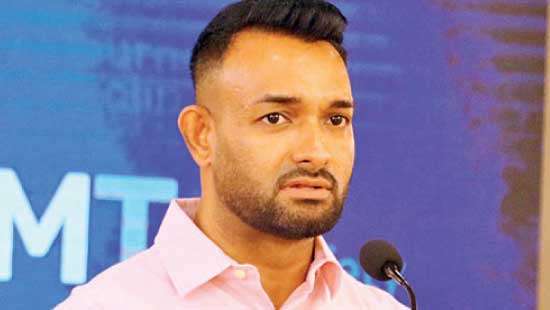
“The company is now faced with a situation where we have invested US$ 22 million, and are prepared to continue, but the CEB is yet to confirm with us that we can continue, and we have not yet obtained the interconnection proposal which has been outstanding since 2009,” KLS Energy Lanka (Pvt) Ltd. Director Niro Cooke said.
Speaking at the Ease of Doing Business Forum held this Wednesday, Cooke told Finance Minister Ravi Karunanayake that the company has filed an injunction against the CEB in order to maintain the status quo of the standardized power purchase agreement (SPPA), which was signed in 2009.
“Since then, however, we’ve had little communication from CEB. In fact today I expect the CEB to say that the company is in court and the matter cannot be addressed,” Cooke added.
A CEB official present at the event played the card, which was offered by Cooke.
“The Attorney General appeared on behalf of CEB. They have taken an injunction but we haven’t violated any condition. There’s a clause for termination, and we haven’t accepted that. But the SPPA has lapsed. The matter is now before the courts. The next hearing is on March 30. We are going with whatever decision that is given by the courts,” he said.
However, Board of Investment Chairman Upul Jayasuriya, who was the Past President of the Bar Association of Sri Lanka, confirmed KLS Energy’s arguments.
“The proceedings only said that the status quo be maintained until the matter is resolved with the CEB, and the CEB was informed of the position that the agreement is still in force. So if the agreement is in force, they must honour the conditions of the agreement,” he said.
Jayasuriya added that the Attorney General had appeared in the persona of a private attorney-at-Law and not as the Attorney General.
Cooke said that KLS Energy has now invoked an alternative dispute resolution method, and if a solution is not presented, it will also invoke the Sri Lanka-Malaysia Investment Protection Agreement.
“We really would like to just communicate with the CEB and understand what they would like us to do. They’ve informed us that there’s no capacity in the grid; yet, they’re going to call a tender for a 20 MW plant in the same substation. So there’s a lot of conflicting information,” he said.
The CEB official said that the state agency has continuously cooperated with KLS Energy.
“In 2009, we signed the agreement 2 days after they came to CEB. There may be some other reason beyond our control that’s the problem, because we have facilitated and supported. Now 6 years have lapsed. We haven’t terminated,” he said.
Cooke replied, saying that while the CEB had been cooperative in 2009, it hadn’t offered an interconnection proposal which allows the generated electricity to be supplied to the grid, without which the company cannot finalize designs for the plant, despite purchasing equipment for it.
Karunanayake too sided with KLS Energy, saying that the CEB General Manager will be summoned before the Committee for Economic Affairs, and the Prime Minister will make a policy decision on it.
“CEB, I think you have been very helpful in the past, but the present doesn’t seem to be so, like the investor is saying. I can see that there have been many influences on these type of projects,” he said.
KLS Energy Lanka is a subsidiary of KLS Energy Sdn Bhd of Malaysia.
The initial investment had been for US$ 250 million, before the project was downsized. The project was delayed until 2011 due to demining in the region.
The CEB’s 20-year plan is pushing for a power generation policy centred on coal. (CW)