Reply To:
Name - Reply Comment
By Shabiya Ali Ahlam
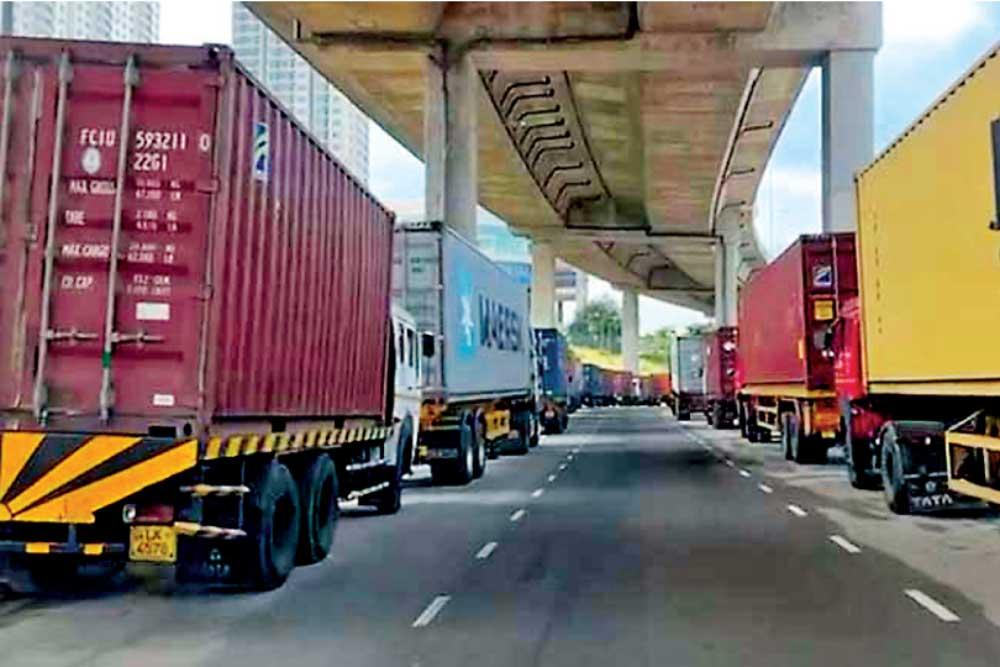
The 20 percent increase in container transport charges that came into effect yesterday has triggered concern across Sri Lanka’s export supply chain, with the industry stakeholders warning of rising logistics costs, weakened competitiveness and broader inflationary pressures.
The Free Trade Zone Manufacturers Association (FTZMA) said that the revision, largely driven by higher fuel costs, would immediately feed into the higher end-to-end shipping expenses across both imports and exports, given the central role of container trucking in linking the factories, warehouses and Port of Colombo.
FTZMA Chairman Dhammika Fernando speaking to Mirror Business said that the cost shock would compress the margins and erode the export pricing competitiveness, even in the FOB contracts, where the freight considerations ultimately influence the buyer decisions. He warned that the import-dependent industries would also face higher input costs, given Sri Lanka’s reliance on intermediate goods.
“Container trucking is a key link among the factories, warehouses and Port of Colombo. A 20 percent hike directly increases the end-to-end shipping costs for both exports and imports,” he pointed out.
Fernando said the impact would be uneven, with the small and medium enterprises particularly exposed, due to the weaker bargaining power and limited long-term logistics contracts. He identified apparel and textiles, tea, rubber products and electronics among the most vulnerable sectors.
Fernando further cautioned that the current fuel constraints are compounding the operational disruptions beyond the freight movement alone, affecting the workforce transportation and courier-linked surcharges across the supply chain.
“The shortage of fuel supply currently prevailing in the country is affecting not only the container transport but also the transportation of their workforce, whilst ensuring that the employees can travel to and from the factories for continuity of operations. In addition to the haulier charges, we are experiencing a very high increment of the fuel surcharge levied by the courier companies too,” he said.
He added that the combined pressures are cascading through the trade ecosystem, raising the costs domestically while weakening Sri Lanka’s external competitiveness.
The FTZMA urged the government to urgently ensure uninterrupted fuel availability for manufacturing and logistics operations linked to trade continuity.
Reflecting similar sentiments, the National Chamber of Exporters (NCE) said the increase comes at a time when the exporters are already under strain from the elevated production costs and fragile global demand conditions.
“This development comes at a time when the exporters are already operating under significant pressure. The industry continues to grapple with the high production costs, including energy, labour and other operational expenses,” NCE Secretary General and CEO Shiham Marikar said.
He noted that the external headwinds, including the geopolitical tensions in the Middle East, have further disrupted the trade flows and softened the demand in key markets, adding pressure on the Sri Lankan exporters attempting to retain the long-standing buyers.
While acknowledging the resilience of the export sector, the NCE warned that higher logistics costs could feed into the pricing structures and dampen the overseas demand if prolonged.
“Given these circumstances, the NCE believes that the increase in logistics costs will have a negative impact on the export sector, if prolonged. We sincerely hope that this situation will be temporary,” Marikar said.
The NCE said that it would engage the members and stakeholders to evaluate the full impact and explore the mitigation measures as the exporters navigate a tightening cost environment.