Reply To:
Name - Reply Comment
In a bid to keep the rupee from appreciating, Sri Lanka in recent months has bought dollars from the market reversing its course from selling the greenback as the Central Bank wants a competitive exchange rate to support exports in the import-dependent economy.
Since June, the Central Bank has bought as much as US $ 600 million from the market as Sri Lanka in the recent months saw some foreign inflows into government securities and equities.
In June, Sri Lanka received its first tranche of US $ 161 million from the US $ 1.5 billion bailout package with the International Monetary Fund.
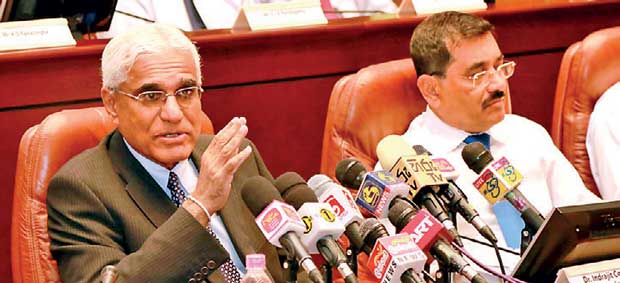
“If we didn’t buy those inflows, then obviously it would have appreciated,” said Central Bank Deputy Governor Dr. Nandalal Weerasinghe at a press briefing called soon after the August monetary policy was announced on Tuesday.
The Central Bank kept its key policy rates unchanged as its earlier tightening actions are still being transmitted to the real economy as the monetary authority expects private credit to slow and inflation to moderate going forward.
But a lot will depend on how effective the fiscal side of the economy is managed with shortfalls in revenue and need for higher government expenditure.
Since June, Sri Lanka has seen foreigners buying into treasury bills and bonds. By August 26, foreign holdings have increased to Rs.302.4 billion, still lower from the Rs.465 billion held in April 2015 when the Central Bank slashed the interest rates by 50 basis points in a surprise move, effectively chasing away the foreigners holding
Lankan bonds.
Nevertheless, the Central Bank Governor said such capital inflows have not been sufficient enough to exert an upward pressure on the rupee but the currency is valued “at fairly stable rate”.
“I don’t think the capital inflows have been of a sufficient magnitude to exert too much (upward) pressure as yet.
For the exchange rate to shift, it needs to be in quantities whereby the overall balance of payment is improving significantly. Some money has come in but as far as I understand, it is not in quantities, which is sufficient to shift the needle as far as appreciating the currency is concerned,” Central Bank Governor Dr. Indrajit Coomaraswamy told the
reporters on Tuesday.
Nevertheless, both the senior most officers in the Central Bank do not want the rupee to appreciate as it has a knock-on effect on the competitiveness of the country’s exports.
“One of the reasons why the Central Bank does buy the dollars is if you allow the exchange rate to appreciate,
you lose competitiveness.
If we are saying that we want to have an export-driven growth process, clearly you have to maintain the competitiveness of the rupee as well,” Dr. Coomaraswamy explained. When the exporting country’s currency appreciates against the importing currency, such goods become expensive in import currency as the importer has to pay more thereby losing the
exporter’s competitiveness.
Over decades Sri Lanka has been plagued with high budget deficits, higher nominal interest rates, higher inflation and over-valued exchange rate, quite contrary to how the Southeast Asian nations such as Singapore and Malaysia managed their economies and attained economic prosperity through higher exports. Sri Lanka’s economic growth largely hinges on exports and foreign direct investments. But both have been lacklustre even after the end of the separatist conflict seven years ago.