Reply To:
Name - Reply Comment
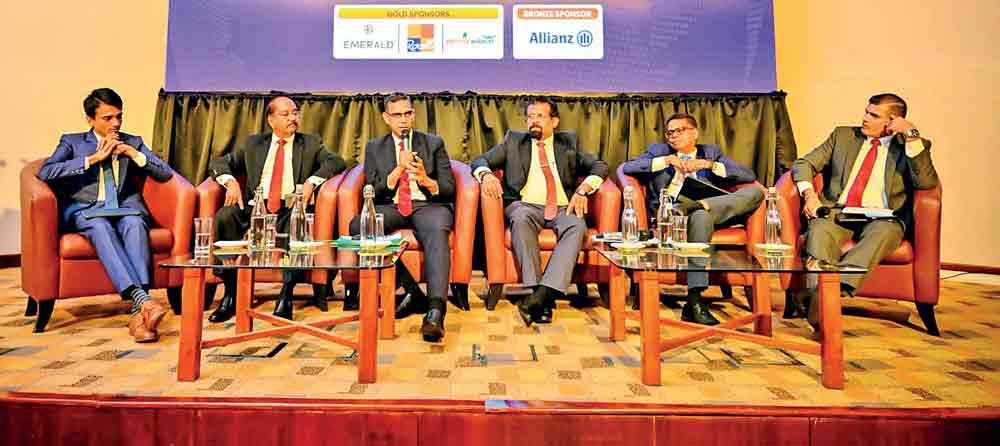
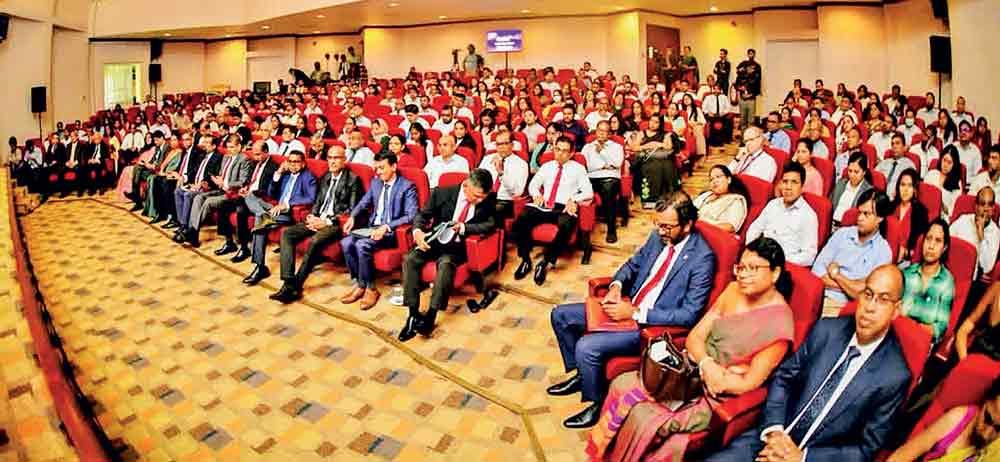
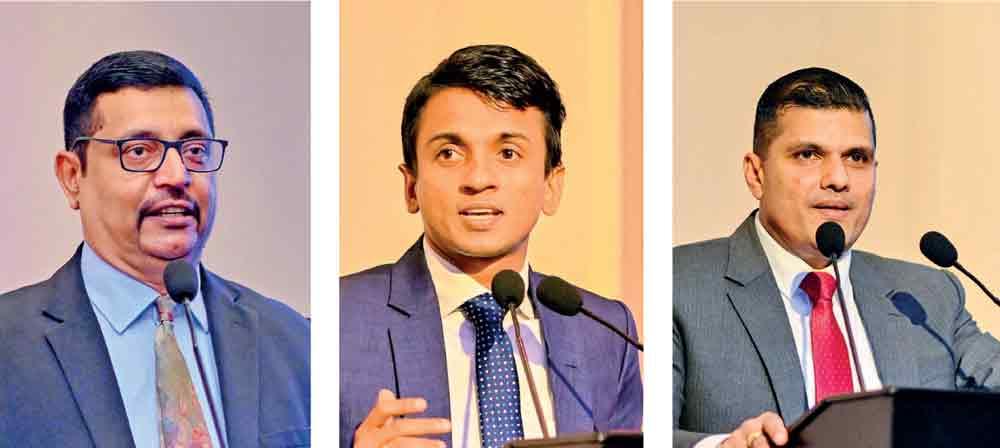
The Institute of Chartered Accountants of Sri Lanka (CA Sri Lanka) successfully concluded its fifth Annual Economic and Tax Symposium, held under the theme ‘From Resilience to Revival: Shaping Sri Lanka’s Economic and Tax Landscape’.
The annual event brought together the nation’s foremost economic and fiscal policymakers, industry leaders and experts to outline a transformative agenda aimed at driving Sri Lanka’s long-term prosperity.
Moving beyond a narrative that focuses solely on recovery, the symposium delivered a powerful consensus that Sri Lanka stands at a critical juncture, where it must transition from stabilisation to sustainable growth. The discussions, spanning four comprehensive sessions, focused on the structural reforms, strategic tax policies and institutional strengthening required to build a resilient and competitive economy.
CA Sri Lanka President Tishan Subasinghe
Addressing the symposium, CA Sri Lanka President Tishan Subasinghe stressed that Sri Lanka must move beyond economic resilience towards sustainable revival, driven by productivity, innovation, investment and a fair and predictable tax system.
“Our objective must be not taxation versus growth but taxation that enables growth. Businesses need predictable and consistent tax policies, while broadening the tax base with fairness and transparency is essential to strengthening national confidence, attracting investment and building a competitive economy that delivers lasting prosperity,” he said.
Tax Faculty Chairman Saman Srilal
Tax Faculty Chairman Saman Srilal highlighted that while Sri Lanka had demonstrated remarkable resilience through one of the most challenging periods in its history, the country’s focus must now shift towards sustainable economic revival by restoring investor confidence, strengthening fiscal discipline and improving tax efficiency.
He also underscored that the symposium was designed to generate practical and actionable policy recommendations rather than remain limited to academic discussions. The outcomes of the symposium will be consolidated and submitted to the Finance Ministry to support Budget 2027 and inform future national tax policy.
Economic and Tax Symposium Committee Chairman Prasad Dasanayaka officially launched the symposium.
Advocata Institute CEO Dhananath Fernando
The keynote address of the first session on ‘Navigating Global Economic Shifts: Insights from the World Economic Forum and the Implications for Sri Lanka’ was delivered by Advocata Institute CEO Dhananath Fernando, who set the tone for the discussions by presenting a critical assessment of Sri Lanka’s economic challenges and a roadmap for overcoming them.
He highlighted the country’s rapidly approaching demographic challenge, noting that approximately 1.8 million youth are expected to enter the labour force in the coming years, requiring the creation of one million new jobs and over one hundred thousand new firms.
He stressed that the public sector cannot absorb this workforce and that economic growth cannot continue to rely on temporary drivers such as construction activity and vehicle tax revenue. To address these structural weaknesses, Fernando proposed six key reforms: accelerating state-owned enterprise restructuring, establishing new industrial zones, streamlining business approvals, expanding trade agreements, implementing labour market reforms and improving land title systems.
Postgraduate Institute of Management Senior Management Consultant Dr. Trevor Mendis
Sharing his insights, Postgraduate Institute of Management Senior Management Consultant and Board Member Dr. Trevor Mendis drew on key discussions from the World Economic Forum, noting that the global agenda is increasingly centred on strengthening international cooperation, improving productivity, fostering innovation and achieving sustainable economic growth. Against this backdrop, he stressed that Sri Lanka must build on the reforms initiated under the International Monetary Fund (IMF) programme by implementing consistent long-term economic policies, enhancing competitiveness and raising productivity.
He emphasised the importance of leveraging Sri Lanka’s strategic location, strengthening exports, improving quality standards and increasing foreign exchange earnings.
Dr. Mendis cautioned that without sustained reforms and stronger global competitiveness, Sri Lanka risks undermining economic stability and increasing the possibility of renewed dependence on the IMF support.
Board of Investment Director General Dr. S. Jayawardena
Board of Investment Director General Dr. S. Jayawardena reinforced this perspective by highlighting the need to streamline investment approvals and strengthen infrastructure to attract foreign investment. He noted that the government plans to introduce a single-window approval system to enhance efficiency and strengthen investor confidence.
Union Bank of Colombo CEO and Director Dilshan Rodrigo
The private sector’s critical role in driving economic revival was a central theme of the symposium, with Union Bank of Colombo PLC CEO and Director Dilshan Rodrigo emphasising that small and medium enterprises remain vital to Sri Lanka’s economic growth. He stressed that strengthening entrepreneurship, expanding manufacturing capabilities and creating an enabling environment for businesses are essential to generating employment and fostering sustainable development.
Central Bank Director Economic Research Dr. L.R.C. Pathberiya
Providing insights into the country’s macroeconomic landscape, Central Bank Director Economic Research Dr. L.R.C. Pathberiya highlighted the evolving economic conditions, noting that inflation had increased faster than expected due to higher global oil prices and stronger domestic demand. He also noted that the Central Bank had responded by adjusting interest rates to manage economic pressures. The session was moderated by Subasinghe.
KPMG Sri Lanka Principal and Head of Tax and Regulatory Suresh R.I. Perera
The second session on ‘Positioning Sri Lanka as a Global Investment Hub’ featured KPMG Sri Lanka Principal and Head of Tax and Regulatory Suresh R.I. Perera, who delivered the keynote speech highlighting the need for Sri Lanka to rethink its approach to attracting foreign direct investment. He explained that traditional tax holidays have become less effective for multinational enterprises with revenues exceeding 750 million euros, as any tax advantage provided by a host country can be neutralised and collected by the investor’s home jurisdiction under the Pillar Two framework.
Perera cautioned that Sri Lanka risks losing potential tax revenue unless it introduces a Qualified Domestic Minimum Top-up Tax mechanism to retain revenue within the country. He urged the policymakers to redesign the existing incentive framework by moving away from the traditional tax holidays towards Pillar Two-compliant incentives such as Qualified Refundable Tax Credits.
He proposed a ‘two-basket’ approach, where the existing incentives could continue for smaller investors while introducing globally compliant structures for large multinational enterprises. He stressed that Sri Lanka must act swiftly to safeguard its tax base while positioning itself competitively for high-value investments.
Colombo Port City Economic Commission Director General Revan Wikramasuriya
Meanwhile, Colombo Port City Economic Commission Director General Revan Wikramasuriya clarified that the Port City project remains wholly government-owned and that no land has been transferred on a freehold basis. He noted that investor confidence has strengthened since 2025, with six developments currently under construction.
He emphasised that tax incentives alone are insufficient to attract investors, who increasingly prioritise policy certainty, ease of doing business, labour flexibility and the free movement of capital. He urged Sri Lanka to shift its focus from concessions towards broader structural reforms, including labour law reforms and capital account liberalisation, to create a predictable and business-friendly environment.
Joint Apparel Association Forum Chairman Felix Fernando
The resilience and global competitiveness of Sri Lanka’s apparel sector were highlighted by Joint Apparel Association Forum Chairman Felix Fernando. He attributed the sector’s success to its strong reputation as an ethical, reliable and high-quality sourcing destination. However, he raised concerns over bureaucratic inefficiencies and Sri Lanka’s limited network of effective free trade agreements, which place local exporters at a disadvantage compared with regional competitors.
SLASSCOM Vice Chairman Sampath Jayasundara
Representing the ICT sector, SLASSCOM Vice Chairman Sampath Jayasundara emphasised the need for Sri Lanka to move beyond traditional outsourcing and focus on developing intellectual property, digital products and artificial intelligence-driven solutions.
He noted that many Sri Lankan entrepreneurs establish holding companies overseas due to regulatory constraints, highlighting the need for a more investor-friendly ecosystem that enables businesses to retain value and scale locally.
UNDP Regional Programme Specialist Sudarshan Kasturirangan
The symposium also examined the importance of strengthening fiscal institutions and enhancing investor confidence. United Nations Development Programme (UNDP) Regional Programme Specialist Sudarshan Kasturirangan explained that the UNDP’s support extends beyond revenue mobilisation and includes strengthening institutional capacity to improve confidence in Sri Lanka’s investment environment.
He highlighted the Tax Inspectors Without Borders programme, which supports the Inland Revenue officials through practical case-based learning to enhance expertise in areas such as transfer pricing and tax audits. He emphasised that modern investors value strong institutions, transparency and certainty over low tax rates alone.
A dedicated session on enhancing tax system efficiency highlighted a broad consensus on the need for greater predictability, digital transformation and improved voluntary compliance.
The panellists identified the lack of tax certainty as a major challenge affecting investor confidence, noting that frequent policy changes make it difficult for businesses to assess long-term risks and returns. They stressed the importance of digitalisation through citizen-centric platforms and system integration using Open APIs to enable real-time data exchange.
The discussion also highlighted the need to improve voluntary tax compliance by strengthening taxpayer and tax administrator awareness. The panellists noted that many taxpayers are not deliberate evaders but lack sufficient technical knowledge, emphasising the importance of education and consistent guidance. The session was moderated by Deloitte Sri Lanka Associate Director Krishnaveny Karmegam.
Verité Research Lead Economist Raj Prabu Rajakulendran
The third session which featured a panel discussion on ‘Fiscal Challenges and Strategic Priorities for Budget 2027’ outlined a clear vision for the future direction of Sri Lanka’s tax policy and fiscal management. Verité Research Lead Economist Raj Prabu Rajakulendran emphasised that economic growth must be viewed as a means of achieving broader development outcomes, including poverty reduction, employment generation and improved living standards.
He highlighted that building investor confidence requires greater tax predictability and policy consistency, rather than focusing solely on tax rates.
Finance Ministry Tax Policy Advisor Thanuja Perera
Finance Ministry Tax Policy Advisor Thanuja Perera noted that the next phase of economic reform must focus on transformation rather than merely stabilisation. She emphasised the importance of maintaining government revenue above 15 percent of GDP and achieving a primary surplus of 2.6 percent of GDP, while avoiding reliance on increased tax rates.
She stressed that future revenue growth should be driven through broadening the tax base, improving compliance, strengthening administration and leveraging digitalisation to create a more efficient tax system.
Sarvodaya Development Finance Independent Non-Executive Director Nandika Buddhipala
Sarvodaya Development Finance PLC Independent Non-Executive Director Nandika Buddhipala cautioned against excessive reliance on indirect taxation, highlighting its regressive impact on lower-income households. He noted that the lower-income groups dedicate a significant proportion of their earnings towards consumption expenditure and that increased dependence on indirect taxes could further widen income inequality.
EY Sri Lanka and Maldives Partner and Head of Tax Sulaiman Nishtar
Similarly, EY Sri Lanka and Maldives Partner and Head of Tax Sulaiman Nishtar highlighted the importance of developing sustainable revenue streams, including emerging opportunities such as carbon credits and biodiversity financing, which can be transformed into valuable economic assets.
Saman Dissanayake of Inland Revenue Department
Providing an update on tax performance, Saman Dissanayake of the Inland Revenue Department noted that Sri Lanka’s tax-to-GDP ratio had recovered to 15.4 percent, while tax collections in 2025 reached 104.41 percent of the annual target.
However, he identified several ongoing challenges, including weak information sharing mechanisms, limited transfer pricing enforcement and the burden of legacy tax arrears.
The session was moderated by BDO Partners Sri Lanka Partner and Tax Services Dinusha Rajapakse.
John Keells Group Head of Corporate Structuring, Strategic Tax and Social Entrepreneurship Nishreen Rahumanjee
During the fourth session, titled ‘Enhancing Tax System Efficiency to Support Economic Growth’, the panellists explored key reforms required to create a more transparent, predictable and business-friendly tax environment. John Keells Group Head of Corporate Structuring, Strategic Tax and Social Entrepreneurship Nishreen Rahumanjee identified the lack of tax certainty as one of the most significant barriers to investment, noting that frequent changes to the tax framework make long-term projects appear increasingly risky.
She highlighted concerns regarding the interpretation and implementation of tax laws, including prolonged dispute resolution processes and emphasised the need for a more balanced approach that strengthens compliance while maintaining trust between taxpayers and administrators.
Bhasha CEO and Helakuru founder Dhanika Perera
Bhasha CEO and Helakuru founder Dhanika Perera highlighted the importance of accelerating digital transformation within the tax system. He called for the development of citizen-centric portals with self-registration and payment facilities, Open APIs to enable seamless data integration between systems and the use of artificial intelligence-enabled solutions for customer support and anomaly detection. However, he cautioned that a mindset shift is required to fully embrace digitalisation, noting that administrative processes must move beyond traditional practices and adopt technology-driven solutions.
Ranaweera Associates Managing Partner Athula Ranaweera
Addressing voluntary compliance, Ranaweera Associates Managing Partner Athula Ranaweera emphasised that many taxpayers are not intentional evaders but often lack sufficient technical knowledge. He stressed the need to educate both taxpayers and tax administrators to ensure greater consistency, understanding and compliance within the system.
On broadening the tax base, he noted that expanding the taxpayer network should not be confused with increasing tax rates or lowering thresholds for the existing taxpayers but should instead focus on bringing previously untapped segments into the formal tax system.
Gajma & Co Senior Partner N.R. Gajendran
Gajma & Co Senior Partner N.R. Gajendran highlighted the importance of rebuilding trust between the taxpayers and administrators, noting that a strong tax system must treat compliant taxpayers as partners in national development.
He emphasised that while a majority of tax revenue is generated through self-assessment, the system must continue to strengthen fairness, transparency and confidence among the compliant taxpayers. He reiterated that broadening the tax base requires expanding participation in the tax system rather than increasing the burden on the existing taxpayers.
The session was moderated by Saman Srilal.
The fifth Annual Economic and Tax Symposium concluded with a strong call for collective action among the policymakers, businesses, professionals and institutions to advance Sri Lanka’s economic transformation. The discussions reinforced the importance of predictable policies, stronger governance, digitalisation and inclusive reforms in building a competitive and sustainable economy.