Reply To:
Name - Reply Comment
By Nishel Fernando
|
Buddika Hewawasam |
The government has decided to hold off on finalising the specific tourism revenue targets for 2026, until the completion of a comprehensive data-gathering exercise under the Tourism Satellite Accounting framework.
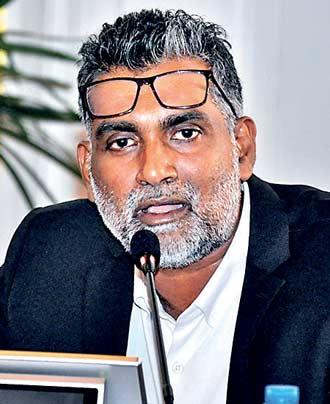
Sri Lanka Tourism Development Authority (SLTDA) and Sri Lanka Tourism Promotion Bureau Chairman Buddika Hewawasam emphasised that the future goals would no longer rely on assumptions or outdated metrics but would instead be grounded in a “scientific” model, once the full suite of surveys—including the critical leakage and domestic tourism data—is validated.
However, earlier he announced plans to achieve US $ 4.5-5 billion in tourism earnings for this year, after achieving the estimated US $ 3.2 billion in tourism earnings last year.
Speaking at a press briefing held this week, he explained that the shift to verified data is essential to avoid the discrepancies of the past. The previous calculations were largely based on the surveys conducted between 2010 and 2014, a period when the exchange rate was approximately Rs.150 per US dollar. With the rupee now hovering in the Rs.300 range and the global spending habits shifting significantly post-pandemic, the authorities stated that relying on the decade-old base data is no longer viable for accurate forecasting.
As part of this data-driven recalibration, the recent surveys have already revised the estimated daily spend per tourist down to approximately US $ 140. Hewawasam noted that this figure was identified following a rigorous 12-month survey covering a sample size of 10,000.
Addressing concerns regarding the accuracy of these numbers, specifically whether the Sri Lankan expatriates arriving on foreign passports are inadvertently counted, Hewawasam assured that the methodology strictly excludes this demographic. He explained that the verification protocols are in place at the point of data collection—covering both group tourists and free independent travellers—to ensure these arrivals are identified and removed from the calculation, thereby eliminating significant error margins.
He further highlighted that the decline in expenditure is a global trend, with competitor markets like the Maldives seeing the average spending drop from US $ 500 to US $ 300 and Thailand seeing figures slide from US $ 200 to under US $ 150. The authorities asserted that rather than hiding these facts, the industry must base its 2026 targets on this “certified data”.
To complete the scientific picture, the SLTDA is currently finalising a “leakage survey”, with the results expected by end-January. This study will pinpoint exactly how much foreign exchange is retained within the local economy across sectors such as accommodation and dining.
However, the full implementation of the Satellite Accounting system—which aggregates inbound, outbound and domestic tourism data—is pending the completion of the domestic tourism survey. This component, conducted in collaboration with the Census and Statistics Department, is slated for completion in the third quarter of this year. Once finalised, the Satellite Account will provide a holistic view of the sector’s true economic contribution, serving as the baseline for the 2026 revenue targets.