Reply To:
Name - Reply Comment
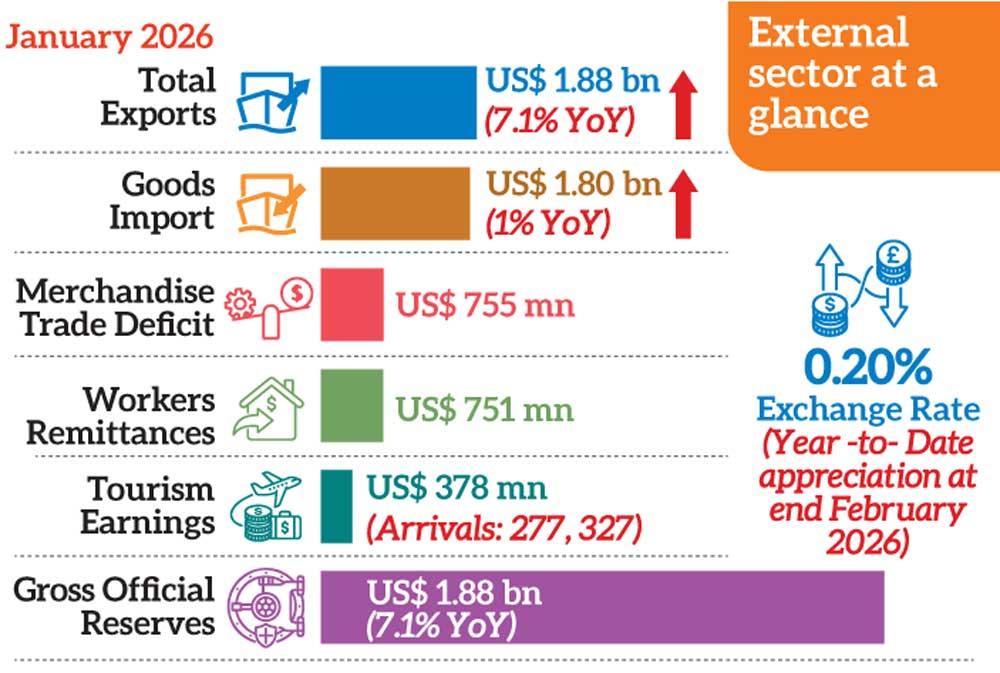
Sri Lanka’s external sector delivered a stronger-than-expected start to 2026, with January’s numbers pointing to a more broad-based foreign exchange cushion.
The data released by the Central Bank of Sri Lanka showed that the external current account recorded a larger surplus of US $ 369.7 million in January 2026, compared with both recent months and January 2025 (US $ 99.8 million). The performance follows a provisional surplus of US $ 1.7 billion for 2025.
The merchandise trade deficit narrowed on a year-on-year basis, supported by a stronger export growth, relative to the imports.
However, the improvement was tempered by a deterioration in the terms of trade. The import prices rose at a faster pace than the export prices compared to January 2025, underlining Sri Lanka’s lingering exposure to global price dynamics, a key risk factor should commodity markets tighten further.
The import demand is also gradually normalising as vehicle imports, including both personal and commercial units, amounted to US $ 224 million in January, down from US $ 301 million in December.
The services account surplus edged down marginally year-on-year, as services outflows grew faster than the inflows. The increase in outflows was driven primarily by higher expenditure on overseas travel.
Tourism remained a core pillar of inflows. Tourist arrivals increased year-on-year and exceeded the monthly level recorded in 2025. Earnings were estimated at US $ 378 million for January. mpared to the previous year, revisions to average daily spending, based on the updated survey results by the Sri Lanka Tourism Development Authority, partly explain the shift, rather than a slowdown in arrivals alone.
Workers’ remittances once again stood out as the single largest stabiliser. Inflows reached US $ 751 million in January, marking a 31.1 percent increase from a year earlier.
The sustained recovery in formal remittance channels continues to underpin the secondary income account and ease pressure on the overall balance of payments.
On the financial account, foreign participation presented a mixed picture.
The government securities market recorded a net inflow of US $ 17 million in January, suggesting cautious but continued appetite for rupee-denominated debt. In contrast, foreign investments in the Colombo Stock Exchange, including both primary and secondary market transactions, registered a net outflow of US $ 22 million, highlighting selective risk positioning in equities.
Gross official reserves stood at US $ 6.8 billion at end-January, inclusive of the swap facility with the People’s Bank of China. The Central Bank remained a net purchaser of foreign exchange in the domestic market during the month.
Meanwhile, the Sri Lankan rupee recorded a year-to-date appreciation of 0.2 percent against the US dollar as at end-February.