AI SUMMARY GENERATED ONLY FROM THIS ARTICLE'S TEXT.
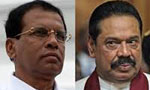
It was just one month ago that Sri Lanka surprised the world by electing opposition candidate Maithripala Sirisena as president, rejecting the authoritarianism, corruption and dynastic politics of the administration of the incumbent, Mahinda Rajapaksa.
President Sirisena has moved swiftly to usher in a new chapter of hope for Sri Lanka, the New York Times said in its editorial.
So as not to reopen old wounds too soon, his government is now seeking a delay in the release of a report that is scheduled to be presented next month on a United Nations inquiry into war crimes and other human rights abuses committed during Sri Lanka’s civil war that ended in 2009.
The government is also lobbying for support from the United States and the United Nations for a proposed domestic tribunal on abuses. The United Nations says as many as 40,000 Tamil civilians may have been killed during the last months of the war. Mr. Rajapaksa had flatly refused to cooperate with the United Nations inquiry.
Mr. Sirisena’s government has taken other positive steps to begin the healing process. It has pledged to free hundreds of detained ethnic Tamils and to restore to Tamil owners land seized by the military for commercial development projects. It has also appointed a new civilian governor for the ethnic Tamil-populated Northern Province and lifted a travel ban on foreigners to the area.
Mr. Rajapaksa and his brother Gotabaya Rajapaksa, who, as defense secretary, oversaw some of the worst abuses during the civil war, are still national political forces. One of the new government’s concerns is the outcome of upcoming parliamentary elections.
However, noble its motives, the Sirisena government must deal with the legacy of the past. Any delay in the release of the United Nations report must be brief. And the United Nations must remain involved. This is not a rebuke to Mr. Sirisena’s welcome intentions. It is simply the best way to guarantee that the inquiry is swift and independent, that witnesses are adequately protected and that perpetrators are finally punished. (New York Times)
Comments - 9
Comments - SL’s duty on war crimes: NYT Editorial
Kiris Baba Amaray Wednesday, 11 February 2015 12:49 PM
MS you are trying to defend MR the crook. Why is that?
9557
Kiris Baba Amaray Wednesday, 11 February 2015 12:49 PM
MS you are trying to defend MR the crook. Why is that?
7944
J Palitha Wednesday, 11 February 2015 12:51 PM
MR should be taken for War Crimes investigation in front of United Nations Council. Otherwise, MS cannot servive.
16568
Vijith Pieterz Wednesday, 11 February 2015 12:53 PM
SriLanka will lose the dignity, if not Mahinda taken to UN for War Crimes Investigation.
10554
sarojini Wednesday, 11 February 2015 02:57 PM
NO MS should not punish MR because MR was the Executive President of SL. Executive is immune to any legality - International Law
5039
OMG Wednesday, 11 February 2015 03:12 PM
Percy should be sent to ICC for Sri Lanka to get into a level playing field with other countries
4125
Kingsley Wijesinhe Thursday, 12 February 2015 10:13 AM
Looks like you are another Goda Perakadoruwa. Heads of State are immune only while in office.
02
dilo Thursday, 12 February 2015 01:10 PM
you are a disgrace to all the srilankan patriots
42
Prem Nath Friday, 13 February 2015 04:07 PM
So what about George Bush jr,why is he still allowed to roam free after killing so many innocents in Iraq,is he immune because He Was The President of The USA? Oh sorry,President of the World.
01
222
Add comment
Comments will be edited (grammar, spelling and slang) and authorized at the discretion of Daily Mirror online. The website also has the right not to publish selected comments.




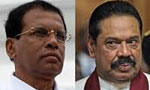
 It was just one month ago that Sri Lanka surprised the world by electing opposition candidate Maithripala Sirisena as president, rejecting the authoritarianism, corruption and dynastic politics of the administration of the incumbent, Mahinda Rajapaksa.