AI SUMMARY GENERATED ONLY FROM THIS ARTICLE'S TEXT.
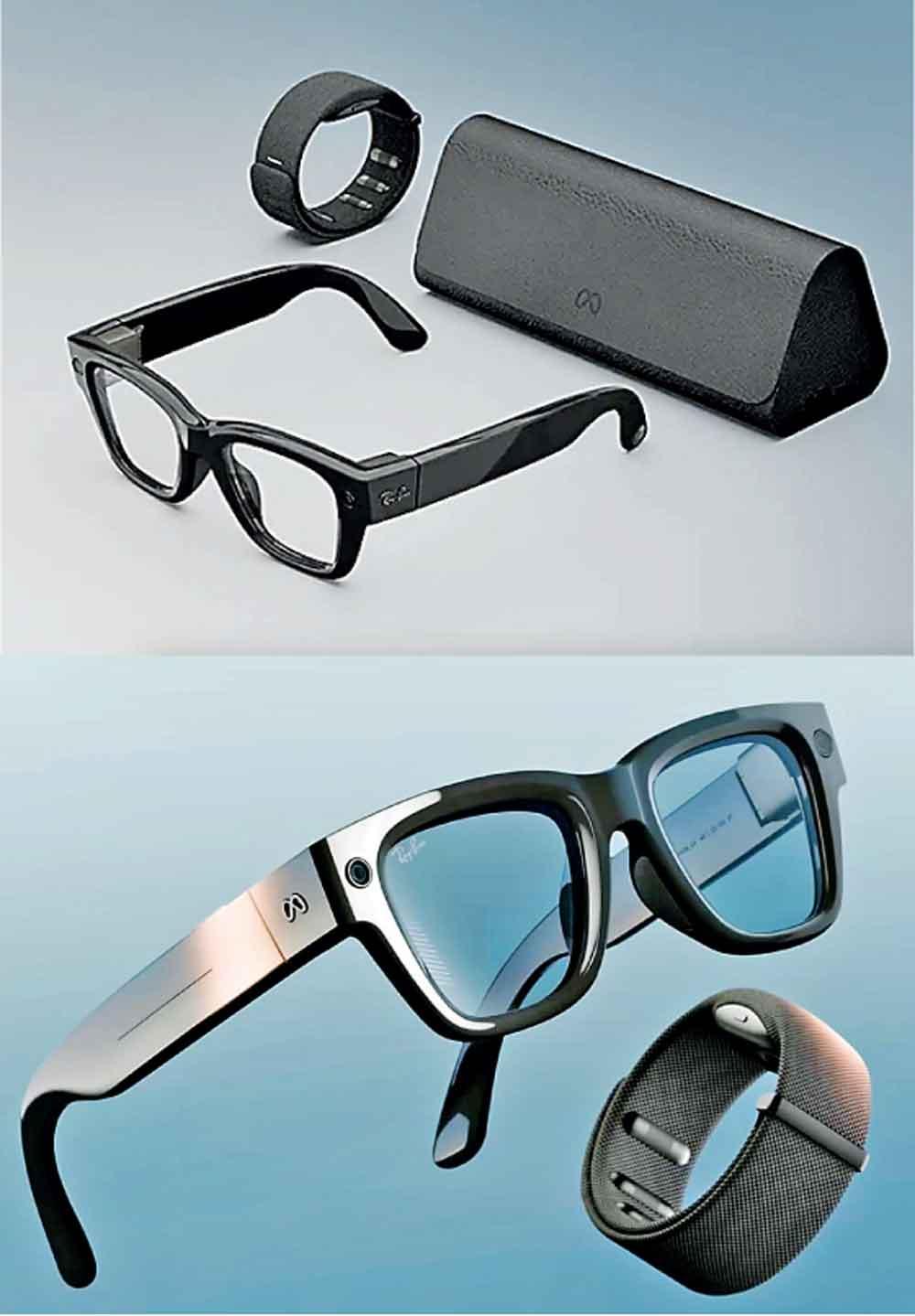
All images of Meta AI Glasses in this article are from Meta Store
By Prasad Perera
Media Analyst, Researcher onTech, Media & Online Safety, x@BuduMalli
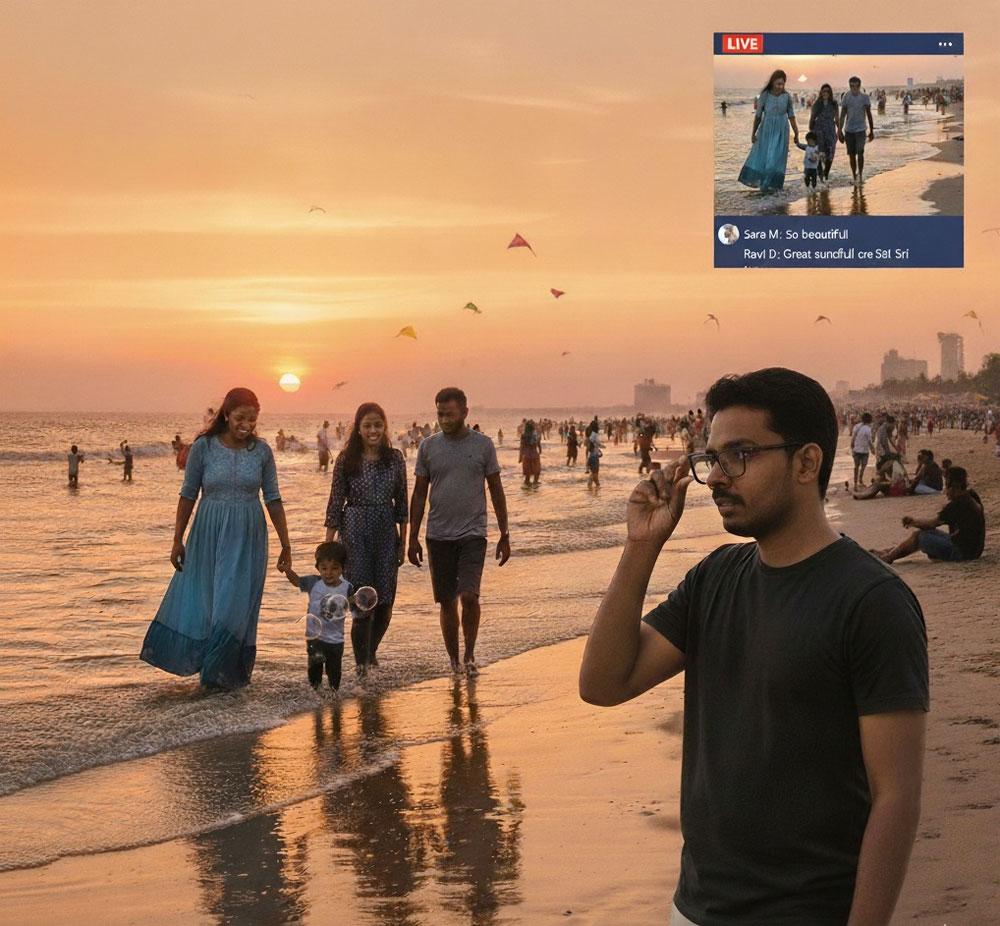
Imagine this: You’re walking along Galle Face Beach with your family. The sun is slipping into the sea, your child’s chasing bubbles, the salty breeze feels good. Then you notice someone nearby talking to himself, adjusting his sunglasses, pointing them subtly in your direction.
He isn’t holding a phone. He isn’t taking a selfie. Yet his glasses have a tiny light, almost invisible. Those could be META’s new Ray-Ban smart glasses capable of recording, live-streaming, and sending everything they see straight to the Facebook or Instagram platforms live. And your family, your kids, your quiet moment might already be part of someone’s live feed or someone’s monetized content.
How would you feel? Uneasy? Angry? Violated?
Or would you simply shrug it off because “that’s just how technology works now”?
What if these recordings fell into the wrong hands, or worse, were manipulated and turned against you or even turned into a meme without your consent?
This is not a distant problem anymore. These smart glasses are available in the Sri Lanka market and people are already wearing them.
Law vs. Reality – The Gap in Privacy Protection
Sri Lanka’s Personal Data Protection Act (PDPA) was hailed as a milestone, one of South Asia’s first comprehensive data privacy laws. It gives individuals the right to control how their personal information is collected, used, and shared.
But here’s the reality: the PDPA is still in its early stages of enforcement. The Data Protection Authority is not yet fully operational, and many citizens and businesses barely understand their rights under the law.
At the same time, the Online Safety Act (OSA) focuses on digital harm and false information but it doesn’t clearly address how wearable devices, AI assistants, or “always-on” cameras could invade everyday privacy.
While Sri Lanka’s laws now recognise privacy as a legal right under the Personal Data
Protection Act, public understanding of how to exercise those rights remains limited.
Until enforcement catches up, Sri Lankans remain exposed not just to data misuse, but to silent surveillance dressed as innovation.
Luxury Surveillance – When Fashion Becomes a Threat
META’s collaboration with Ray-Ban has turned surveillance into a luxury item. These glasses can take photos, record video, stream live, and even use META’s AI to describe surroundings, all with a single voice command.
It looks modern. It sounds harmless. But it erases a core principle: the right not to be watched. Back in 2013, Google Glass faced bans in bars, cinemas, casinos, and even parts of the UK after
public backlash over privacy concerns. People called users “Glassholes” and the device collapsed under social rejection, not legal action.
Today, META’s version rebrands the same idea with slicker marketing and discreet high- resolution cameras and audio devices, yet the privacy risks remain unchanged.
As a digital defender, I see a worrying truth. The moment surveillance becomes fashionable, privacy becomes negotiable. In a country like Sri Lanka, where digital literacy is still growing, the danger is that we may embrace these technologies without understanding the trade-offs.
Invisible Consent in Public Spaces
Many argue that “public spaces” don’t offer privacy. But Sri Lanka’s Constitution and PDPA disagree. Even in public, if you are identifiable in an image or video, that is personal data and consent still matters.
Yet, how can you give or deny consent to someone wearing smart glasses? A tiny LED indicator is not consent; it is a loophole.
Consent isn’t merely a click on a smart wearable device. It is a fundamental human choice. Civil society organizations and digital safety trainers in Sri Lanka emphasize that individuals must be aware of when their data is captured and how to exercise their rights under the PDPA. This is where policy gaps become visible. Our laws mention “personal data processing” but not “ambient surveillance,” the passive, constant recording of everyone nearby.
Without updates, these wearable devices will outpace our legal definitions and enforcement capacity.
The Cultural Cost of Ignoring Privacy
For Sri Lankans, privacy has traditionally meant family respect, safety, reputation, and personal dignity. But in the digital age, that meaning is shifting.
When recordings can be made secretly at religious events, schools, protests, or private gatherings, the cultural harm can be deep. Misuse of personal images has already led to harassment, character damage, and even suicides in Sri Lanka.
Technology should not decide who deserves safety. Laws, ethics, and human judgment must govern how we protect individuals’ rights and privacy in a digital world.
This isn’t just about tech. It is about power versus vulnerability, who controls the camera, and
who has no choice but to appear in someone’s monetized or live frame.
Weak Enforcement and the Cost of Inaction
Even globally, META has paid billions in privacy fines yet continues collecting data. Without strong local enforcement, Sri Lanka could become a testing ground for new privacy-invasive devices.
While Sri Lanka’s Data Protection Authority is still being established, the government and the Authority, once operational, must treat recording-enabled wearables as part of its regulatory scope. At the same time, ICTA and the Telecommunication Regulatory Commission (TRC) should oversee their importation and usage.
Protecting Communities, Not Just Devices
For women, children, activists, journalists, and LGBTQIA individuals, these devices bring a new layer of risk. A person can now be filmed without consent at a march, clinic, or café, and that footage can circulate globally within minutes.
This is not freedom. It is exposure. Sometimes we keep telling people to protect their devices, but we forget to protect people. Sri Lanka must focus privacy education not just on data protection, but on digital ethics and consent in social interactions.
Defining Restricted and Safe Zones
As wearable and recording technologies become more common, some experts suggest defining different levels of privacy protection:
•Private zones, such as homes, schools, or hospitals, where recording could be strongly discouraged.
•Restricted zones, like places of worship or cultural events, where consent may be required.
•Public access areas, including roads or transport hubs, where clear notices and limited data retention might balance transparency and safety.
The goal isn’t to block technology. It is to ensure that innovation respects human dignity.
The Bigger Picture: Privacy Fatigue
A decade ago, Google Glass collapsed under global pressure. Today, we see fewer protests, not because tech got safer, but because people got tired. Many now shrug and say, “We’re being watched anyway.”
This attitude, privacy fatigue, is dangerous. Every compromise we accept today weakens our
right to challenge tomorrow’s intrusions.
We traded privacy for convenience, and now we are too tired to ask what it cost us.
A Question for Every Sri Lankan
Surveillance is no longer limited to governments or security agencies. It is being carried by everyday people, friends, influencers, even children, often without understanding the implications.
So let’s ask ourselves:
How comfortable would you feel if your neighbour or a guest visiting you wore smart glasses that recorded every glance, including you, inside your own home? Under Sri Lanka’s PDPA, that image counts as personal data. But in practice, who is responsible for protecting it?
If that thought makes you uneasy, it is time we reclaim privacy as a public value, not just a personal wish. When eyes are everywhere, the right to live privately is nowhere.
*All images of Meta AI Glasses in this article are from Meta Store.
Comments - 0
Comments - When Fashion Turns into Surveillance: Why Sri Lanka Must Wake Up to the Privacy Crisis
222
Add comment
Comments will be edited (grammar, spelling and slang) and authorized at the discretion of Daily Mirror online. The website also has the right not to publish selected comments.