Reply To:
Name - Reply Comment
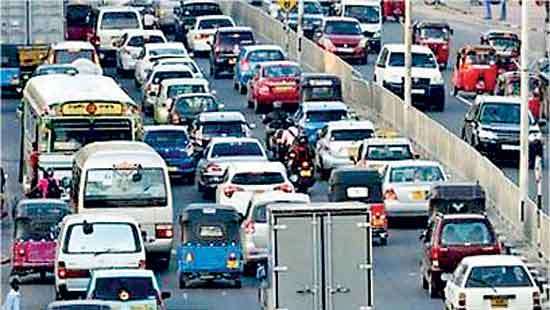
 Vehicle registrations eased in February after the strong momentum seen at the start of the year, with declines across several passenger vehicle segments even as overall activity remained relatively high following the reopening of vehicle imports.
Total vehicle registrations fell to 51,682 units in February, down from 55,365 units in January, according to data compiled by JB Securities.
The moderation was visible across motor cars, SUVs, vans and several commercial vehicle categories, although two-wheelers continued to dominate the market.
Motor car registrations declined to 4,163 units in February, compared with 4,648 units in January, with imports from Japan continuing to dominate the segment. Japanese vehicles accounted for 3,504 units, led by Suzuki with 1,355 units, Toyota with 1,095 units and Daihatsu with 610 units. China followed with 236 units, mainly from BAW and BYD.
Brand-new motor car registrations totaled 488 units, down from 556 units in the previous month. BAW led the segment with 193 units, all from the E7, an entry-level electric vehicle priced below Rs. 5 million. Perodua ranked second with 93 units, led by the Bezza and Axia, while Toyota recorded 73 units, all from the Wigo. Indonesian EV brand Wuling registered 38 units. Small cars dominated the segment, accounting for 91.4 percent of registrations, while financing penetration remained relatively low at 37 percent.
Pre-owned motor car registrations also declined to 3,675 units, from 4,092 units in January. Suzuki led the segment with 1,354 units, largely driven by the Wagon R, followed by the Spacia and Alto. Toyota ranked second with 1,120 units, led by the Yaris and Roomy, while Daihatsu recorded 609 units, mainly from the Mira and Taft. Small cars overwhelmingly dominated the pre-owned segment, accounting for 96.3 percent of registrations, while financing accounted for 50.7 percent of purchases.
Premium vehicle registrations fell to 165 units in February, from 206 units in January. Brand-new premium vehicles accounted for 41 units, slightly higher than the 38 units recorded in the previous month. Mercedes-Benz dominated the new premium segment with 39 registrations, led by the C-Class, followed by the E-Class, GLE, G-Class and S-Class. Pre-owned premium vehicles accounted for 124 units, with Mercedes-Benz, Audi, BMW and Lexus recording most of the registrations.
Several ultra-luxury vehicles were also registered during the month, including one Porsche Carrera, one Rolls-Royce Cullinan, one Bentley Flying Spur Mulliner and one Bentley Bentayga Azure, all of which carry substantial import taxes.
Registrations of SUVs and crossovers totaled 5,636 units in February, down from 7,664 units in January, with 2,380 units brand new and 3,256 units pre-owned. Toyota led the segment with 2,043 units, driven mainly by the Raize, followed by Urban Cruiser and Yaris Cross models. Higher-end Toyota registrations included 151 Land Cruiser variants across the LC250, LC150 and LC300 models.
Honda ranked second with 1,055 units, overwhelmingly driven by the Vezel, while Suzuki recorded 712 units, almost entirely from the Fronx. Nissan followed with 587 units, largely from the Magnite, while BYD recorded 216 units, led by the Sealion. Kia registered 175 units, mainly from the Sorento. Small crossovers with engines below 1,500cc accounted for more than 94 percent of registrations, highlighting the continued shift toward compact SUVs. Financing accounted for 48.8 percent of purchases in the segment.
Hybrid registrations declined to 2,542 units, down from 3,465 units in January, with SUVs and crossovers accounting for 2,398 units of the total. Honda led the hybrid segment with 1,023 units, followed by Toyota with 989 units and BYD with 185 units.
Electric vehicle registrations eased to 3,332 units in February, compared with 3,763 units in January. Motor cars accounted for 281 units, of which 273 were brand new, with BAW leading the segment with 194 units, followed by Wuling with 38 units and BYD with 23 units. SUVs accounted for 100 EV registrations, led by GAC and BYD. However, EV registrations were overwhelmingly dominated by two-wheelers, which accounted for 2,845 units, led by Yadea, followed by AIMA and Nwow. Two-wheelers remained the largest vehicle category, with 34,191 units registered in February, marginally down from 35,533 units in January. Bajaj led the market with 9,292 units, capturing a 27.6 percent market share, followed by Honda with 6,110 units, TVS with 5,532 units, and Hero with 4,904 units. Scooter registrations increased to 18,557 units, led by Honda, while motorcycle registrations declined to 15,130 units, with Bajaj accounting for more than 60 percent of the segment. Three-wheeler registrations increased to 4,060 units in February, from 3,568 units in January, with Bajaj dominating the passenger segment, recording 3,321 units and capturing 81.8 percent market share.
Registrations of vans declined to 924 units, from 1,159 units in January, led by Suzuki Every, followed by Toyota Hiace and Nissan Clipper models.
Among commercial vehicles, pickup truck registrations fell to 457 units, from 612 units in January, led by Toyota Hilux, followed by Mahindra Bolero and Ford Ranger. Mini truck registrations rose to 255 units, while light trucks increased to 204 units. Medium truck registrations eased slightly to 340 units, dominated by Isuzu, while heavy trucks declined to 207 units, led by Tata and Ashok Leyland.
Bus registrations declined to 270 units, from 296 units in January, with Lanka Ashok Leyland leading the segment, followed by Gold Dragon, Toyota Coaster and Tata.
Locally assembled vehicle registrations totaled 7,531 units in February, down from 8,239 units in January, with two-wheelers accounting for the bulk of production. Bajaj dominated local assembly, followed by TVS. In the SUV category, BAIC and GWM accounted for most locally assembled units, both produced by David Peiris Motor Company, the country’s largest vehicle assembler.
JB Securities Managing Director Murtaza Jafferjee said the strong registration figures in January and February may not entirely reflect final consumer demand.